
Motorcycle specifications Kawasaki 1000 ZX-10R 30ème anniversaire 2015 The legend continues


presentation of the 1000 ZX-10R 30ème anniversaire 2015
kawasaki celebrates the 30th anniversary of a milestone in the world of sports bikes: the GPZ 900 R. It was the first Ninja, the first to achieve a power-to-weight ratio of less than 2, and the first in a long line of uncompromising sports bikes. To commemorate this thirtieth anniversary, the Akashi-based manufacturer presents a limited series of ZX-10Rs.
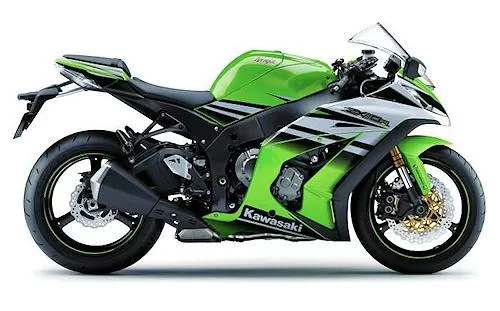
the 1000 Ninja ZX-10 R comes in a special color scheme, reminiscent of that used on World Superbike machines. The Ninja 30th Anniversary logo behind the machine's eyes, and green on the suspension, are just a few of the special touches reserved for the discerning eye. More precisely, on the shock absorber spring and fork adjusters.
For the lucky owners of this hypersport, what will be most exhilarating? The aura of three decades of performance, the taste of multiple victories at the 24 Hours of Le Mans and the Bol d'Or, or the flavor of Sykes and Baz's performances at its handlebars... All without moderation.
the Kawasaki ZX-10R is continuing its career with flying colors, ready to remain a top performer in 2015. But this year, the competition has stepped up a notch, and is putting its weight behind the Ninja. The Yamaha R1 makes its comeback with 200 hp and a razor-sharp chassis; the Aprilia RSV4 becomes an RR with 200 hp as well; the Ducati 1299 pushes all the meters towards madness; the BMW S 1000 RR has gained even more potential. It won't be easy, but the Kawa has a strong case. The scarecrow of world endurance racing (four wins in a row at the 24 Hours of Le Mans, three at the Bol, and the Bol d'Or + Le Mans double in 2012 and 2013), untouchable in WSBK Superpole, it brought Tom Sykes the 2013 World Superbike Championship title. Overpowered and extremely efficient, adopted by MRT and Ecurie ChronoSport riders, the Kawasaki ZX-10R is THE benchmark Japanese sportsbike. Released in 2011, the big Ninja has refined its chassis for 2013. The changes mainly concern the steering damper.
Still entrusted to Öhlins, this little appendage that regulates the front end's energy is now electronically controlled (Suzuki has been using a similar method on its GSX-Rs for some years now). Depending on speed, acceleration and deceleration, the on-board control unit adjusts the amorto settings. This means that the steering can be softened at low speed, or made much firmer at high speed, without the rider having to intervene (and lose concentration).
every year, the Ninja 1000 asserts itself as a blend of menace, efficiency and competitiveness. Its look frames a new air intake that means a lot in itself: the triangle-shaped mouth, a Ninja trademark since its 2003 revival, will have lasted almost a decade, but here it gives way to a strange duct. The front turn signals have finally left the rear-view mirror arms and are now embedded in them.
Its silhouette will once again call out to you. More solid, less openwork, it surprises you with its large panels, singularly broken up by long ventilation holes. The fuel tank is encircled by large covers that end abruptly on a new rear frame. At the end of the frame, the headlamp unit has evolved considerably, with the turn signals implanted in the hull coupling with the taillight to form a multi-surface unit. Yet the design of this new stern seems out of sync with the machine's silhouette. It almost looks like the rear of an '80s V-series shuttle. As for the exhaust system, I hope you like the Z 1000's. The ZX-10 R has stolen one from the roadster. Shorter and more "bowl-shaped", it refocuses the masses.

The multifunction display is modular: there's a standard display mode and a few modifications in track mode. Race Mode modifies the display as follows: speed becomes a large gear indicator, and the time is transformed into speed. As standard, the LCD window displays speed, gear engaged (small), 2 trips, instant fuel consumption, selected mapping, Traction Control level, temperature and clock. All you need to know how things are going down there. What's more, quite a few of you want to know what's going on inside the engine, and whether it's firing on all cylinders.
hot, boiling, volcanic, the 998 cm3 four-cylinder. Caliper in hand, you'll find identical displacement, stroke and bore. And yet, the engine-makers have rolled up their sleeves to find horsepower and remove weight in every direction.
In the bowels, things have moved. The driveshaft is 108 mm higher than before, as is the crankshaft, which is 28 mm higher than before. The aim is to further centre the masses and raise the center of gravity. Optimized pistons and rings reduce internal friction losses.
"Make me breathe this engine!!!
- Uh, chief, it's already breathing hard on the ...
- I don't care! Do better! "
"Chief, there's no way to...
- WHAT?!? Do better, dammit! "
Re-glurps. Maybe we could? Yes, shorten the piston skirts and lighten the pistons, increase the throttle bodies from 43 to 47 mm, and see what the boiler spits out. Bbrrrooooooovroaaaaabbraaaapppppp! 13,000 rpm later, the control screen clicks. The BMW S 1000 RR, hitherto the power record holder (193 horsepower announced), has just had its bottom cracked. 200 HORSEPOWER!!! Good grief, but that's power with forced air, isn't it? Well, no. With the RAM Air in action, the boiler unlocks 210 hp. It's all racing, of course, with a double set of injectors, cassette gearbox, anti-dribble clutch, new airbox and titanium exhaust system.
Will such vigor be manageable? Hmmm, let's just say that with an upwardly displaced torque curve, a max of 11.7 mkg at 11,500 rpm (0.7 mg more, 3,000 later), and the Kawa character, you'd better know how to ride. But today, power and talent are not enough to win. Electronics have become an indispensable co-pilot. Why do you think there are new cables running around on this 2011 ZX-10R? I'll put you on the track: a serrated track on each wheel, a sensor in front of each track. Bingo, an ABS... and a traction control system, the S-KTRC (Sport Kawasaki Traction Control). This combines a number of parameters (wheel speed, engine speed, throttle opening, throttle position) to optimize acceleration to the max. The system can even tell the difference between "controllable" wheeling and brutal, uncontrolled wheeling. Checking every 5 milliseconds, S-KTRC acts directly on the ignition when things start to zip.
The anti-lock system here is called KIBS, Kawasaki Intelligent anti-lock Brake System. It's a sport ABS capable of regulating and optimizing braking on the front and/or rear - in a way, it thinks for the rider about the braking action.
so, we've got a queen of electronics on hand, with 200 bricks in the basket and a killer mouth. But don't worry, the Ninja still has a lot to promise. Like that 208 she wiped out. That was the weight of the 2010 ZX-10R. A bit annoying, given that the other models were all less overweight. So I went on a very dry diet. And that's 10 kg lost! Not bad. At 198 kilos wet (201 with ABS), the Kawa hypersport becomes the lightest of the bunch. In 2004, the 1000 managed 1 kg per horse dry weight. Today, the ratio is the same, but fully loaded. The race for power has gone beyond the frightening.
There's no secret about it, we've had to cut back gram by gram, sometimes impressively. The battery is simply twice as light. From 4130 g, it is now 2040 g, except in the ABS version where the energy requirements are greater. But even with a 3080 g battery, the weight saving is still there. The on-board electronics have been reduced by 63g, the front wheel by 330g, the rear by 490g, the fuel pump has been lightened, and the ABS is a lighter version.ABS is an 800g lighter version than current market units, and the entire chassis also contributes to the drastic diet.

Stay close to the rear. Look at how the monoshock is mounted! Surprising, isn't it? You don't often see a shock absorber anchored horizontally above the swingarm on a sports bike... Neither do I. This process was first used on the latest generation Z 1000 and is now installed on the most violent Kawa. The advantage? Mass centralization, greater stability, more progressiveness, and with the space freed up, you can fit a larger plenum chamber, and thus a shorter exhaust, and refocus mass even further.
The Akashi-based manufacturer renews its confidence in the BPF fork. Introduced on the 600 in 2009 (and on the Suzuki GSX-R 1000), this model features a piston almost twice the size of a conventional cartridge fork. As a result, fluid pressure is much lower, while damping force remains identical. The result is better steering control during compression phases. As the geometry of this Ninja opus 2011 is even more tilted towards the front, riding should be even more incisive. Bonus: with fewer internal parts due to its design, the fork is also lighter - and that's another gram saved.
Suspension is, of course, adjustable for compression, preload and rebound, with dual compression settings (slow and fast) for the rear shock.
The result is a 200 hp, 198 kg machine. On board, a number of features have been incorporated. An ergonomic fuel tank, 15-mm adjustable footrests and, for the passenger, a slice of sliced bread. Braking is still at the high end of the all-radial scale, with pump and calipers with 4 pistons each flirting with 310 mm petal discs. But we're still waiting for the monobloc and aviation hoses.
more ferocious than ever in this edition, the ZX-10 R sets a benchmark for power and cleans up the hypersports world. The 24 Hours of Le Mans have whetted Kawa's appetite - this Ninja is now out to bleed the competition on most theatres of operation.
M.B - Manufacturer's photos
by Greg
Greg is the founder of Motoplanete—a website created in 2001 to share his passion with his friends and showcase as many motorcycle models as possible to his readers. Self-taught and a jack-of-all-trades, his discovery of the world of motorcycles led him to work as a photographer, rider, team manager, web developer, graphic designer, editorial assistant, and editor-in-chief.
 Share
Share
Key facts Kawasaki 1000 ZX-10R 30ème anniversaire (2015) : What you need to know before you buy
 France
Specifications Kawasaki 1000 ZX-10R 30ème anniversaire 2015
- Chassis
- Frame : double alu perimeter beam
- Fuel capacity : 17 liters (4.49 US gallons)
- Seat height : 813 mm (32.01 in)
- Length : 2,075 mm (81.69 in)
- Width : 715 mm (28.15 in)
- Min height : 1,115 mm (43.90 in)
- Wheelbase : 1,425 mm (56.10 in)
- Weight when fully loaded : 201 kg (443 lb)
- Front axle
- BPF reverse telehydraulic fork Ø 43 mm, Wheel travel : 120 mm (4.72 in)
- Braking 2 discs Ø 310 mm (12.2 in), radial mounting, 4-piston caliper
- Front tire : 120 / 70 - 17 → Order this type of tire
- Transmission
- 6 stage gearbox
- Secondary by chain
- Rear axle
- Mono-damper, Wheel travel : 125 mm (4.92 in)
- Braking 1 disc Ø 220 mm (8.66 in), single-piston caliper
- Rear tire : 190 / 55 - 17 → Order this type of tire
- Motor
- 4 cylinders online , 4 strokes
- Injection Ø 47 mm
- Cooling system : liquid
- 2 ACT
- 4 valves per cylinder
- 998 cc
- 200 ch (197.20 hp) to 13,000 rpm
- 210 hp with ram air
- 11.70 mkg to 11,500 rpm
- Power-to-Weight Ratio : approx. 0.94 kg/ch
- Torque-to-Weight Ratio : approx. 15.91 kg/mkg
- Compression : 13 : 1
- Standard equipment
- Brake assist : ABS sport and optional
- Practical information
Essentials


 Motoblouz
 LaBécanerie


Gallery


Models
2015


Compare the 1000 ZX-10R 30ème anniversaire to its competitors
Compared to its 7 direct competitors, this 1000 ZX-10R 30ème anniversaire offers an appealing positioning, managing to stand out in certain specific areas. It stands out with top speed of 300 km/h. Its torque-to-weight ratio of 15.91 kg/Nm limits its punch at low revs.
Torque
Power
Power-to-Weight ratio
Torque-to-Weight ratio
Speed
FAQ Your frequently asked questions about the 1000 ZX-10R 30ème anniversaire 2015
- What is the power of the 1000 ZX-10R 30ème anniversaire?
-
The 1000 ZX-10R 30ème anniversaire 2015 develops a power of 200 ch (197.20 hp)
- What is the torque of the 1000 ZX-10R 30ème anniversaire?
-
The maximum torque of the 1000 ZX-10R 30ème anniversaire 2015 is 11.70 mkg to 11,500 rpm.
- What is the maximum speed of the 1000 ZX-10R 30ème anniversaire?
-
The 1000 ZX-10R 30ème anniversaire 2015 is capable of reaching a top speed of 300 km/h (186.40 mph) on the track.
- What is the weight of the 1000 ZX-10R 30ème anniversaire?
-
The 1000 ZX-10R 30ème anniversaire 2015 has a a weight when fully loaded of 201 kg (443 lb).
- QWhat is the seat height of the 1000 ZX-10R 30ème anniversaire?
-
To ensure good accessibility, the 1000 ZX-10R 30ème anniversaire 2015 offers a minimum seat height of 813 mm (32.01 in).
- What is the price of the 1000 ZX-10R 30ème anniversaire?
-
The price of the 1000 ZX-10R 30ème anniversaire 2015 is 16,349€ in France. It is displayed at 17,349€ in France with ABS.
- What size tires should I put on my 1000 ZX-10R 30ème anniversaire?
-
The standard size for a 1000 ZX-10R 30ème anniversaire 2015 is 120 / 70 - 17 for the front, and 190 / 55 - 17 for the rear.
- Where can I find high-quality used 1000 ZX-10R 30ème anniversaires?
-
You can find used 1000 ZX-10R 30ème anniversaire at great prices on MotoPlanete, in the section dedicated to them—models from professionals and private sellers, as well as spare parts.
News
-
2026 MXGP of China: Herlings Unbeatable, McLellan Delays the MX2 Title
-
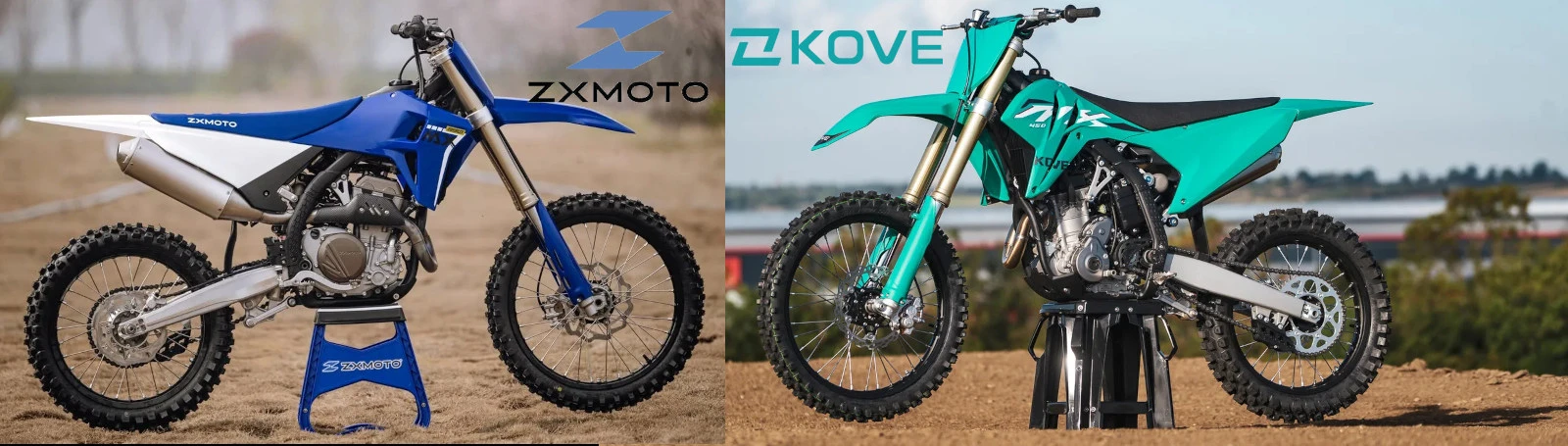
MXGP 2027: Kove and ZXMoto Join the Championship
-
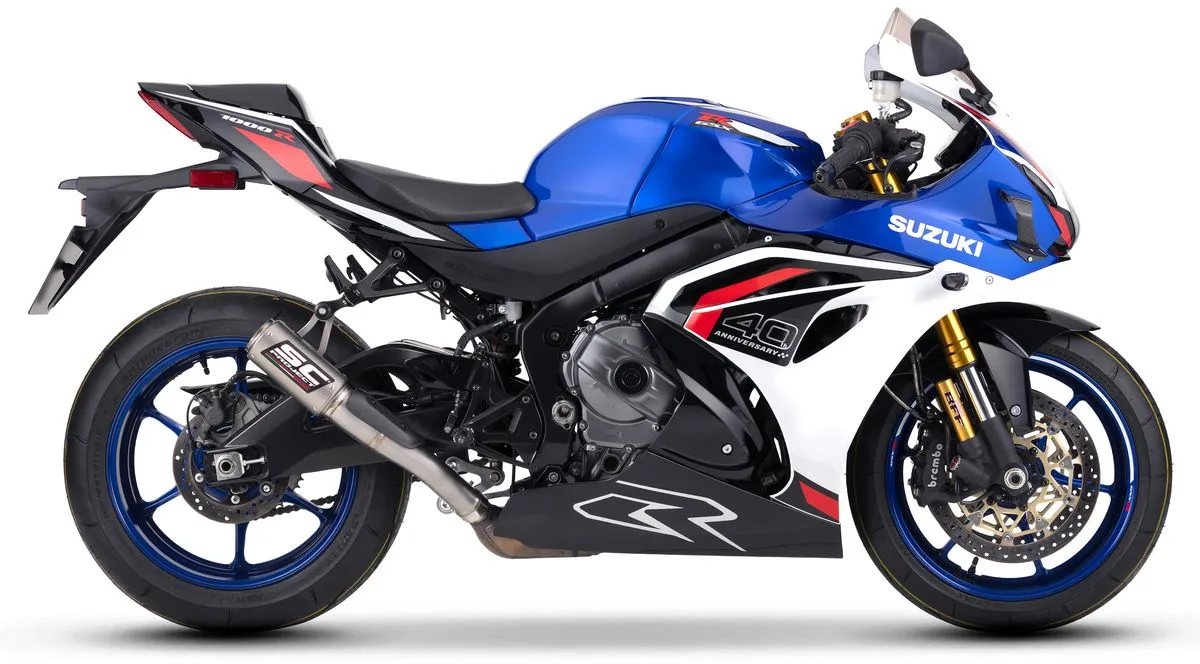
SC Project is working on the 2026 Suzuki GSX-R1000R.
-
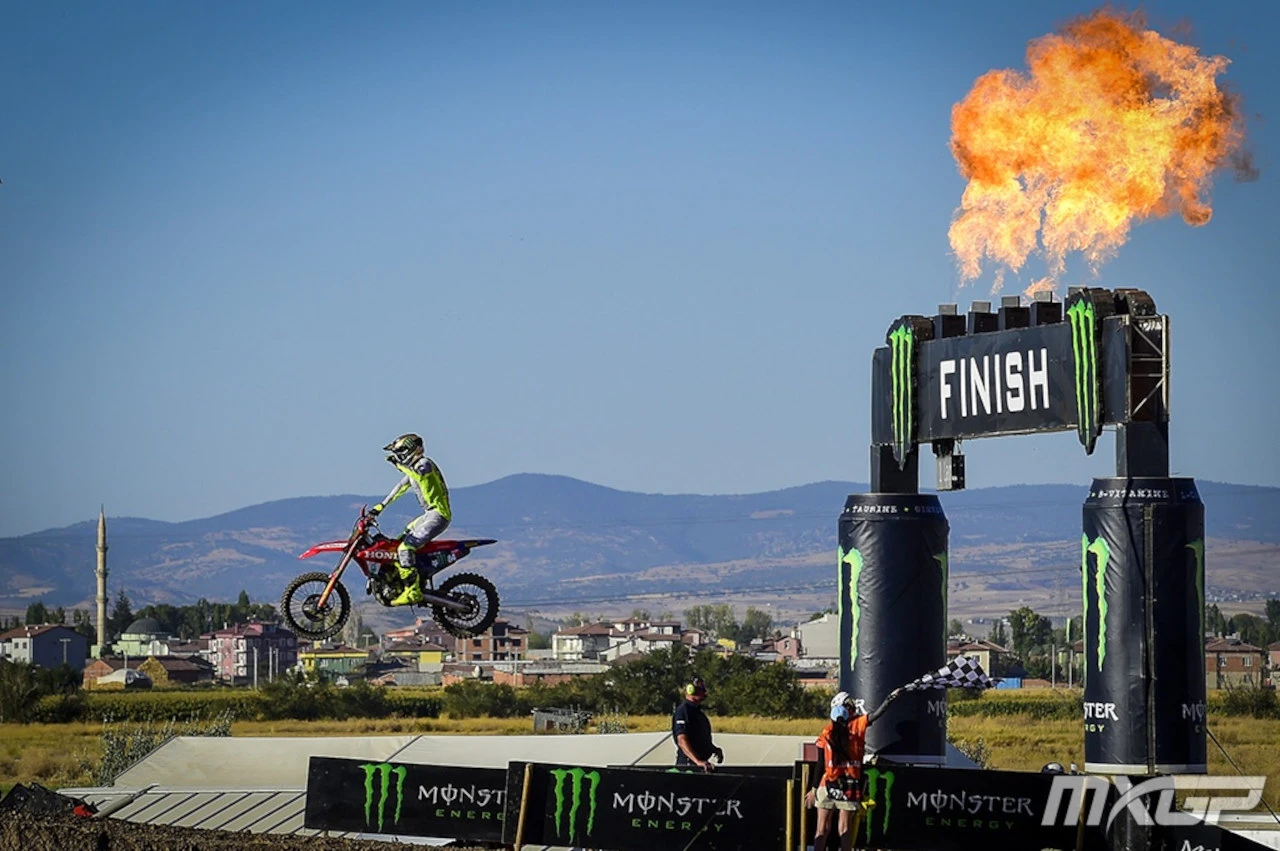
2026 MXGP of Turkey: Herlings Crowned World Champion!
-
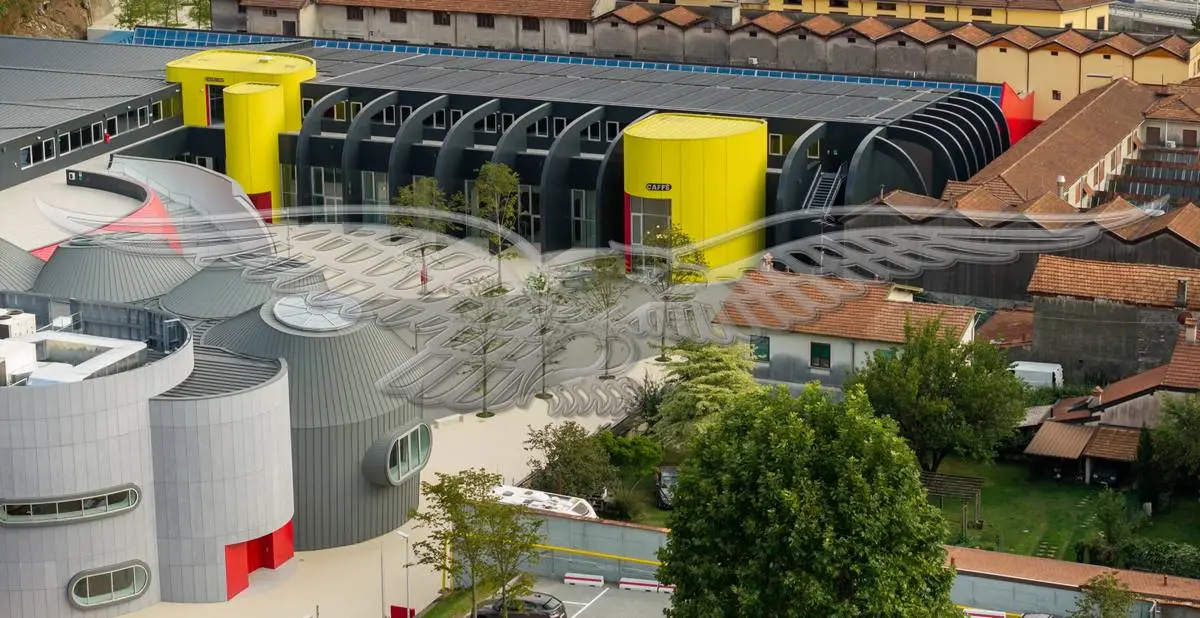
Moto Guzzi: In Mandello, the historic factory is taking on a new scale.
-
ZXMoto in MXGP 2027: The Hypothesis of an Off-Road Earthquake
-
Superbike - Will 240 ch sport bikes soon be available at dealerships?
-
2 new SC-Project mufflers for the R 12 NineT and G/S.
-
Seiko unveils a watch inspired by the Honda Motocompo.

-
The new motorcycle models of 2026 and the evolutions.

Bikers' reviews Leave a review