
Everyone either goes on a long-distance trip or thinks about it at some point. Whether it’s on a big trail-GT, a sport-touring bike, a scooter, or a hypersport bike with saddlebags… It doesn’t matter—only the horizon can judge.
And then there’s American-style Grand Touring. In the Harley-Davidson lineup, the Street Glide Limited (along with its Road sister model) is the best at devouring the miles, with the power and finesse of a Super Bowl team. Let’s take a little ride from Chambéry to Biarritz to discover this ocean liner with steel sails.
Road test of Harley-Davidson1920 Street Glide Limited FLHXL 2026 Sailing on a Panamax
Touring

presentation
Key facts
Drive test
Specifications
Gallery
Models
Used
Competitors
Compare
Bikers' reviews
Rating 1920 Street Glide Limited FLHXL 2026 test drive
Rating
Editor's score
Ratings by category
- (4/5)
- Style (5/5)
- (4/5)
- (1/5)
- Engine (4/5)
- (4/5)
- Agility (2/5)
- Freinage (3/5)
- (3/5)
- (4/5)
- (5/5)
- Comfort (4/5)
Highlights
- An exhilarating driving experience
- A very rewarding motorcycle
- Plenty of storage space
Weak points
- Heavy and intimidating
- Manly Commands
- Excessive price
Field test Our tester's opinion on the 1920 Street Glide Limited FLHXL from 2026

To discover, to explore in more detail
(4/5)
Some of the motorcycle’s features, tips, and handling characteristics may seem obvious and/or unnecessary to those familiar with the Harley world. But this information is provided to help newcomers understand certain aspects of this machine and the culture that surrounds it.
A Harley that lives up to its reputation
Style (5/5)
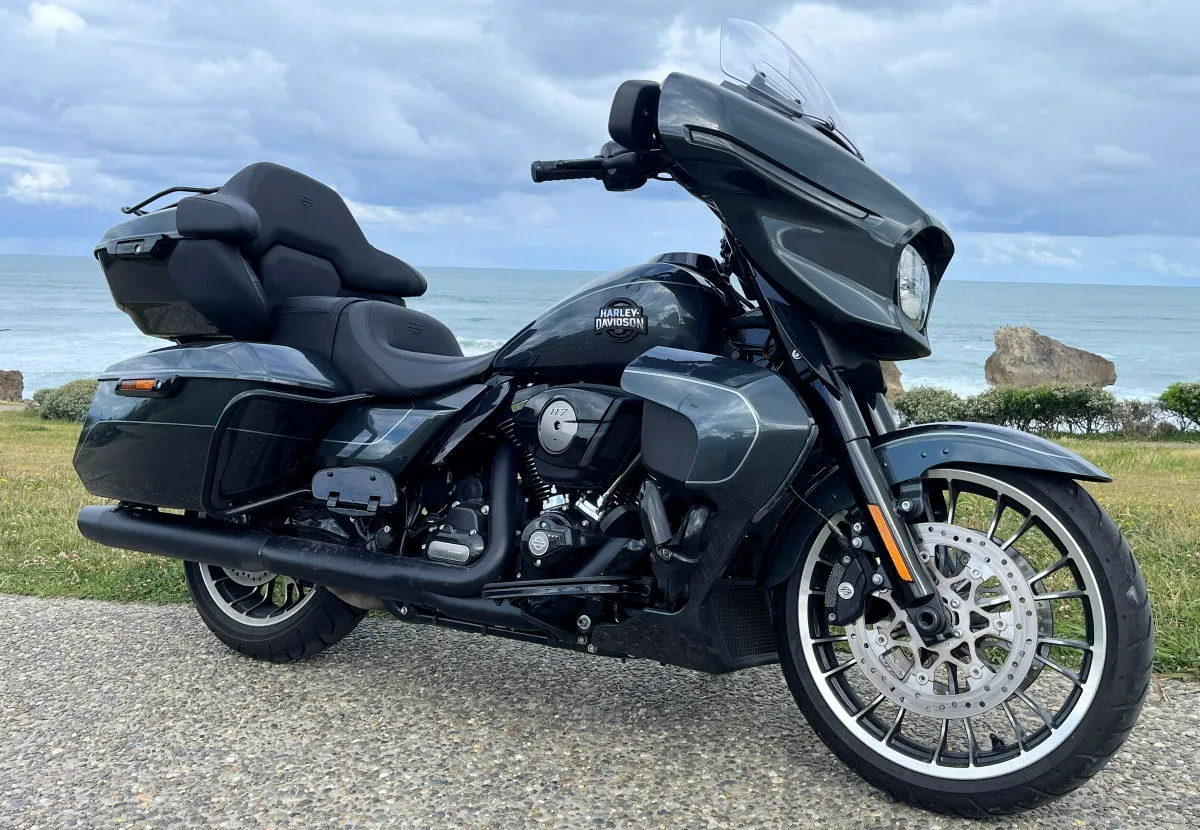
What a presence! Whether among fans or critics, this massive Harley touring bike draws admiring glances. Is it the brand name, the look, or the sheer size? Whatever the reason, people turn to look at it, and everyone has something to say—never dismissive, always thought-provoking.
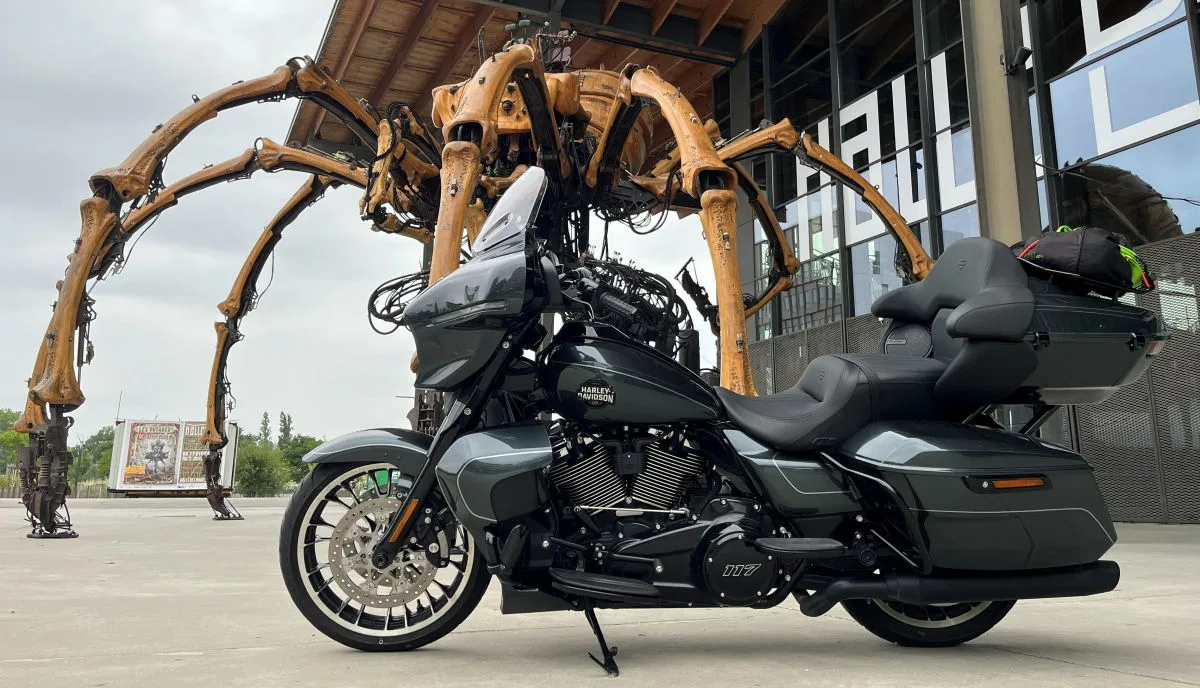
It’s the perfect opportunity to take a closer look, scrutinizing it up close and noting the overall level of quality. As always with Harley-Davidson, the imposing parts and that “solid, heavy metal” feel ensure a commanding presence. With a very generous seat, long footpegs, a massive fuel tank, the engine exposed like a heart without a ribcage, and its transatlantic-class array of features, the Street Glide Limited exudes incredible character and promises royal comfort.
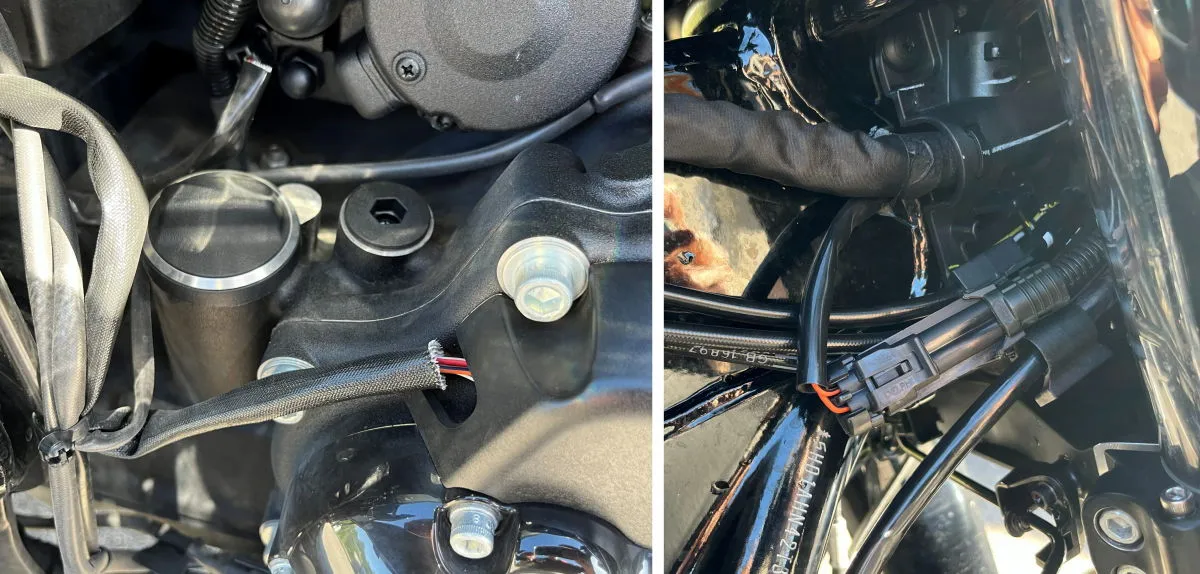
But at this price point and level of sophistication, one is left speechless by certain electrical connections—especially when both the handlebars and the instrument panel boast such impeccable design.
Storage everywhere
(4/5)
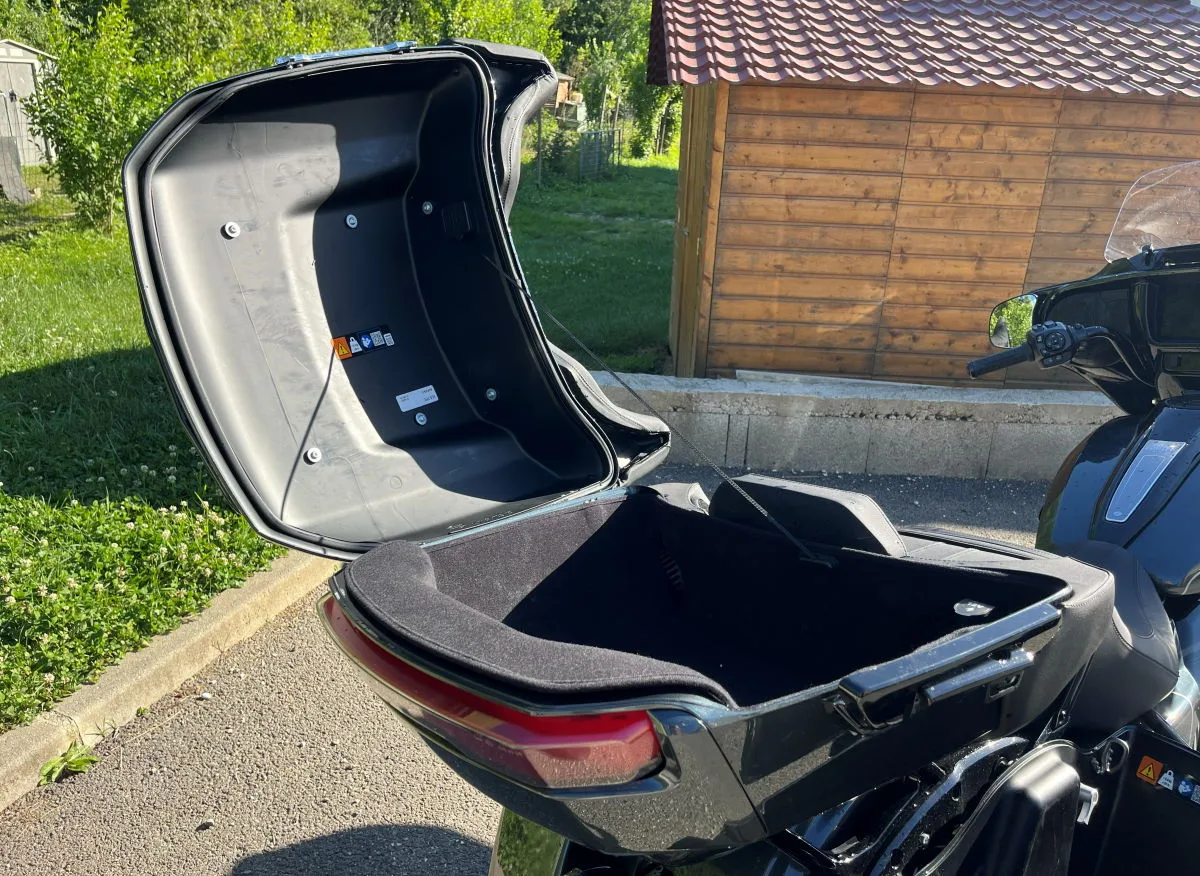
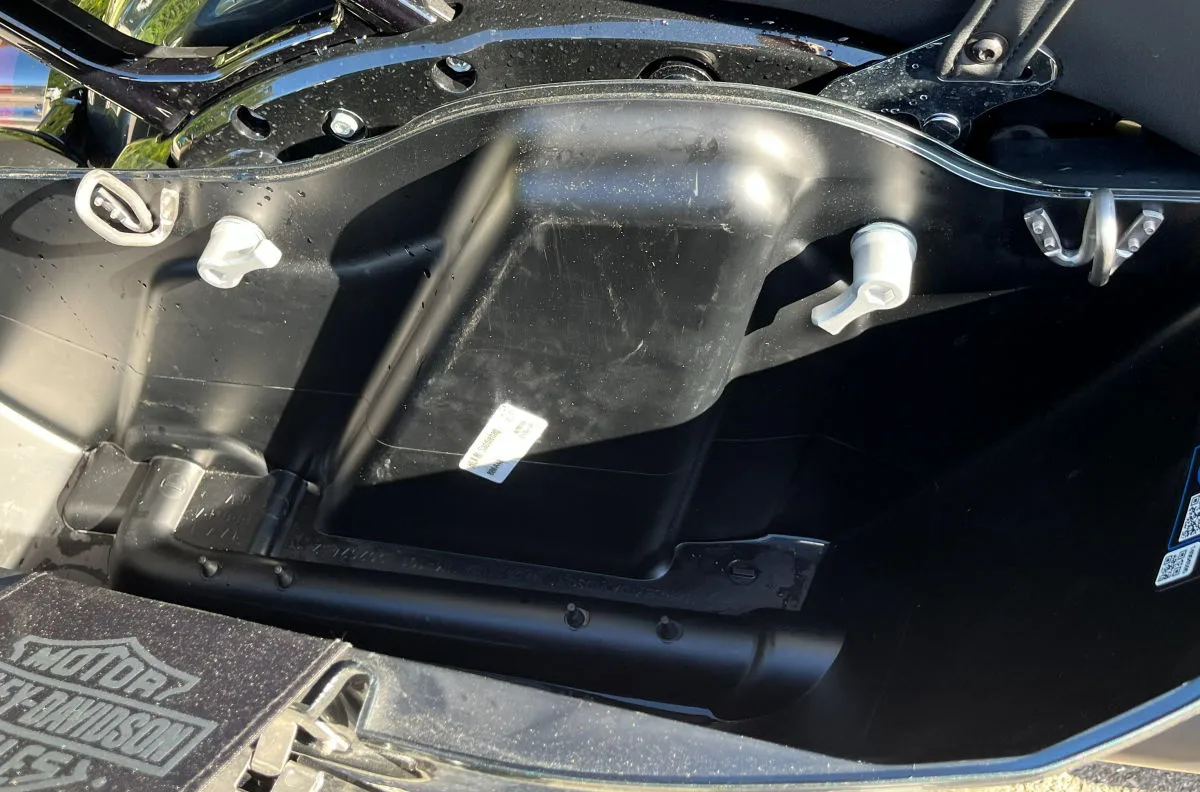
The storage is just as paradoxical. The top case is huge, with a high-quality padded interior, a 12V outlet, and enough room to fit a large bag or two helmets plus a few odds and ends. Below that, the side cases have a much less sophisticated opening/closing system, a rough interior marred by mounting brackets (for the top case and bike mounts), and a capacity that’s really only useful for a few items of clothing (a pair of pants and a jacket) or tools and a backpack. In short, a Range Rover trunk up top and Clio-sized pockets down below.
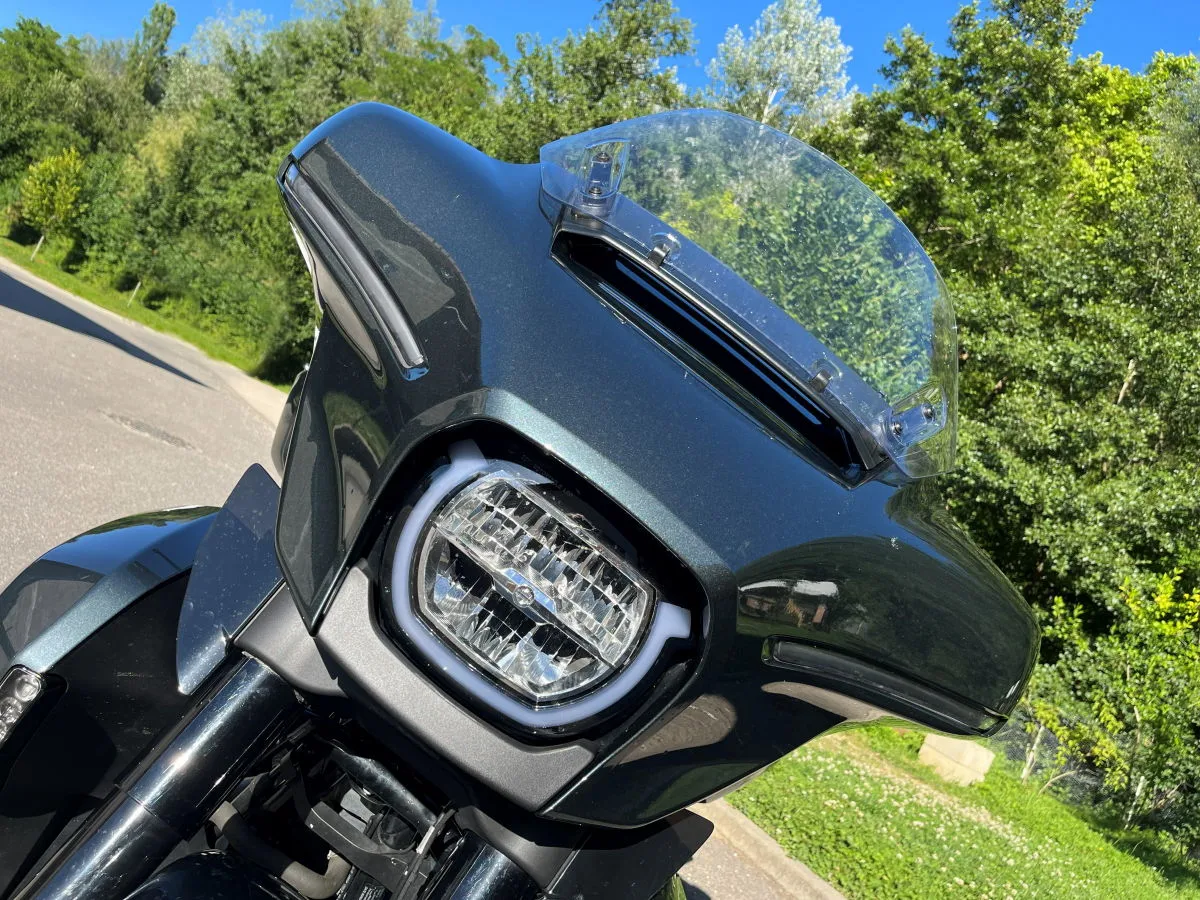
The storage space doesn’t stop there. Each side of the fairing has a small glove compartment that easily fits a pair of gloves, or even a sausage and a big chunk of bread. A small flap lets you direct air toward your feet (nice in the summer) or, conversely, protect them from the elements. A major bonus: a very well-placed drawer under the 31-cm screen (a real TV—no Netflix, but it sure looks like it) lets you stash toll tickets, your wallet, a USB drive, a pen, and your phone.
Oh, come to think of it, my phone’s battery is almost dead. Since there’s a USB-C port built in, I’ll be able to charge…… Oh wait, no: it’s a female port. So I’ll have to buy a male-to-male adapter first.
Weight training session
(1/5)
7 a.m. The bike is loaded up—and then some! The rooster has just crowed for the third time in four hours; the route is set, and my phone is paired with the Street—a quick and easy process; some brands could take a cue from this.
Getting out of the garage is the first tricky part. Very wide and very bulky, the Street Glide Limited is also very heavy, weighing over 400 kg to maneuver. It’s a challenge even for giants, especially in reverse, where every movement is deliberate, delicate, and always teetering on the edge of anxiety. Because the bike quickly makes you feel that the swingarm is just waiting to tip over to whichever side it’s leaning toward. So, here are three key points to keep in mind right away:
- Always park the motorcycle in a way that allows for an immediate start, without any maneuvering
- If it tips over, it’s impossible to catch it. The two sets of crash bars will save the bike, but not you.
- Maneuvering it at very low speeds—such as when moving around a courtyard or similar area—is as easy as pushing a wheelbarrow filled to the brim with fresh concrete and steered by a scooter wheel.
A Harley engine that’s full of life yet so humble in the face of its legend
Engine (4/5)
Guaranteed to send chills down the spines of the uninitiated. You absolutely must get going. And then shift into an emotion that’s gripping every single time: the engine’s awakening. The strain on the starter is palpable, then the twin roars to life with a rumble of power and pride, shaking the entire bike and its immediate surroundings. The storm rises with it, and so do the spasms. It settles back into idle, where the vibrations are as intense as you could hope for.
Your foot must then reach far for the kickstand and prepare to shift into first gear. The gear selector is far away—very far away, in fact—and engaging the gear is accompanied by a virile, long crank. On a Japanese transmission, a noise like that would mean a broken fork or bent gears. On an American bike, it’s the ruggedness of a bike full of character, a drivetrain for the strong, and a foot that has to be as tough as the leather of the boot. Your right calf will also need to be brave, quickly overwhelmed by the heat of the engine.
But the struggle ends there. As you release the clutch, the Big Block displays an unexpected suppleness—almost gentle and docile. Its vibrations fade away, and the bike takes to the road like an airplane relieved when its wings catch the wind’s lift. Once in motion, it waits only to settle comfortably onto the road, letting you feel it through its nonchalance—polished by a particularly palpable breath—though its rumbling and squabbling have clearly been tamed by modern standards. Time has rounded out the lines and smoothed away the rough edges.
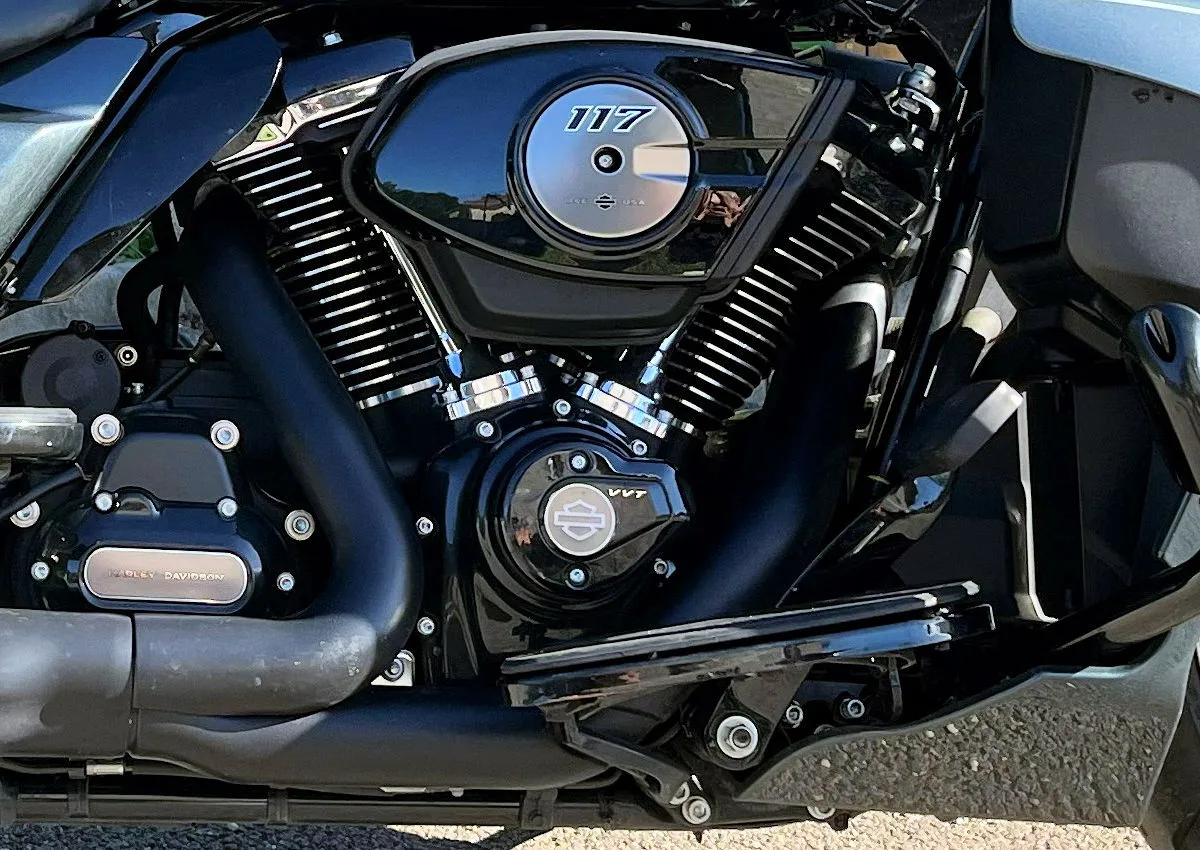
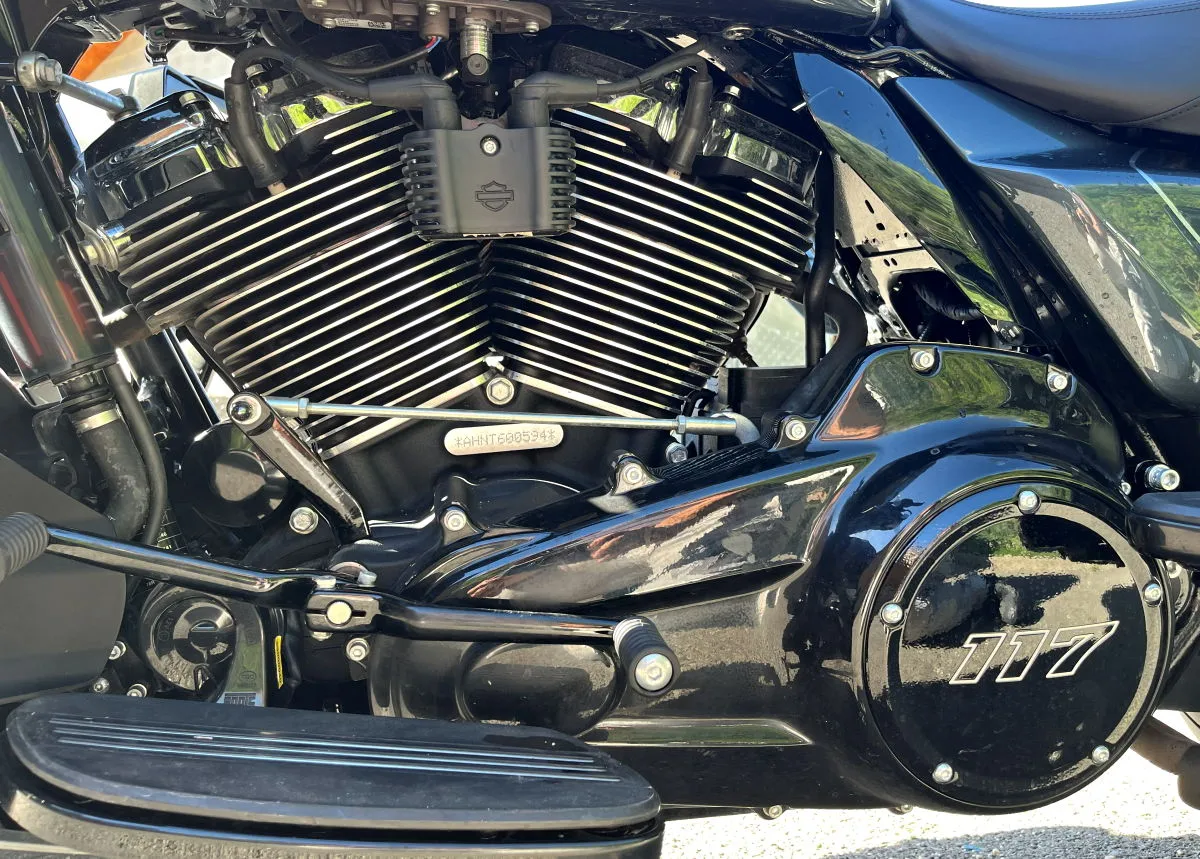
Proud of its soul, the Harley engine enters a new dimension. Full-bodied throughout, it also displays a livelier responsiveness at high RPMs than the smaller-displacement versions. The VVT must also have something to do with it. But its behavior is smoother, more refined, and less temperamental than before. Less turbulent than its history but still with a very distinct personality. The pistons seem to weigh 10 kilos each, pushing heartily on a crankshaft bathed in margarine.
The twin is like a massive pickaxe, cracking open the ground—or in this case, the road—churning it up and turning it over, just like in a Zola novel. It loves to shake up every clod of earth, every meter, every pulse. You get the sense that it would happily spend the day tilling a vegetable garden—just as it can just as easily tear through a hectare at breakneck speed, barely breaking a sweat in the process. But you can tell that this is where it’s happiest.
Let the road steep
(4/5)
A “Grand American Touring” isn’t as easy to get the hang of as a Honda, which you can figure out in 500 meters. It takes time, patience, and a very particular vision of travel to truly grasp its spirit. Kilometers don’t matter; hours do. Because I had to wait until I tasted the salty sea spray before I fully understood and accepted ITS way of riding, of cruising. That last word is the most important one.
The massive M8 twin never runs out of steam. So maintaining any cruising speed is a breeze for it. Settled at 130 km/h on the highway, it purrs and leaves it to the wind to disturb the tranquility. But that’s not where the bike truly comes into its own.
It can go faster (up to 179 km/h in Germany, electronically limited), but it doesn’t see the point—and neither does the rider.
Let’s be more reasonable, set the cruise control to 110 km/h, and see how it feels. That’s already better. The bike seems to thrive at this pace, leaving more room for the music and the asphalt rushing by. But this still isn’t where the bike truly comes into its own.
So what should we do? Change routes, head out onto a highway, tackle winding roads and twisting stretches of asphalt? No, you have to listen to it, calm it down, let it win you over… and slow down. Forget the speedometer; let the engine’s revs take over your senses, and within a few leagues, it will truly reveal itself.
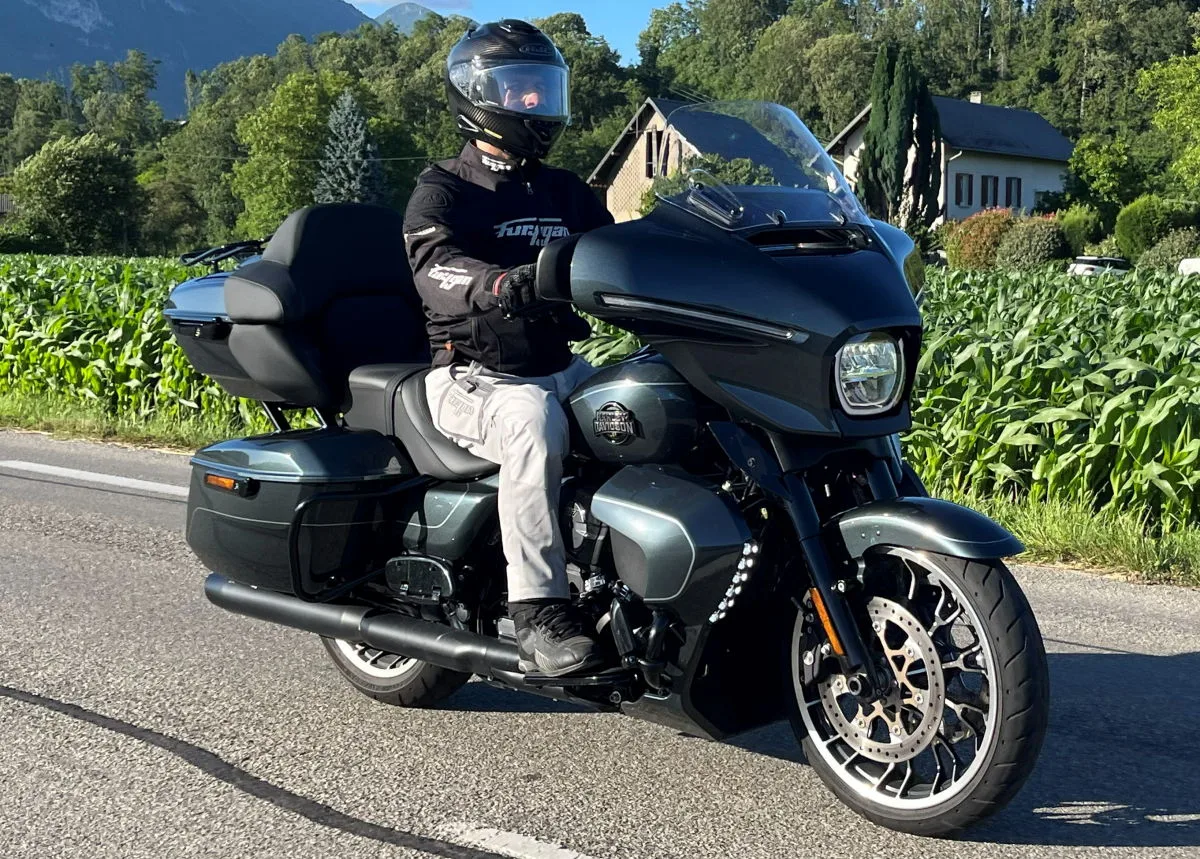
Everything comes together between 80 and 90 km/h. With the engine speed below 2,000 rpm, the engine hums along with a nonchalant, almost placid rumble that evokes a deep sense of patience and hard work from the heart of America. Like a stagecoach that doesn’t want to kick up dust so as not to obscure the landscape from the travelers’ view. At this speed, most observers would judge it to be dragging its feet, plodding along. Not this one, though—it’s at the height of its comfort. It takes the time to live, to roll along, to savor the scent of lavender as much as the coolness before a summer storm. It’s impossible to understand until it has shown it to you.
The engine’s vibrations are like those of a big sleeping cat, perfectly complementing the cruising that has become second nature. That is her life, her purpose, her symbiotic well-being: a good playlist, the landscape rolling by like in a Western, time crashing against the windshield, and nothing else on earth but the road, the motorcycle, and the rider. The Street is only happy when it has brought this trio together.
That’s the most beautiful aspect of the picture. Because this massive Harley is built for exactly that. It needs wide-open spaces, completely unobstructed. Not necessarily eight-lane highways. A simple country road will do, but it has to be very long, with few other vehicles. The space ahead of her must be vast—that is, free of obstacles (cars, skateboards, speed bumps, traffic lights, villages, cities, mountains, etc.). Take it anywhere else, and it’ll start to sulk, with the same bitterness as its transmission.
Stay away from cities
Agility (2/5)
Inevitably, the city made its way into the travel log.
No big deal, we tell ourselves as we head back in…
“Help!” we swear, regretting it!
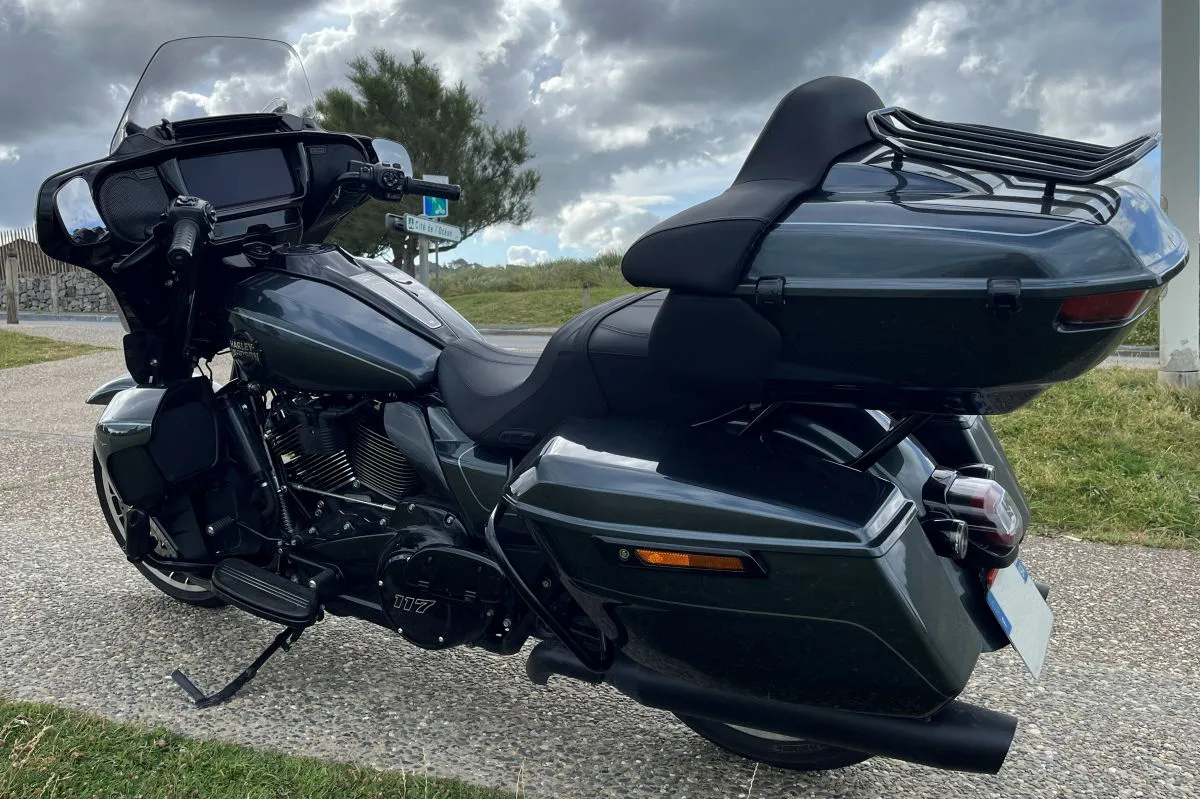
Ms. Glide is as at home as an aircraft carrier in the Panama Canal. Red lights, stop signs, crosswalks, roundabouts, and small intersections are all opportunities to put your strength and balance to the test. You can’t let yourself be caught off guard—leaning too far to one side will be fatal, and emergency braking is out of the question. With so many kilos on your back, the motorcycle will inevitably come to a stop farther than you think. On the other hand, given its steel frame and weight, it’s almost certain that the car will end up on its roof in the event of a collision.
Train braking
Freinage (3/5)
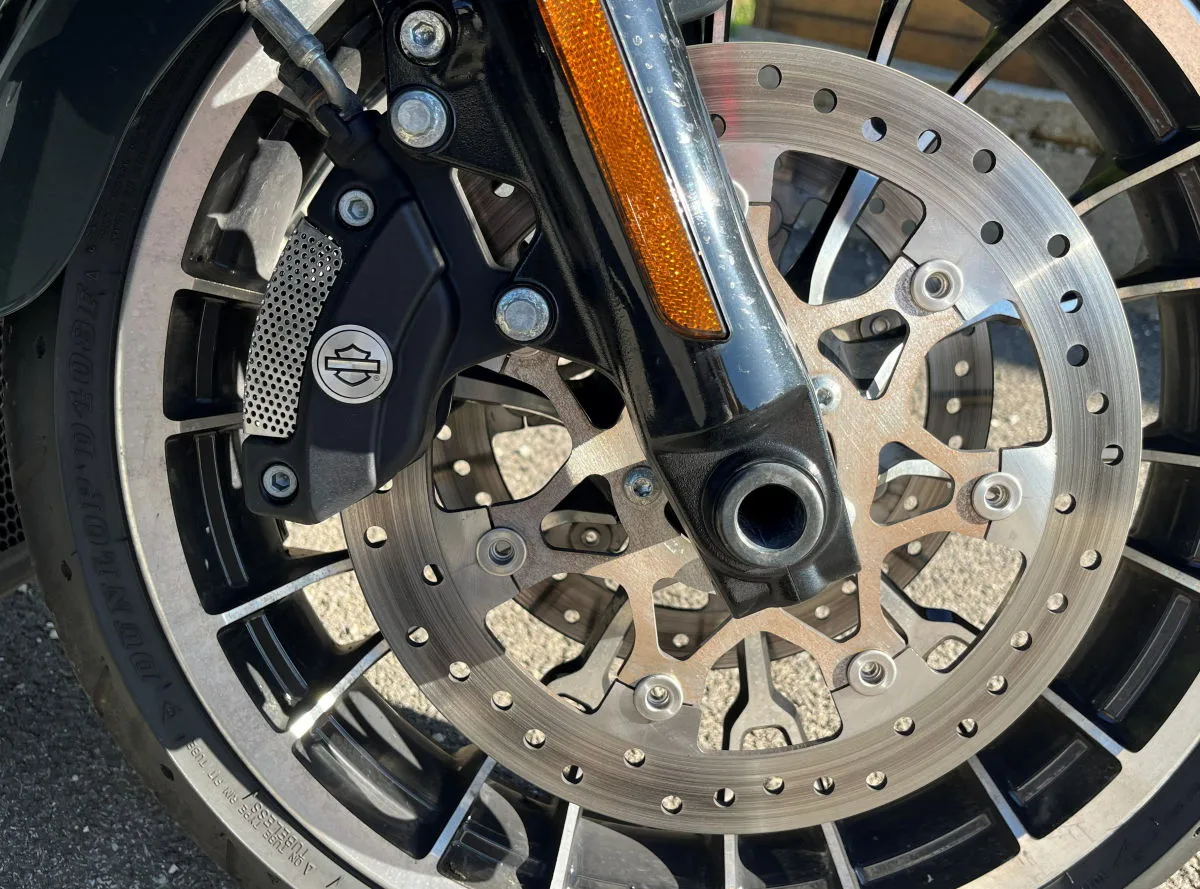
Just to be clear, I’m not saying the Harley doesn’t brake. On the contrary, it brakes very well. The Brembo brakes do an excellent job, offering plenty of power and great modulation. But the bike’s weight is too much for them to handle. So, I recommend that you get into the habit of using the rear brake right away. It’s more effective and consistent, and it’ll keep your right hand from getting stiff—which can happen quickly.
Finally, the clutch is so stiff that your left hand will be in agony until you’re back on the highway. Back in the day, people would have called this a “man’s bike.” Today, let’s just say it takes some real grip. And both of them!!!
A cocoon with room for improvement
(3/5)
A morning in Corrèze offers some interesting conditions: few cars, a leisurely ride, peaceful, rolling forest landscapes, and plenty of town signs hung upside down (a trend of highly questionable mental acumen). Above all, it’s cool out. It’s the perfect opportunity to test the Glide’s thermal comfort. The heated seat is a little slice of heaven—easy to turn on and providing very pleasant warmth.
It’s a different story with the handlebar grips. Clearly a bit worn out (did some rough rider go through here before me?), turning them on with the side button is a real struggle. Fortunately, they can also be activated via a menu on the dashboard. But they get too hot even on the lowest setting, and the three available levels offer virtually no difference in power. An experience worth trying again on another model before drawing any conclusions.
The most surprising part isn’t that, though. I’m riding and my knees are cold… Because despite its imposing fairing, its tanker-like front end, and its intimidating width, the Harley lets a draft blow right through at knee level. The result is even more striking in the rain. The protection is such that almost the entire rider stays dry, except for the helmet (no big deal) and the upper part of the knee. Astonishing—an NT 1100 that costs a third as much turns out to be more effective.
Let’s get back to the positives with the small vent under the windshield. It’s smarter than you’d think. Its opening is adjustable, not so much to control airflow but to reduce turbulence around the helmet. It’s obvious and effective. Yet another area where Harley manages to surprise us. Sophisticated aerodynamics on one hand and a brake pedal that could serve as a boat anchor on the other—that’s quite something; even more so on the same motorcycle.
A Boeing would be jealous
(4/5)
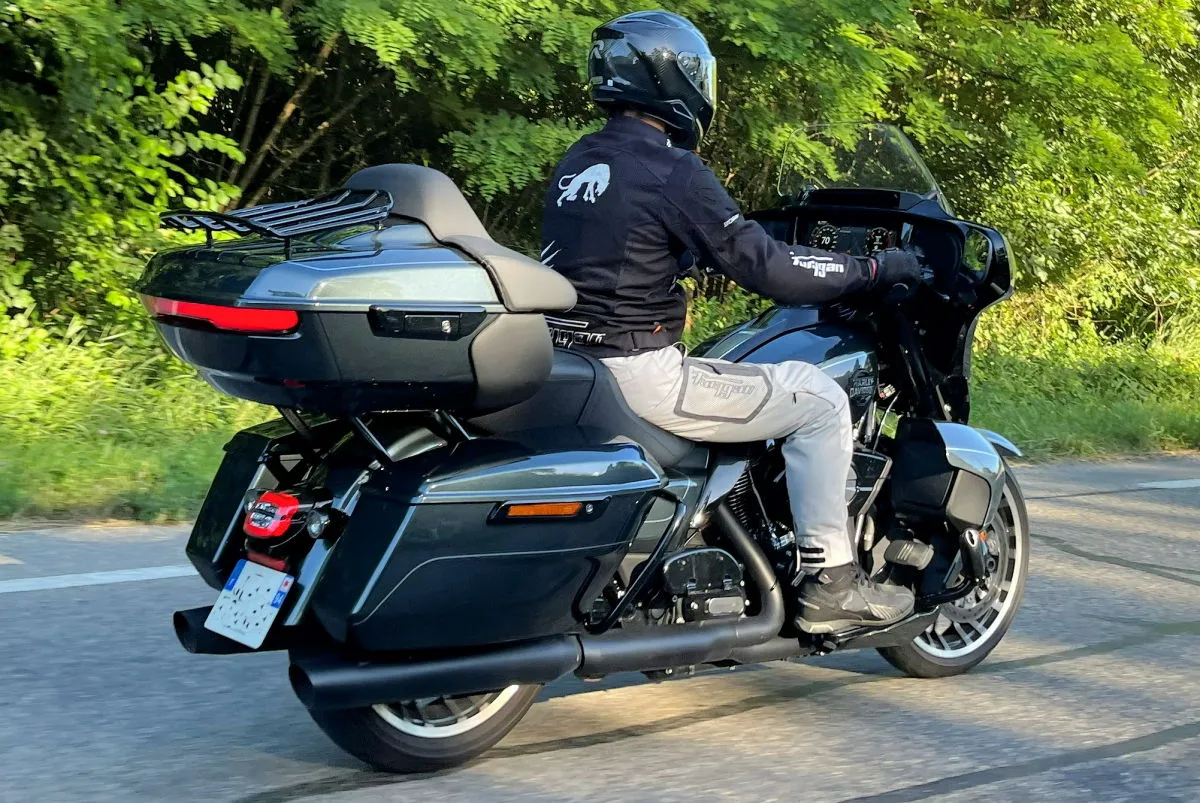
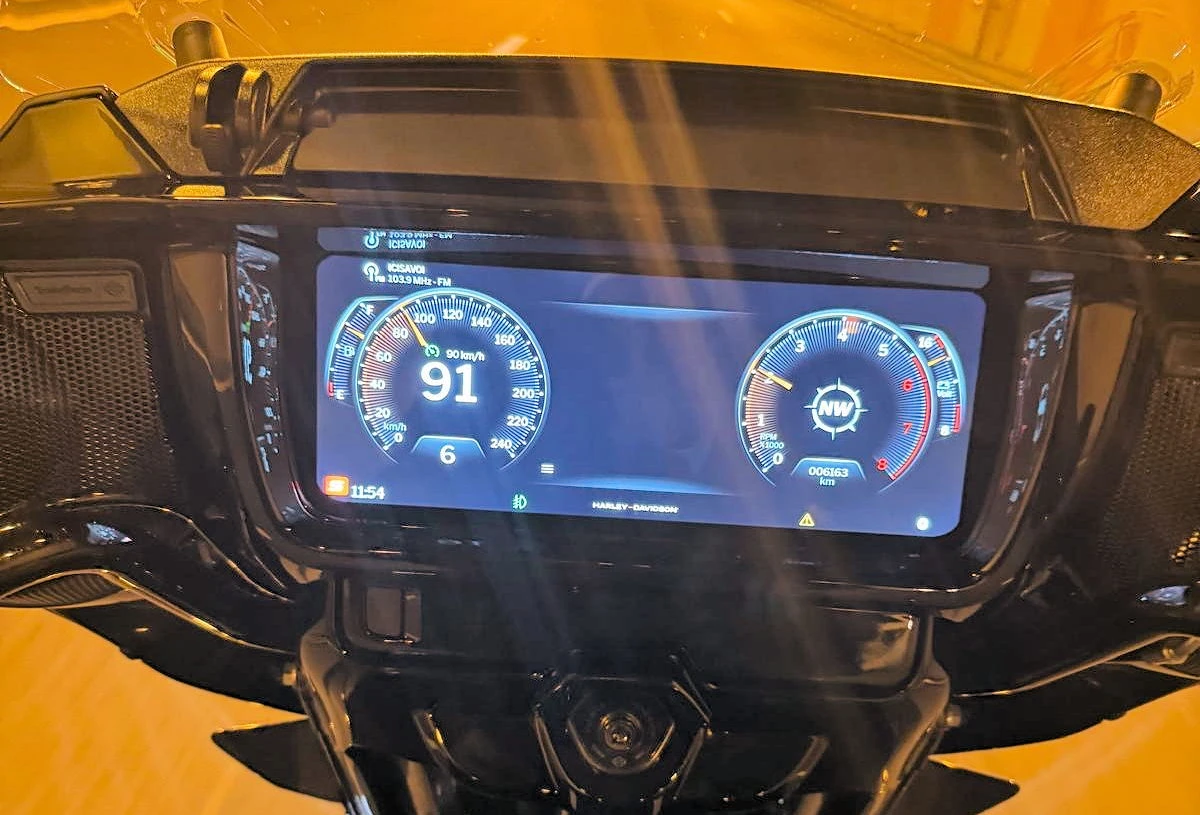
Milwaukee’s latest models have introduced new control panels. With so many functions and systems to manage, the number of buttons on the controls has multiplied. At first glance, your thumbs might already feel overwhelmed. Except that Harley has done a pretty good job with the menus, shortcuts, and navigation in this interface worthy of a German sedan. It obviously takes some time to get used to it, but once you do, the controls become almost intuitive. We’ve seen better at times, but we’ve very often seen worse.
The tech and digital features are impressive, high-quality, incredibly user-friendly, and frankly well-executed. But it’s not immune to glitches. During this short 2,200-km loop, the radio froze until we stopped for a meal, the screen went black twice while riding, and the GPS went into a coma for a few minutes… Nothing serious or problematic; but what if the engine ECU or the interconnected braking system did the same thing?!
And then, it takes forever for the electronics to boot up. While you can start the engine as soon as you turn the ignition on, you have to wait a full minute before the radio comes on—and even longer to get the GPS navigation up and running. Next, searching for an address takes quite a while, especially when you’re used to Waze or Maps. On the other hand, once the destination is found, everything else is fast, smooth, and route recalibration responds quickly.
Beyond the infotainment system, the active safety features are on par with those of a Japanese car. Some of you just choked on that. You’re going to have to get used to it: the days of analog gauges, driving by feel, and listening to the engine’s visceral roar are over. Now, it communicates first and foremost with traction control and driving modes. There are four modes on board, at least two of which we’d consider clandestine. The “Rain” mode puts you in the mood of a sloth on Tranxen. Even in challenging weather conditions, it was hardly ever called upon.
Switching to “Road” mode, the car feels a bit more responsive but still quite smooth, very cruising-oriented, and linear.
In any case, we quickly switch to “Sport” mode to take advantage of sharper acceleration for passing… and we keep it on for the rest of the day. With this mode, the engine really shows what it’s capable of, with torque that makes you puff out your chest at low and mid-range RPMs and never seems to falter.
A customizable mode lets you fine-tune the driving character to your liking—which ends up feeling just like Sport Mode; so, we never actually used it.
All of this is designed for driving in a variety of conditions, along with an inertial measurement unit that informs the driver-assistance systems of the turn angle, electronically linked braking, residual torque control, and a few comfort features such as tire pressure monitoring and hill-start assist. All these systems work away without ever drawing attention to themselves; which, ironically, leads to the feeling of “what’s the point of all this stuff?” But would I have driven so calmly without all these co-pilots, given the power of this massive engine and such a heavy vehicle?
Not that thirsty
(5/5)
Did I mention the displacement of this Milwaukee-Eight 117 ci? Exactly 1923 cm3. That’s almost the displacement and power of a late-’90s TDI diesel engine. I mean, an engine that huge must guzzle gas like crazy, right?! Well, actually, not really. Average fuel consumption came in at 4.9 liters per 100. And that’s with 80% of the driving done in Sport mode.
The Cruise in Sight
Comfort (4/5)
Whether it’s after 10 km or 1,000 km, the thrill of riding this Harley can vary and fluctuate—except for the passenger. The passenger is treated like royalty, as if sitting in a Chevrolet recliner. With their back resting against the large backrest, their hips cradled by the excellent Rockford Fosgate sound system, and in a perfectly relaxed position—less engaged than the rider’s—the passenger can, at their leisure, take in the scenery, take a nap, or read the second volume of Aristotle’s Poetics. Without a doubt, they’ll have the best seat on board.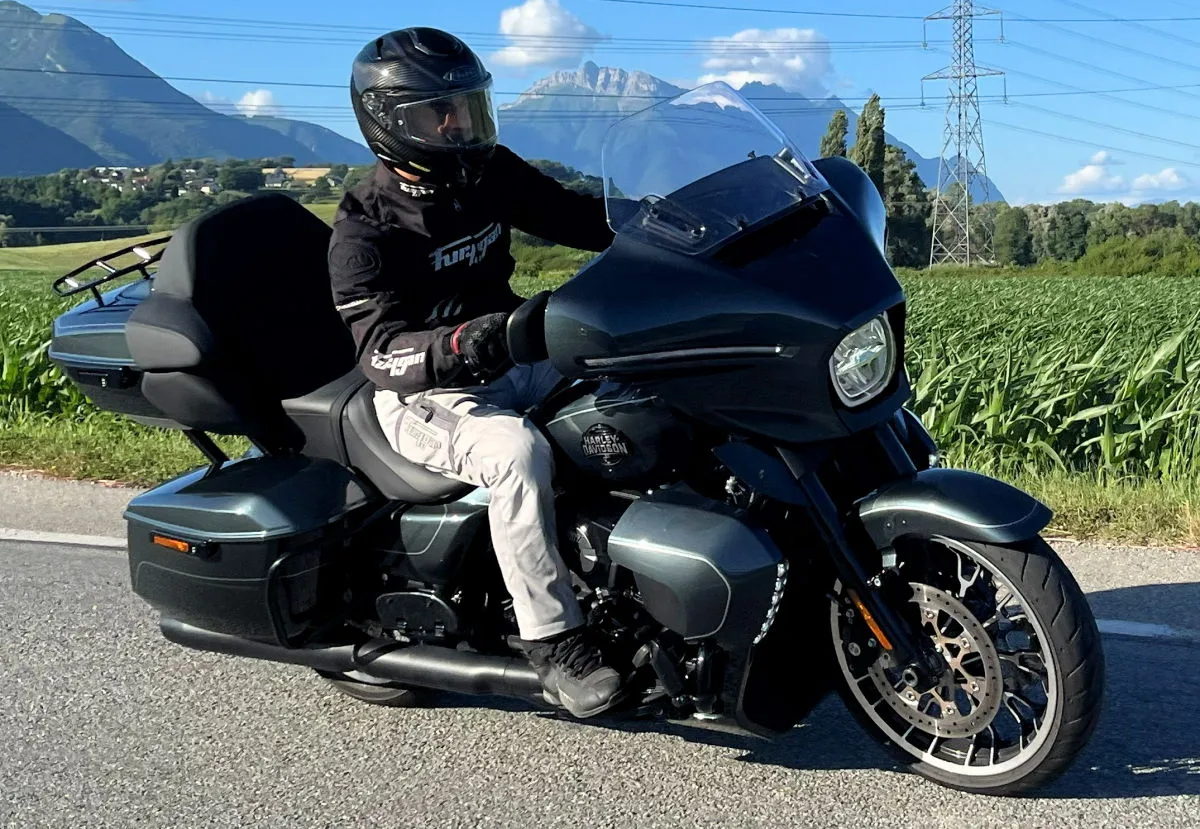
The crew will have plenty of time to appreciate the Showa components, tasked with holding and guiding this vehicle. The suspension works rather well, with convincing and responsive damping. It truly prioritizes comfort, but the short shock absorber travel prevents it from being truly effective. It’s especially on small bumps that the suspension is overwhelmed. Here, too, the Street reminds us that it only dances on wide, open roads—the kind where the asphalt doesn’t wrinkle.
A journey of two thousand kilometers on a Harley-Davidson Street Glide Limited didn’t feel like a road trip but rather an initiation. An immersion into a world where the rider and the motorcycle must patiently understand one another so that it can subtly reveal its charm. A lady you have to come to terms with and find new ways of navigating. She’s heavy, not easy to get along with, hates the city, gets too hot, rumbles too gently, costs an arm and a leg, and gives you cold sweats. And yet, she embodies that feeling that has turned passions into legend: the American dream.
Published on 6/19/26
by Greg

by Greg
Greg is the founder of Motoplanete—a website created in 2001 to share his passion with his friends and showcase as many motorcycle models as possible to his readers. Self-taught and a jack-of-all-trades, his discovery of the world of motorcycles led him to work as a photographer, rider, team manager, web developer, graphic designer, editorial assistant, and editor-in-chief.
Highlights
- An exhilarating driving experience
- A very rewarding motorcycle
- Plenty of storage space
Weak points
- Heavy and intimidating
- Manly Commands
- Excessive price
Gallery of our 1920 Street Glide Limited FLHXL test drive
 helmet
 Gloves
 jacket
 braking
 Chain kit
 Oils
Oils Find an intercom
 Parts
Parts Luggage
 Tires
TiresKey facts Harley-Davidson 1920 Street Glide Limited FLHXL (2026) : What you need to know before you buy
Model sold in 2026

Performance
- Max speed : over 180 km/h (111.80 mph)
- Average fuel consumption : 5.90 liters/100km (0.40 mpg)
-
Estimated range
: 385 km (239 miles)
Calculated range until tank is empty, not verified.
Prices
| Basic version | |
|---|---|
 France France |
35,500€
|
Motorcycle specifications
Harley-Davidson 1920 Street Glide Limited FLHXL 2026
Let the horizon come

Bikers' reviews Leave a review