
Motorcycle specifications Kawasaki Z 7 Hybrid 2025 Walking vers le futur
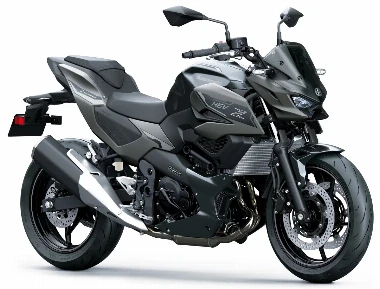

presentation of the Z 7 Hybrid 2025
Kawasaki loves roadster-sports bike duos. You'll find them all over the range: Z 650 / Ninja 650 - Z 500 / Ninja 500 - Z H2 / ex-Ninja H2 - Z e-1 / Ninja e-1 - Z 125 / Ninja 125. Two riding philosophies on the same base. The same applies to the hybrid sector, where Akashi is exploring the first horizons. The Z 7 Hybrid offers high handlebars and two hearts underneath.
This is the first roadster from a major dual-motor manufacturer. While the idea has been around for a long time in cars, developing it on a motorcycle is much more complicated. You don't have a lot of room for two types of engine, an imposing battery and a fuel tank! But between the underbody and the trunk of a car, there's no shortage of dm3. The green team worked hard to achieve this highly technical assembly.
First, they designed a Z500-style tubular steel frame, with additional structural reinforcements around the top of the engine. Then fit in a 451 cm3 twin-cylinder, an electric motor above the (robotized) gearbox, a 13 kg 48V battery, an inverter, a converter to send 12V to the on-board system, a few thick cables and the algorithm to make it all work together. But not all the time: the Z 7 Hybrid can be driven in many different ways.
It's like Driving Modes, except that the bike mixes technologies according to need. - In the Eco configuration, the bike starts out electrically, then automatically switches to internal combustion after 2,000 rpm. The rider can choose between manual or automatic transmission. And to save fuel, the engines go to sleep when the bike is stopped.
- With EV Mode, it's all electric. No noise, no pollution, the best! But limited. Range is just 12 km, and top speed is reduced.
- Walk Mode is designed for short maneuvers. It's a smart idea, allowing you to move along at a leisurely 3 km/h at the touch of a button. Need to reverse? No problem, the Z7 can also do so at 2 km/h.
- Finally, Sport Mode unleashes the power of the bike. The twin-cylinder engine takes care of its 59 hp and is ready to be reinforced by the electric motor at any moment. One press of the thumb on the button next to the gas pedal and the Z will give it all it's got.
The manufacturer claims that, with e-boost, this Z can outperform a ZX-10R on a standing start... under certain conditions. Have they been smoking at Kawa!?! Maybe not. Electrics are known for their immediate torque. Over a few dozen meters, it's possible they'll hold their own. But after..... especially as the e-boost only works for 5 seconds. Very useful for overtaking, but not for playing Fast & Furious.
Let's look at some figures: with this system, maximum power reaches 69 hp at 10,500 rpm and torque peaks at 6.2 mkg.... At just 2,800 rpm.

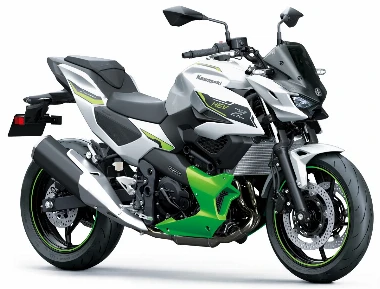
i don't need to tell you how much work has gone into the electronics, the clutch, the combination of motors and all the rest of it, to achieve a seamless driving experience. You might have guessed it from the styling of this roadster. Its protruding lines punctuate a technicality and complexity that's skin-deep. Its size would make it easy to pass off as a 1000, with an aggressiveness relativized by its architectural genetics. The Z is a hybrid in both form and propulsion.
It's almost astonishing that its chassis is much wiser than its innards. Suspension, wheels and swingarm are in line with those of the Z 400 / Z 500. A standard 41 mm fork, a monoshock connected to a Uni Trak linkage repositioned because of the battery, almost no adjustments (just rear preload), 300 mm discs with double-piston calipers, a 250 mm rear disc - simple solutions. Other data will surprise you. The 1524 mm wheelbase is slightly shorter than that of the Ninja 7 Hybrid sibling. This should make it a little more agile. Agility is relative, as these are the highest values in the Kawasaki range. Even a Versys 1000 has a shorter wheelbase. You'll have to go back to the VN 1700 to find a bigger gap.
The weight is also significant. 226 kg, about half a quintal more than a Z 650. Outch, not easy for a machine in this segment. But there was no choice: we had to fit a lot of gear in the engine room. And when you weigh up the ratio of technology to weight, you realize that Kawasaki has done a pretty good job. Not to mention that it's the first of its kind.

the presence of a color TFT screen blends in perfectly with this machine of the near future. The usual Kawa interface has been adapted for hybridization, with two "fuel" gauges, evolving signage according to Modes, all the necessary information and Bluetooth connectivity for a symbiotic relationship between the smartphone and the Rideology app.
Let's take a look at a few of the Z 7 Hybrid's key features, to get a quick idea of its hp.
- 43.5 kW internal combustion engine and 9 kW electric motor
- Robotized gearbox
- Choice of automatic or manual transmission
- Left-hand gearshift
- Start & Stop system
- Starter-alternator
- Walk mode for low-speed forward or reverse operation
- Fully electric EV mode
- ALPF system for engaging first gear after a stop
- Part-cycle of a 500
- Rechargeable battery on the move
- 4.3" TFT instrumentation
The Kawasaki Z7 Hybrid, and its sporty Ninja 7 alter ego, break new ground. A dual engine, performance of 650, fuel consumption of 250, an unprecedented driving experience - a challenge for everyone. Inevitably, it has to take to the water with a few knuckles to grind: weight, a hefty price tag, and a double-edged curiosity. Obstacles that all pioneers must overcome.
M.B - Manufacturer's photos
by Greg

Greg is the founder of Motoplanete—a website created in 2001 to share his passion with his friends and showcase as many motorcycle models as possible to his readers. Self-taught and a jack-of-all-trades, his discovery of the world of motorcycles led him to work as a photographer, rider, team manager, web developer, graphic designer, editorial assistant, and editor-in-chief.
 Share
Share
Key facts Kawasaki Z 7 Hybrid (2025) : What you need to know before you buy
Prices
| Basic version | |
|---|---|
 France France |
8,999€
|

Performance
- Max speed : approximately 180 km/h (111.80 mph)
- Average fuel consumption : 3.70 liters/100km (0.64 mpg)
-
Estimated range
: 378 km (235 miles)
Calculated range until tank is empty, not verified.
Specifications Kawasaki Z 7 Hybrid 2025
- Chassis
- Two-seater saddle
- Frame : Tubular steel mesh
- Fuel capacity : 14 liters (3.70 US gallons)
- Seat height : 795 mm (31.30 in)
- Length : 2,133 mm (83.98 in)
- Width : 787 mm (30.98 in)
- Min height : 1,067 mm (42.01 in)
-
Min. ground clearance : 130 mm (5.12 in)
- Wheelbase : 1,524 mm (60 in)
- Weight when fully loaded : 226 kg (498 lb)
- Front axle
- Telescopic fork Ø 41 mm, Wheel travel : 120 mm (4.72 in)
- Angle de chasse : 25 °
- Braking 2 Nissin discs Ø 300 mm (11.81 in), 2-piston caliper
- Front tire (Tubeless) : 120 / 70 - 17 → Order this type of tire
- Transmission
- 6 stage gearbox , automatic
- Secondary by chain
- Rear axle
- Mono-damper, Wheel travel : 114 mm (4.49 in)
- Preload adjustment
- Braking 1 Nissin disc Ø 250 mm (9.84 in), single-piston caliper
- Rear tire (Tubeless) : 160 / 60 - 17 → Order this type of tire
- Motor
- two-cylinder online , 4 strokes
- Injection Ø 36 mm + 48V Li-ion battery
- Cooling system : liquid
- 2 ACT
- 4 valves per cylinder
- 451 cc
- 59.16 ch (58.30 hp)
- 6.10 mkg to 2,800 rpm
- Power-to-Weight Ratio : approx. 3.66 kg/ch
- Torque-to-Weight Ratio : approx. 34.99 kg/mkg
- Compression : 11.7 : 1
- Starting system : electric
- CO² emissions: 86 g/km
- Standard equipment
- Brake assist : ABS
- Number of riding modes : 3
- TFT Full-Colour screen size: 10.92 cm (4.3 inches)
- Aluminium rims
- Gear indicator
- Automatic transmission
- Bluetooth
- Reverse gear
- Practical information
Essentials
 Motoblouz
 LaBécanerie


Gallery


Models
2026
2025
2024


Used
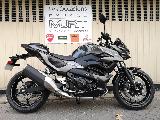
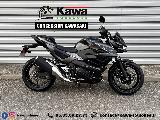
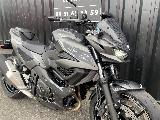
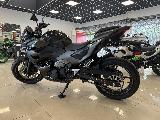
Find this used Z 7 Hybrid on MotoPlanete

Compare the Z 7 Hybrid to its competitors
FAQ Your frequently asked questions about the Z 7 Hybrid 2025
- What is the power of the Z 7 Hybrid?
-
The Z 7 Hybrid 2025 develops a power of 59.16 ch (58.30 hp)
- What is the torque of the Z 7 Hybrid?
-
The maximum torque of the Z 7 Hybrid 2025 is 6.10 mkg to 2,800 rpm.
- What is the maximum speed of the Z 7 Hybrid?
-
The Z 7 Hybrid 2025 is capable of reaching a top speed of approximately 180 km/h (111.80 mph) on the track.
- What is the weight of the Z 7 Hybrid?
-
The Z 7 Hybrid 2025 has a a weight when fully loaded of 226 kg (498 lb).
- What is the fuel consumption of the Z 7 Hybrid?
-
Average fuel consumption is estimated at 3.70 l/100km (0.64 mpg) according to the WMTC cycle.
- QWhat is the seat height of the Z 7 Hybrid?
-
To ensure good accessibility, the Z 7 Hybrid 2025 offers a minimum seat height of 795 mm (31.30 in).
- What is the price of the Z 7 Hybrid?
-
The price of the Z 7 Hybrid 2025 is 8,999€ in France
- What size tires should I put on my Z 7 Hybrid?
-
The standard size for a Z 7 Hybrid 2025 is 120 / 70 - 17 for the front, and 160 / 60 - 17 for the rear.
- What colors are available for the Z 7 Hybrid?
-
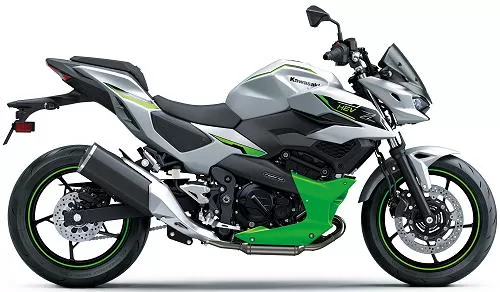
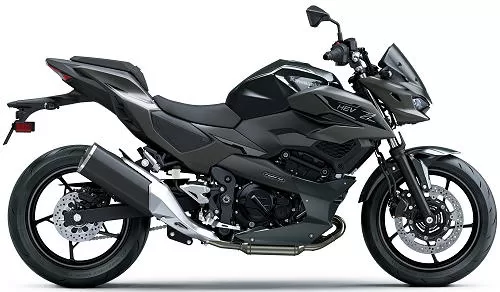
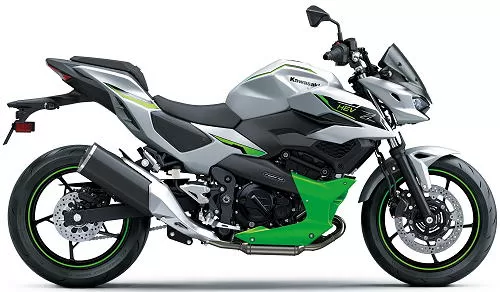
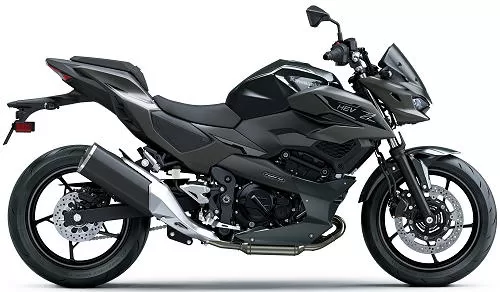
For the 2025 model year, the Z 7 Hybrid is available in several colors: green and grey / black.
- Where can I find high-quality used Z 7 Hybrids?
-
You can find used Z 7 Hybrid at great prices on MotoPlanete, in the section dedicated to them—models from professionals and private sellers, as well as spare parts.
News
-
2026 MXGP of China: Herlings Unbeatable, McLellan Delays the MX2 Title
-
MXGP 2027: Kove and ZXMoto Join the Championship
-
SC Project is working on the 2026 Suzuki GSX-R1000R.
-
2026 MXGP of Turkey: Herlings Crowned World Champion!
-
Moto Guzzi: In Mandello, the historic factory is taking on a new scale.
-
ZXMoto in MXGP 2027: The Hypothesis of an Off-Road Earthquake
-
Superbike - Will 240 ch sport bikes soon be available at dealerships?
-
2 new SC-Project mufflers for the R 12 NineT and G/S.
-
Seiko unveils a watch inspired by the Honda Motocompo.
-
The new motorcycle models of 2026 and the evolutions.

Bikers' reviews Leave a review - 2 reviews