
Motorcycle specifications Kawasaki Z 800 2013 The click of the firing pin


presentation of the Z 800 2013
The Z! Once an icon, now a must-have. Impossible to ignore, it's everywhere: on the streets, between the mountain switchbacks, in the sales charts. And even if its chassis wasn't the best, even if its engine could cough askew against a Street Triple or a GSR, the public has never shunned the Z 750 since its release in 2004.
2013 marks a turning point, both in terms of styling and engine. In this 3rd version, the Z becomes 800, and whips up an aggressiveness that can no longer be contained. A cougar face pursued by flinty shoulders, a body shaped like a ball of nerves, a wild look... Z is born bad, it becomes bad.
The design is a real slap in the face. On the technical front, it's a lot better than we expected, but not as transcendent as we might have imagined. The Z 800 gains improved suspension (at last!) with adjustable rebound and preload, as well as improved braking performance. Brake pads have been increased to 310 mm, and 4-piston calipers have been fitted.
Above all, the 4-leg gains cubic capacity, and not just a little. Ever since Yamaha brought out the FZ8, the standard for mid-size roadsters has gone up a notch. Kawa has overhauled its 4-cylinder engine with new crankcases, a cylinder head with revised external patterns, and above all, a larger bore. Forget its 748 cm3, the boiler wants more availability, and now boasts 806 cm3. This is achieved by increasing the diameter of the combustion chambers from 68.4 to 71 mm.
But that's not all. After all, it's all very well to pump up the engine, but it's even better to fine-tune its internal mechanics. Let's go into a bit more detail, starting with the injection bodies, which have increased in diameter by 2 mm to 34 mm. As the heart is bigger, it needs to breathe better. We give it redesigned intake and exhaust ducts, intake cones of different lengths (short for nos. 1 and 4, long for nos. 2 and 3), and let's keep it simple for the rest: cylinder block now in die-cast aluminum (no longer gravity-fed), electrofuse treatment to remove steel liners, piston height reduced by 7 mm and lightened by 10%, larger oil jets, new timing chain, slightly revised gearbox mechanism, and so on....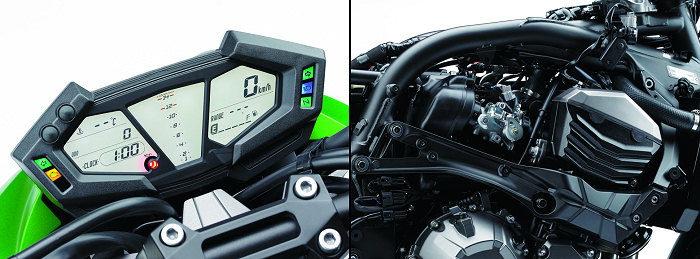
Here's a response to the competition, with more gniak all over the rev range. Everything has been thought out to shift the torque curve towards the low and mid-rpm ranges, while at the same time reinforcing it. And with a shorter final drive, the Z will give its predecessor a run for its money.
Our friends outside France will be able to enjoy even more watts, as the Z 800 delivers 115 horsepower at full throttle and 8.5 mkg. France tempers the effusions with 106 hp and 8.1 mkg, reached at 10,000 and 8,000 rpm respectively.
underneath its exterior, the Z 800 hides what it hasn't changed. The chassis is the same, reinforced, as that of the Z 750 R. The shock absorber has been moved to the left, and the tubular-beam frame has been slightly redesigned.on the whole, however, Kawa has taken the same frame and adapted it in a trial-and-error fashion - we'd have preferred a radical technical change, as was the case with the 3rd-generation Z 1000. Note the longer swingarm (560 -> 572 mm), the aluminum-bodied shock absorber with separate reservoir, and the optional Nissin ABS under the rider's seat.
more ferocious, the Z takes advantage of its new 800 designation to sport a new dashboard with triple digital windows, striking footpeg plates, redesigned handlebars and a more compact exhaust, among other features. We're less impressed and even a little disappointed by the swingarm (why didn't you get the much nicer element from the Z 750 R?!?), the classic brake calipers (fashion demands radial) and, on a personal note, the machine's increasing use of plastics.
These are peccadilloes, but they won't weigh much in the balance. The Z 800 will not only build on the success of the 7 and a half, it will push it to its limits. Watch out, there's going to be a lot of grumbling.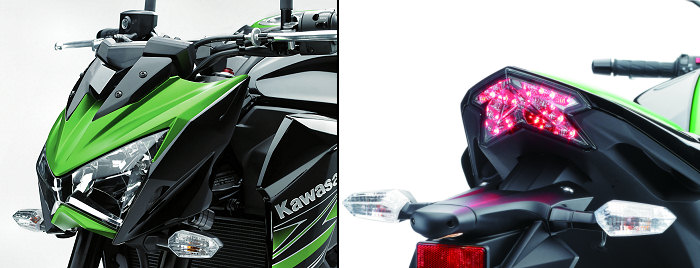
Basically, it's about time Kawasaki made a real effort to slim down its Z fetish. 229 kilos (3 more than the Z 750) is a lot of weight for a roadster, especially when the segment benchmark, the 675 Street Triple, weighs 46 kilos less - a fridge's worth of difference. But the market won't pay much attention: the Z 750 has never been the thinnest blade in its segment, but its design and handling have always put it on the road to success. As the Z 800 is in the same vein, everything is in place for it to secure a place on the sales podium, and its owners will forgive it the fat on its muscles as they focus more on the aggressive design and the details that make the difference: the Z-shaped LED taillights, the exaggerated silhouette, the substantial cubic capacity, the Z spirit.
And the price? It changes category. The Z 800 is priced similarly to the Z 750 R. To match the price of the Z 750, you'll have to go for the e version.
M.B - Manufacturer's photos
n.B : The Z 800 will also be available in an e version, slightly less expensive, less well equipped, and producing 95 hp. It will be bridgable for the new license, will have less advanced suspension and brakes, and will cost the same as the ex-base Z 750.
by Greg

Greg is the founder of Motoplanete—a website created in 2001 to share his passion with his friends and showcase as many motorcycle models as possible to his readers. Self-taught and a jack-of-all-trades, his discovery of the world of motorcycles led him to work as a photographer, rider, team manager, web developer, graphic designer, editorial assistant, and editor-in-chief.
 Share
Share
Key facts Kawasaki Z 800 (2013) : What you need to know before you buy
Highlights
- Fierce style
- Brilliant engine
- Best suspensions
Weak points
- Vibrations
- Swingarm and brake calipers of any kind
- Recipe
Prices
| Basic version | with ABS | |
|---|---|---|
 France France |
8,899€
|
9,499€
|


Performance
- Max speed : approximately 230 km/h (142.90 mph)
History


Specifications Kawasaki Z 800 2013
- Chassis
- Frame : tubular steel beam
- Fuel capacity : 17 liters (4.49 US gallons)
- Length : 2,100 mm (82.68 in)
- Width : 800 mm (31.50 in)
- Min height : 1,050 mm (41.34 in)
- Wheelbase : 1,445 mm (56.89 in)
- Weight when fully loaded : 229 kg (505 lb)
- Front axle
- Reverse telehydraulic fork Ø 41 mm, Wheel travel : 120 mm (4.72 in)
- Braking 2 wave discs Ø 310 mm (12.2 in), 4-piston caliper
- Front tire : 120 / 70 - 17 → Order this type of tire
- Pressure : 2.5 bar
- Transmission
- 6 stage gearbox
- Secondary by chain
- Rear axle
- Mono-damper, Wheel travel : 137 mm (5.39 in)
- Braking 1 disc Ø 250 mm (9.84 in), single-piston caliper
- Rear tire : 180 / 55 - 17 → Order this type of tire
- Pressure : 2.9 bar
- Motor
- 4 cylinders online , 4 strokes
- Injection Ø 34 mm
- Cooling system : liquid
- 2 ACT
- 4 valves per cylinder
- 806 cc
- 113 ch (111.40 hp) to 10,200 rpm
- 8.30 mkg to 8,000 rpm
- Power-to-Weight Ratio : approx. 1.92 kg/ch
- Torque-to-Weight Ratio : approx. 25.8 kg/mkg
- Compression : 11.9 : 1
- Standard equipment
- Brake assist : ABS optional
- Practical information
Essentials

 Motoblouz
 LaBécanerie


Gallery


Models
2016


2015


2014


2013


Used
Find this used Z 800 on MotoPlanete


Compare the Z 800 to its competitors
Compared to its 6 direct competitors, this Z 800 holds a particularly dominant position, establishing itself as the benchmark across several key criteria. It leads the category thanks to its power output of 113 ch and its top speed of 230 km/h. Its torque-to-weight ratio of 25.8 kg/Nm limits its punch at low revs.
Fuel consumption
Range
Torque
Power
Power-to-Weight ratio
Torque-to-Weight ratio
Speed
FAQ Your frequently asked questions about the Z 800 2013
- What is the power of the Z 800?
-
The Z 800 2013 develops a power of 113 ch (111.40 hp)
- What is the torque of the Z 800?
-
The maximum torque of the Z 800 2013 is 8.30 mkg to 8,000 rpm.
- What is the maximum speed of the Z 800?
-
The Z 800 2013 is capable of reaching a top speed of approximately 230 km/h (142.90 mph) on the track.
- What is the weight of the Z 800?
-
The Z 800 2013 has a a weight when fully loaded of 229 kg (505 lb).
- What is the price of the Z 800?
-
The price of the Z 800 2013 is 8,899€ in France. It is displayed at 9,499€ in France with ABS.
- What size tires should I put on my Z 800?
-
The standard size for a Z 800 2013 is 120 / 70 - 17 for the front, and 180 / 55 - 17 for the rear.
- Where can I find high-quality used Z 800s?
-
You can find used Z 800 at great prices on MotoPlanete, in the section dedicated to them—models from professionals and private sellers, as well as spare parts.
News
-
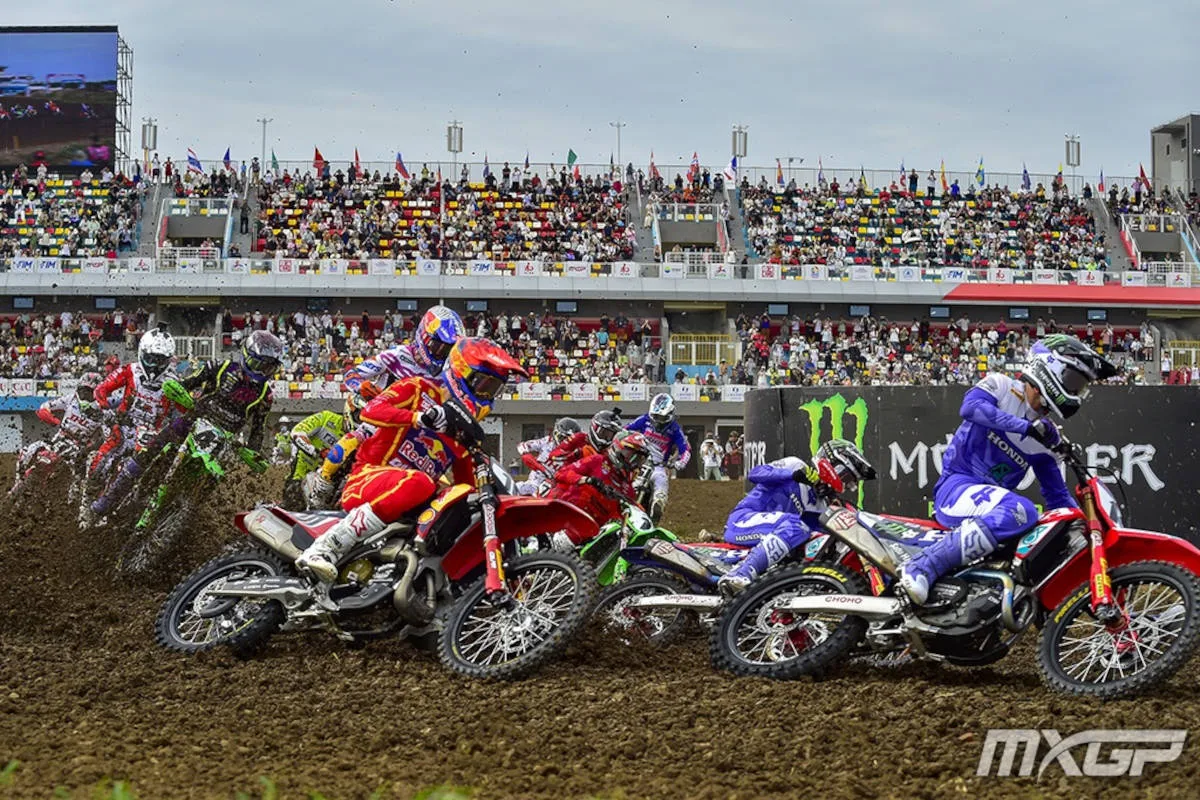
2026 MXGP of China: Herlings Unbeatable, McLellan Delays the MX2 Title
-
MXGP 2027: Kove and ZXMoto Join the Championship
-
SC Project is working on the 2026 Suzuki GSX-R1000R.
-
2026 MXGP of Turkey: Herlings Crowned World Champion!

-
Moto Guzzi: In Mandello, the historic factory is taking on a new scale.
-
ZXMoto in MXGP 2027: The Hypothesis of an Off-Road Earthquake
-
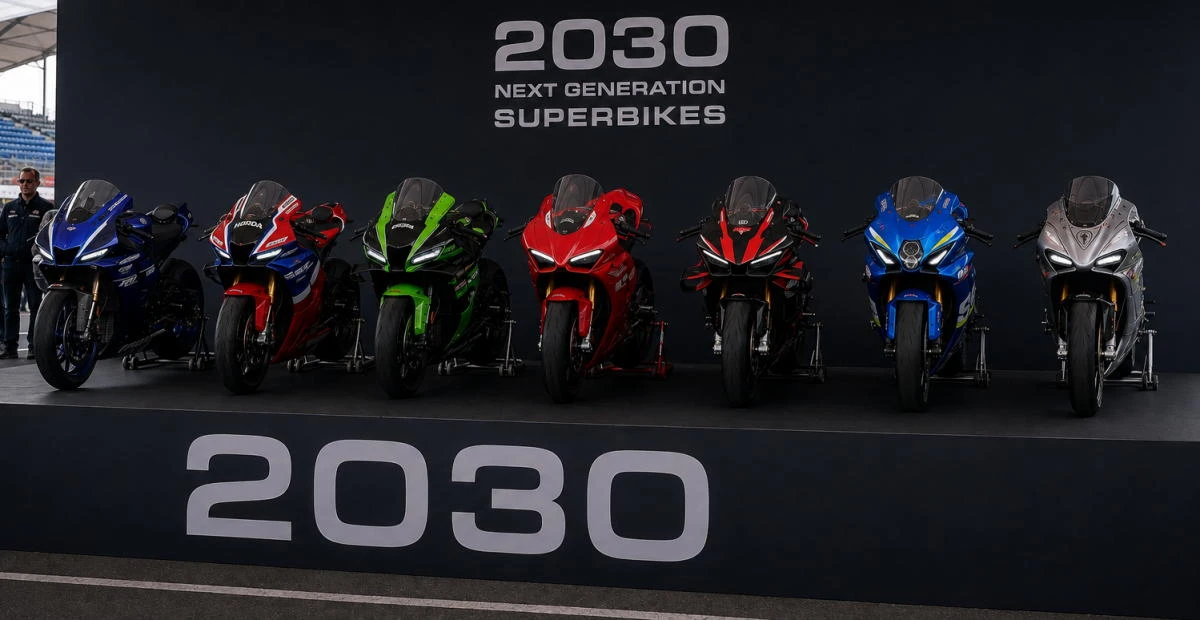
Superbike - Will 240 ch sport bikes soon be available at dealerships?
-
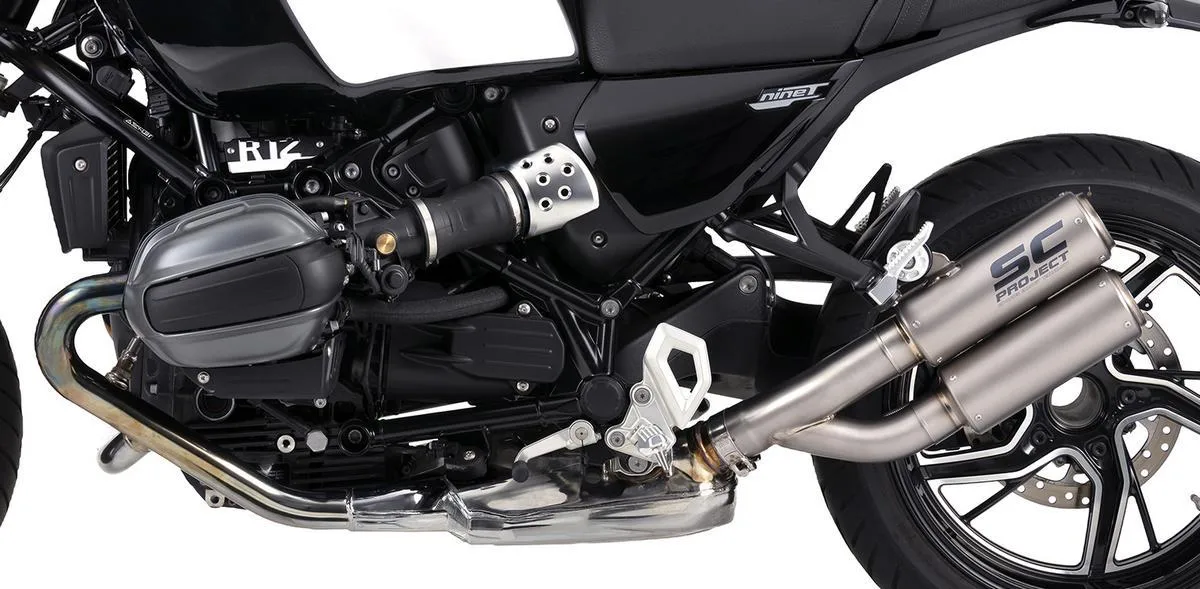
2 new SC-Project mufflers for the R 12 NineT and G/S.
-
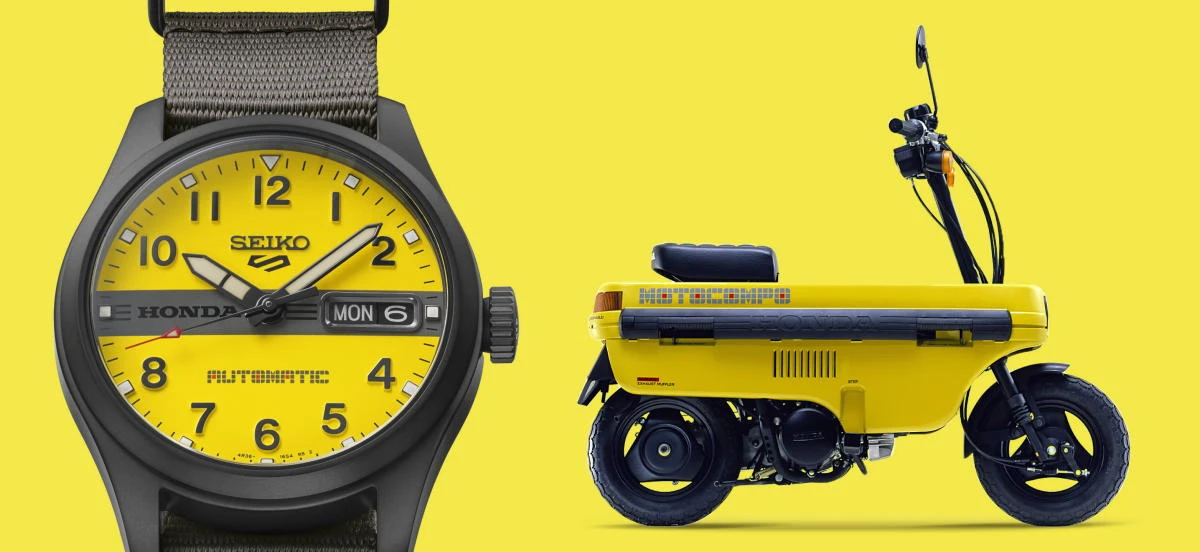
Seiko unveils a watch inspired by the Honda Motocompo.
-
The new motorcycle models of 2026 and the evolutions.

Bikers' reviews Leave a review - 23 reviews
Thank you for the article.
However, there's a lot of blah-blah and not much to say.
Too bad.
Sincerely Rating : 2/5 Respond to kawa23
Great job by Kawasaki! =D Rating : 5/5 Respond to Pierre
arrête c\'est une très bonne moto est elle ne fait pas son poids je l\'l\'ai essayé donc arreter de dire n\'importe koi essayer la .
Rating : 5/5 Respond to jul51
I'm the proud owner of a black Z800e after having had a street triple, versys 650, bmw k1200r. This bike has an engine that is very present everywhere; is very maneuverable in town (I use it daily) and agile in the twisties; is equipped with an economic driving indicator that can prove useful; has a look that has earned it nothing but compliments from those around me.
Shortcomings: a fancy gauge; an average turning radius (even if much better than street triple); a raucous engine noise at higher revs, but a little too discreet at lower revs for my taste; no gear indicator (which would have been very useful to perfect the original design of the dashboard, which is quite complete all the same); a side stand that's a little hard to find....
Rating : 4/5 Respond to janot
thanks Rating : 2/5 Respond to Tonino
I wanted to go for a 1000 for a change (speed, z1000 or cb1000), but given the price I let myself be tempted to try out the 800. And then, revelation, I really had a lot of fun on this Z. I was blown away by the bike's agility, its very decent braking and the weight is even less noticeable than on a z750. All the flaws have been ironed out, and this is a new bike. The z800 meets my expectations perfectly, with its torquey engine, agility and riding comfort. What's more, it's more attractively priced than a 1000, and I think it's a good compromise between the very large displacement bikes and the 750-600s on the market today Rating : 5/5 Respond to N\'y ko
it's already ugly and expensive, plus it's a tank, you'd have to be a real clown to ride it. Rating : 1/5 Respond to dougy