
Motorcycle specifications Kawasaki Z 650 2018 Le renard des mid-size


presentation of the Z 650 2018
Faced with increasingly aggressive and sharpened competition, the ER6-n was a safe bet, but was beginning to suffer from an aging image. It must be said that the machine had not evolved since its minor redesign in 2012, leaving the field wide open to the arrival of the thundering Yamaha MT-07, the sharpening of the CB650F and the resurrection of the Suzuki SV650. It was therefore urgent for Kawa to react and bring its best-selling model (in 2015, 3278 units) back to the forefront.
So 2017 was the year of renewal for Kawasaki's entry-level roadster, which took the opportunity to give it a new identity in order to completely reposition it in its range, since it now joins the Z series alongside the Z1000 and Z900.
it's no longer called the ER6-n, but the Z650, while theER6-f has been renamed the Ninja 650. Old-timers will appreciate the nod to the 1976 Z 650, the lieutenant of a certain emblematic Z 900; history repeats itself with the same ardor as before.
Rest assured, this model isn't just a name change. A much more contemporary design and a revised chassis revitalize the sex appeal of the Kawa, which is now infiltrated by the Sugomi spirit.
It all starts with the arrival of a more seductive, more inspired design, completely in tune with the segment, which now prefers incisive, tortuous lines to more consensual designs.
The forkhead, while not exactly taking on the tapered lines of today's Zs, is more complex, and the windscreen is wider. The ER6-n' s large radiator scoops have been replaced by more discreet covers, while the fork tubes are no longer concealed behind black plastic covers.
The new tubular frame is given an attractive green hue, visually taking precedence over the rear shock absorber, hitherto highlighted on the right and in color, which is now refocused and much less conspicuous. The rear headlight adopts the sugomi signature Z-shaped design.
the machine is shorter (-4.5cm), lower (-3cm) and only slightly wider (+0.5cm), confirming Akashi's desire to give it a stockier silhouette than the ER6-n. Its lowered seat height, plunging nose, raised rear hull and decidedly darker look give a serious facelift to its predecessor, which with its motorcycle-school look could almost be mistaken for a choirboy's motorcycle.
While the Z650's engine block is inherited from theER6-n, its transition to the castrating Euro 4 standard has resulted in a loss of 5 horsepower. Not enough to make the Kawette tremble in the face of the competition, as its 68-hp mill will certainly retain its temperament, especially as it too has undergone some welcome modifications. It's mainly on the torque side that the engineers have worked to offer greater pick-up at low and mid-range speeds. Kawasaki lowered the torque curve by modifying the timing angle, airbox, intake cones and exhaust. The ER6-n produced 6.5mkg at 7,000rpm, and the ER6-n 6.7mkg at 6,500rpm. At the same time, we're promised a highly flexible engine. And so much the better, as this was the weak point of the ER6-n, which was a little harsh at low revs. This corrected version of the 649cm3 twin promises to be just as sparkling and playful after 7,000 rpm.
The sugomi upgrade also sees the arrival of an anti-dribble clutch featuring two types of cam: an assist cam and an anti-dribble cam, offering two new functions not found on conventional clutches.
When the engine is running at normal speed, the assist cam acts as a torque damper, reducing the total load on the clutch spring and smoothing out lever operation.
The anti-dribble cam acts in the event of excessive engine braking (abrupt or involuntary downshifting), relieving pressure on the clutch plates to reduce counter-torque and the risk of rear-wheel lock-up.
This extra torque at low revs isn't the only lever Kawasaki has used to optimize the Z650's performance: the power-to-weight ratio has also been optimized, with the little Kawasaki losing a good 15 kg. 19 kg to be precise, leaving the Z650 weighing 187 kg fully loaded. This is largely due to the arrival of a new, lightweight tubular steel trellis frame, weighing just 15kg. The frame benefits from the latest technology in its design to deliver optimum lateral and torsional rigidity, while lowering the center of gravity.
As for the swingarm, the tubular one has been replaced by a new one, also benefiting from the latest technology and contributing to the machine's lightness.
Front suspension is a telescopic fork with 41 mm tubes and 125 mm travel. The back-link rear suspension is re-centered, with the shock absorber and connecting rods positioned above the swingarm. In addition to contributing to mass centering, this configuration keeps the suspension far enough away from the exhaust to prevent heat from affecting its operation.
On the braking front, the ER6-n' s twin 300mm petal discs and 220mm rear disc are retained. A tried-and-tested pairing, it's easy to understand why they've been re-issued. The standard ABS is entrusted to the Bosch 9.1M module.
Tires of similar dimensions are mounted on new 17-inch 5-spoke star wheels.
The Z650 also features an all-new multifunction on-board computer with analog rev counter, LCD multifunction display and gear indicator. The rev counter offers a choice of three display modes, adaptable to driver preferences. It also acts as a gearshift indicator, flashing when engine speed reaches a preset threshold. The LCD display adopts a negative display (white letters on a black background), a detail that adds to the modern, sporty look of the instrumentation. An economy driving indicator appears on the LCD display to indicate low fuel consumption, corresponding to zen-like driving below 6,000 rpm.
Of course, a wide range of accessories (passenger seat cover, pannier, top case, high speedometer cover, rim trim and various covers) will be offered to personalize this Z650 and give it an even more radical look.
by Greg

Greg is the founder of Motoplanete—a website created in 2001 to share his passion with his friends and showcase as many motorcycle models as possible to his readers. Self-taught and a jack-of-all-trades, his discovery of the world of motorcycles led him to work as a photographer, rider, team manager, web developer, graphic designer, editorial assistant, and editor-in-chief.
 Share
Share
Key facts Kawasaki Z 650 (2018) : What you need to know before you buy
Highlights
- Easy and fun
- More roundness
- ABS discret
Weak points
- Less pep
- Often rises to the top
- Foot vibration
Prices
| Basic version | |
|---|---|
 France France |
6,599€
|


Performance
- Max speed : approximately 200 km/h (124.30 mph)
- Average fuel consumption : 4.30 liters/100km (0.55 mpg)
-
Estimated range
: 349 km (217 miles)
Calculated range until tank is empty, not verified.
Specifications Kawasaki Z 650 2018
- Chassis
- Frame : Tubular steel mesh
- Fuel capacity : 15 liters (3.96 US gallons)
- Seat height : 790 mm (31.10 in)
- Length : 2,055 mm (80.91 in)
- Width : 775 mm (30.51 in)
- Min height : 1,080 mm (42.52 in)
- Wheelbase : 1,410 mm (55.51 in)
- Weight when fully loaded : 187 kg (412 lb)
- Front axle
- Telehydraulic fork Ø 41 mm, Wheel travel : 125 mm (4.92 in)
- Braking 2 discs Ø 300 mm (11.81 in), 2-piston caliper
- Front tire : 120 / 70 - 17 → Order this type of tire
- Pressure : 2.25 bar
- Transmission
- 6 stage gearbox , manual
- Secondary by chain
- Rear axle
- Mono-damper, Wheel travel : 130 mm (5.12 in)
- Braking 1 disc Ø 220 mm (8.66 in), single-piston caliper
- Rear tire : 160 / 60 - 17 → Order this type of tire
- Pressure : 2.5 bar
- Motor
- two-cylinder online , 4 strokes
- Injection Ø 36 mm
- Cooling system : liquid
- 2 ACT
- 4 valves per cylinder
- 649 cc
- 68 ch (67.10 hp) to 8,000 rpm
- 6.70 mkg to 6,500 rpm
- Power-to-Weight Ratio : approx. 2.59 kg/ch
- Torque-to-Weight Ratio : approx. 25.92 kg/mkg
- Compression : 10.8 : 1
- Standard equipment
- Brake assist : ABS as standard
- Practical information
Essentials
 Motoblouz
 LaBécanerie


Gallery


Models
2019


2018


2017


Used
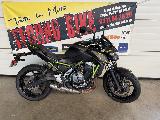
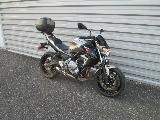
Find this used Z 650 on MotoPlanete
Competitors


Compare the Z 650 to its competitors
Compared to its 4 direct competitors, this Z 650 offers an appealing positioning, managing to stand out in certain specific areas. It stands out with top speed of 200 km/h. Its power-to-weight ratio of 2.59 kg/ch betrays a bit of extra heft on the scales.
Fuel consumption
Range
Torque
Power
Power-to-Weight ratio
Torque-to-Weight ratio
Speed
FAQ Your frequently asked questions about the Z 650 2018
- What is the power of the Z 650?
-
The Z 650 2018 develops a power of 68 ch (67.10 hp)
- What is the torque of the Z 650?
-
The maximum torque of the Z 650 2018 is 6.70 mkg to 6,500 rpm.
- What is the maximum speed of the Z 650?
-
The Z 650 2018 is capable of reaching a top speed of approximately 200 km/h (124.30 mph) on the track.
- What is the weight of the Z 650?
-
The Z 650 2018 has a a weight when fully loaded of 187 kg (412 lb).
- What is the fuel consumption of the Z 650?
-
Average fuel consumption is estimated at 4.30 l/100km (0.55 mpg) according to the WMTC cycle.
- QWhat is the seat height of the Z 650?
-
To ensure good accessibility, the Z 650 2018 offers a minimum seat height of 790 mm (31.10 in).
- What is the price of the Z 650?
-
The price of the Z 650 2018 is 6,599€ in France
- What size tires should I put on my Z 650?
-
The standard size for a Z 650 2018 is 120 / 70 - 17 for the front, and 160 / 60 - 17 for the rear.
- Where can I find high-quality used Z 650s?
-
You can find used Z 650 at great prices on MotoPlanete, in the section dedicated to them—models from professionals and private sellers, as well as spare parts.
News
-
2026 MXGP of China: Herlings Unbeatable, McLellan Delays the MX2 Title
-
MXGP 2027: Kove and ZXMoto Join the Championship
-
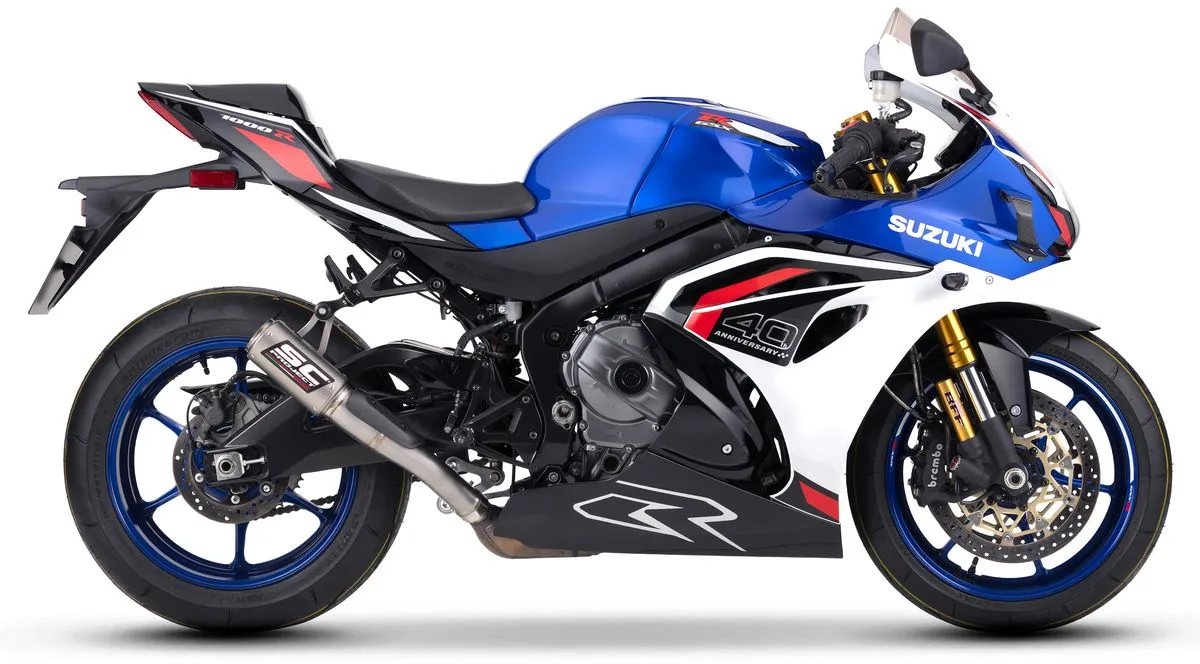
SC Project is working on the 2026 Suzuki GSX-R1000R.
-
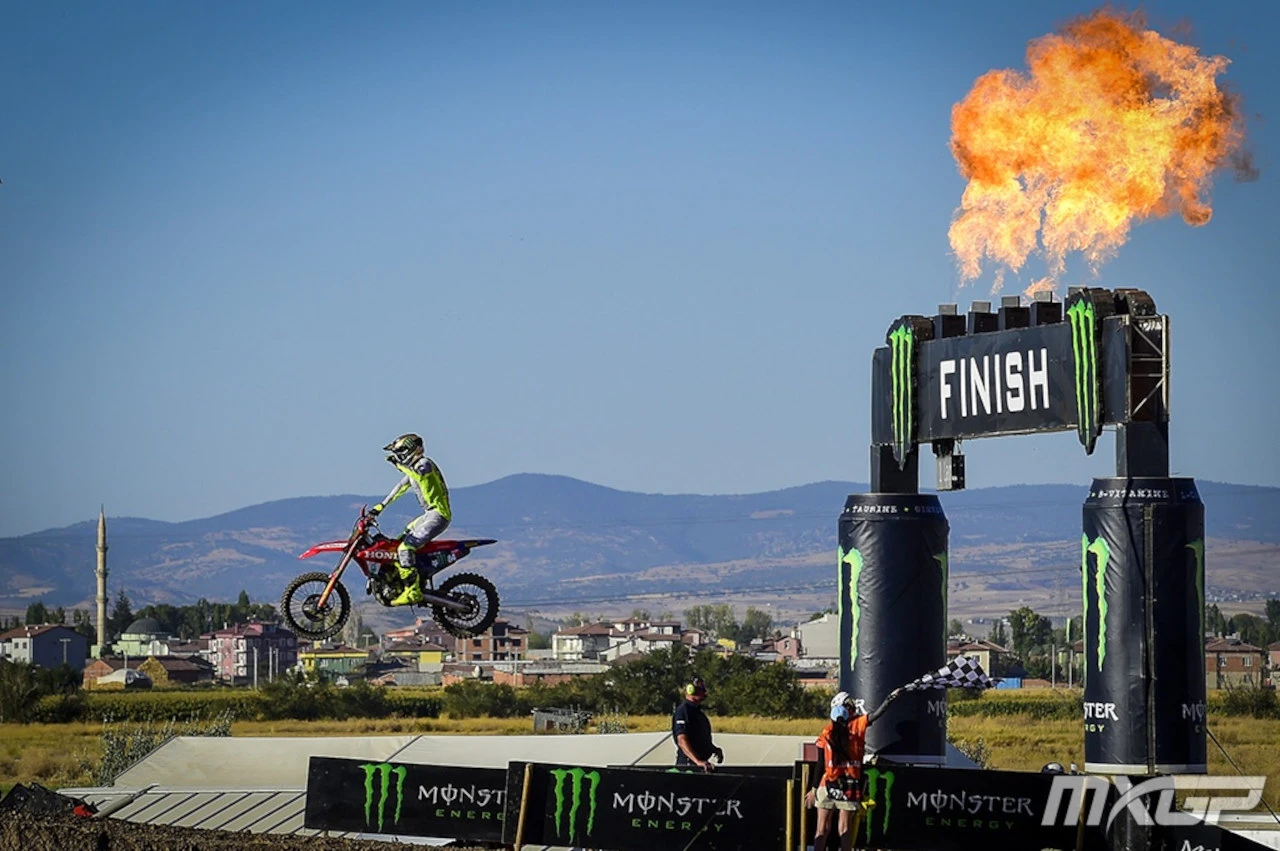
2026 MXGP of Turkey: Herlings Crowned World Champion!
-
Moto Guzzi: In Mandello, the historic factory is taking on a new scale.
-
ZXMoto in MXGP 2027: The Hypothesis of an Off-Road Earthquake
-
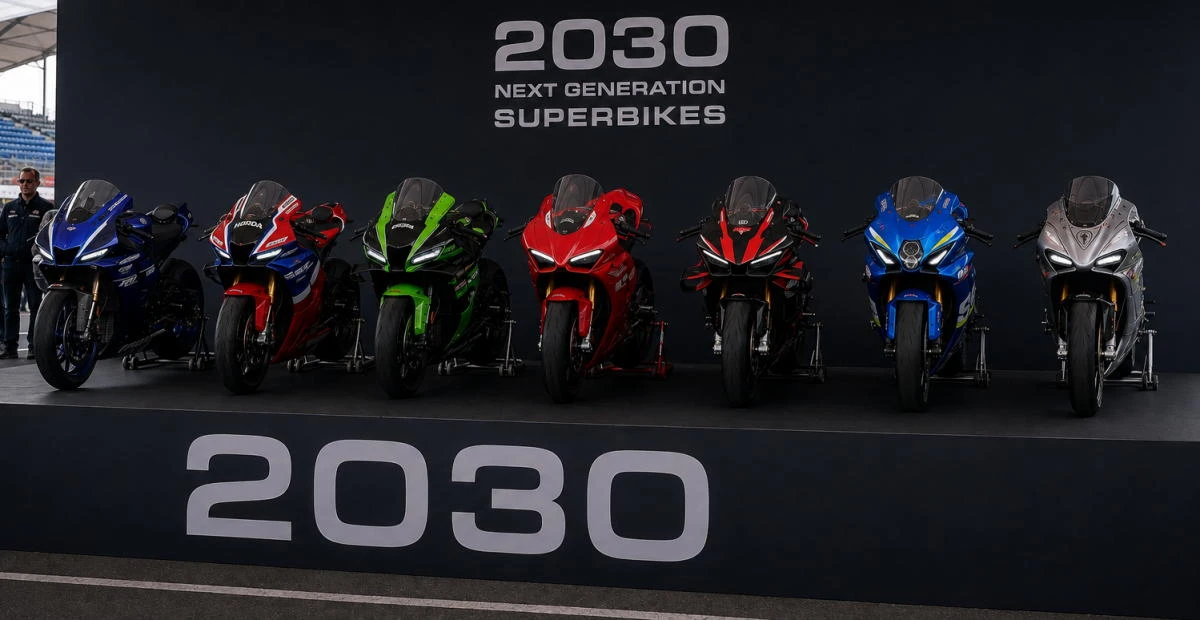
Superbike - Will 240 ch sport bikes soon be available at dealerships?
-
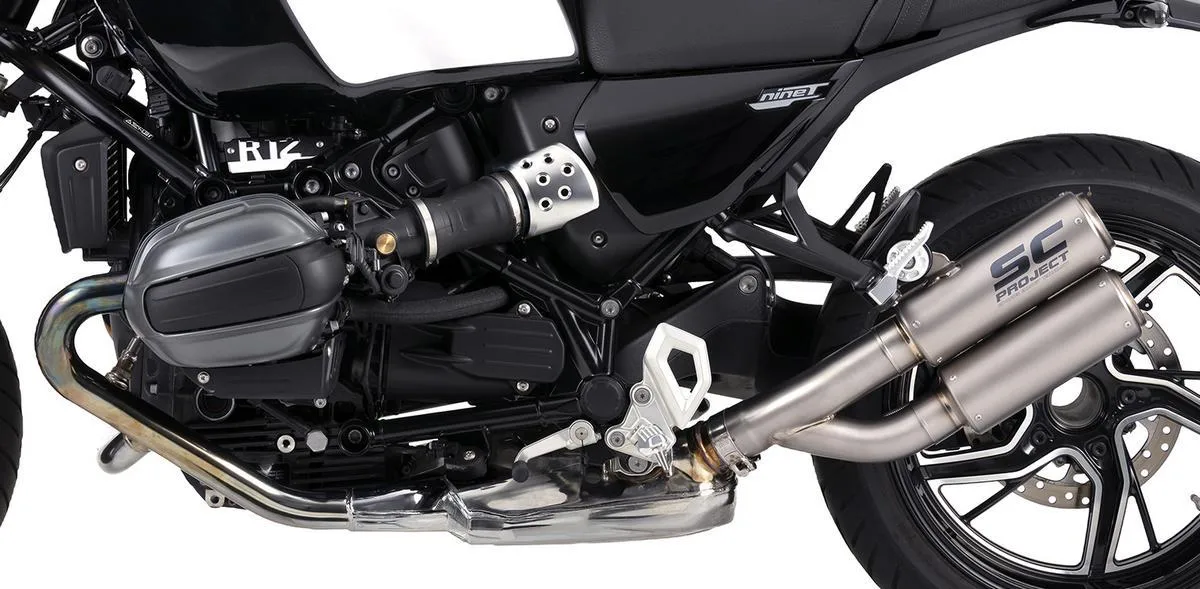
2 new SC-Project mufflers for the R 12 NineT and G/S.
-
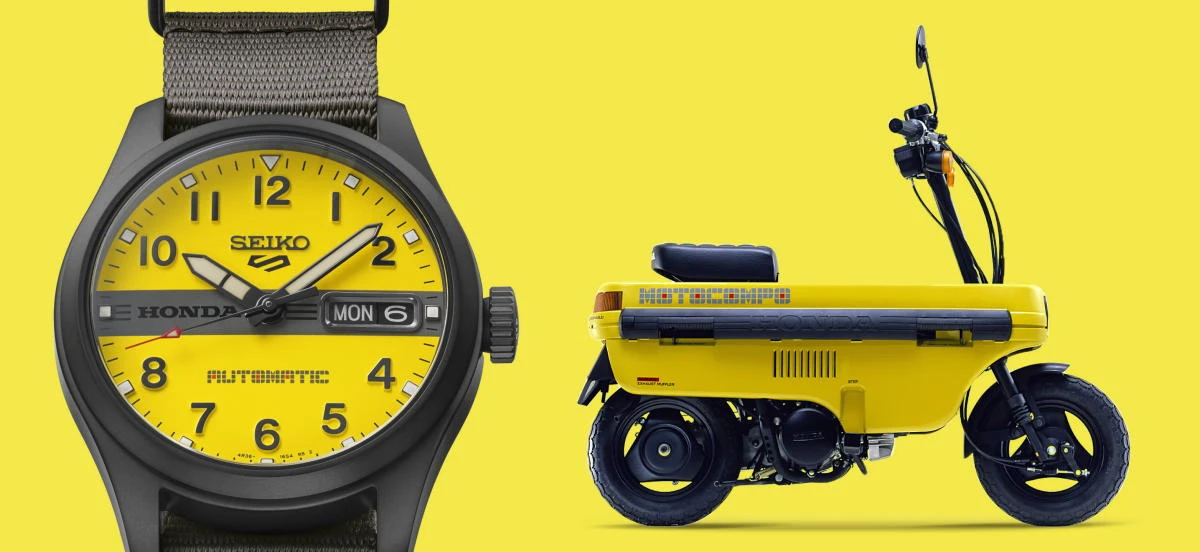
Seiko unveils a watch inspired by the Honda Motocompo.
-
The new motorcycle models of 2026 and the evolutions.

Bikers' reviews Leave a review - 8 reviews
i'm 1m50 tall i'd like to know how much i can lower it
thanks a lot Rating : 5/5 Respond to cali
I'm 1m50 too and by changing the suspension kit you can gain 3cm in height !!!
Nothing's impossible when you're passionate!
Think about the shoes you wear, personally, they're rangers or the sole is thick !
I'm replying late, but if it's any help... ;-) Rating : 5/5 Participate in the conversation
No complaints Rating : 5/5 Respond to Branko
Suzuki did release 76 hp from its SVS, 4 hp more than the Gladius, which until now existed in this mid-size twin-cylinder segment.
This Z650, which is not a Z650 but should have been called an ER6, is still less powerful and a hair heavier than an MT07 for the same price.
It's really a pleasant surprise, and I have no regrets about buying a second-hand MT07, a simple and versatile machine for everyday use, and above all light and playful. Rating : 3/5 Respond to Jeff2A
A good bike to start with! Rating : 5/5 Respond to Aurélien