


KTM, world-renowned for its competitive performance and innovation, is going through an unprecedented financial crisis. Despite its international stature, the Austrian manufacturer has not escaped the global economic turbulence, which has led the Pierer Mobility Group, the brand's owner, to announce a massive loss of 2.5 billion euros. This critical situation calls for a far-reaching restructuring of the company in an attempt to turn things around.
Pierer Mobility and the difficult economic situation
Several factors explain the alarming situation in which KTM finds itself. High interest rates in the USA and economic uncertainty in Europe have had a major impact on the Group's sales in these markets. In both corners of the globe, sales have fallen by 10-15%, a significant drop for a brand of KTM's stature.
At the same time, rising production costs, largely due to higher raw material prices, exacerbated the situation. In response to these difficulties, Pierer Mobility is redirecting its strategy towards Asia, where sales have shown greater resilience, particularly in India. This change of strategic direction could nevertheless have repercussions on consumers in Europe and North America, with a possible reduction in investment in the development of popular models in these markets.
Cost-cutting and restructuring: painful measures
KTM's response to the crisis will involve rigorous restructuring. Among the measures envisaged are a reduction in motorcycle production and cuts in investment for competitions. More surprisingly, the "KTM Group" (now co-directed by Stefan Pierer and Gottfried Neumeister) may divest itself of the GASGAS brand and consider discontinuing Husqvarna, two important brands in its portfolio. These decisions, though difficult, are deemed necessary to ensure the company's financial survival.
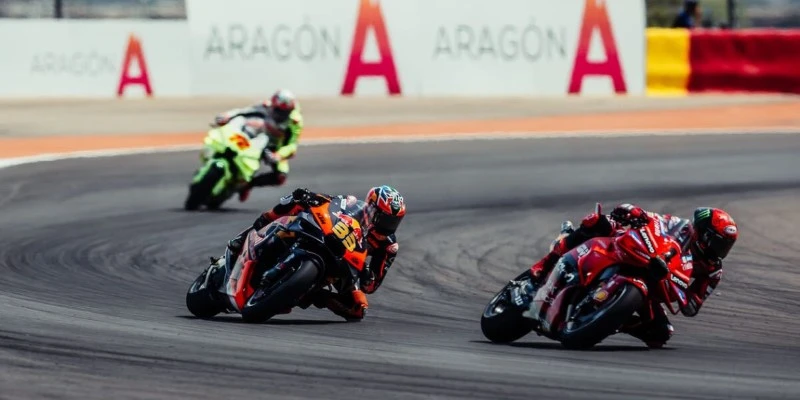
rob Gray/Polarity Photo
In addition, the group has announced a reduction in its workforce after years of uninterrupted growth. This reduction, which has already led to the redundancy of 300 employees, is aimed at adapting the company's structure to the new economic reality and maintaining the competitiveness of its production sites, notably the Mattighofen site in Austria.
Relocation and new partnerships: a risky bet for KTM?
To cut costs even further, KTM is considering relocating part of its production to countries where labor costs are lower. The company is already collaborating with CFMoto in China and Bajaj in India, and could intensify these partnerships. However, this relocation raises questions about product quality, a crucial point for a brand that has built its reputation on the excellence of its motorcycles.
Raphael Crambes, director of KTM's French branch (Moto Station interview)
The first half of 2024 did not live up to our expectations in terms of results, but I can reassure you that the Group is not in the process of taking a dive.
Raphael Crambes tried to reassure us that quality would remain a priority, despite these changes. According to him, the new facilities in partner countries are capable of maintaining high standards, while offering more favorable economic conditions for the company.
Recovery possible, but uncertain...
Finally, it is important to note that this crisis is occurring in a particularly unstable global context. The war in Ukraine and the COVID-19 pandemic have disrupted the global economy, leading to galloping inflation and major disruptions to supply chains. These factors have hit the motorcycle industry hard, affecting not only KTM but the sector as a whole.
KTM is at a turning point in its history. The current crisis is forcing it to take some tough decisions to restructure and reposition itself on the global market. If these measures bear fruit, they could enable KTM to regain financial stability and maintain its leading position in the motorcycle industry. However, the challenges are many, and the success of this strategy remains uncertain, particularly in a global economic climate that remains as unpredictable as ever.
 Share
Share
 helmet
 Gloves
 jacket
 braking
 Chain kit
 Oils
Oils Find an intercom
 Parts
Parts Luggage
 Tires
Tires


Bikers' reviews
Pourquoi ktm en deficit
SAV à revoir
Crise ktm