

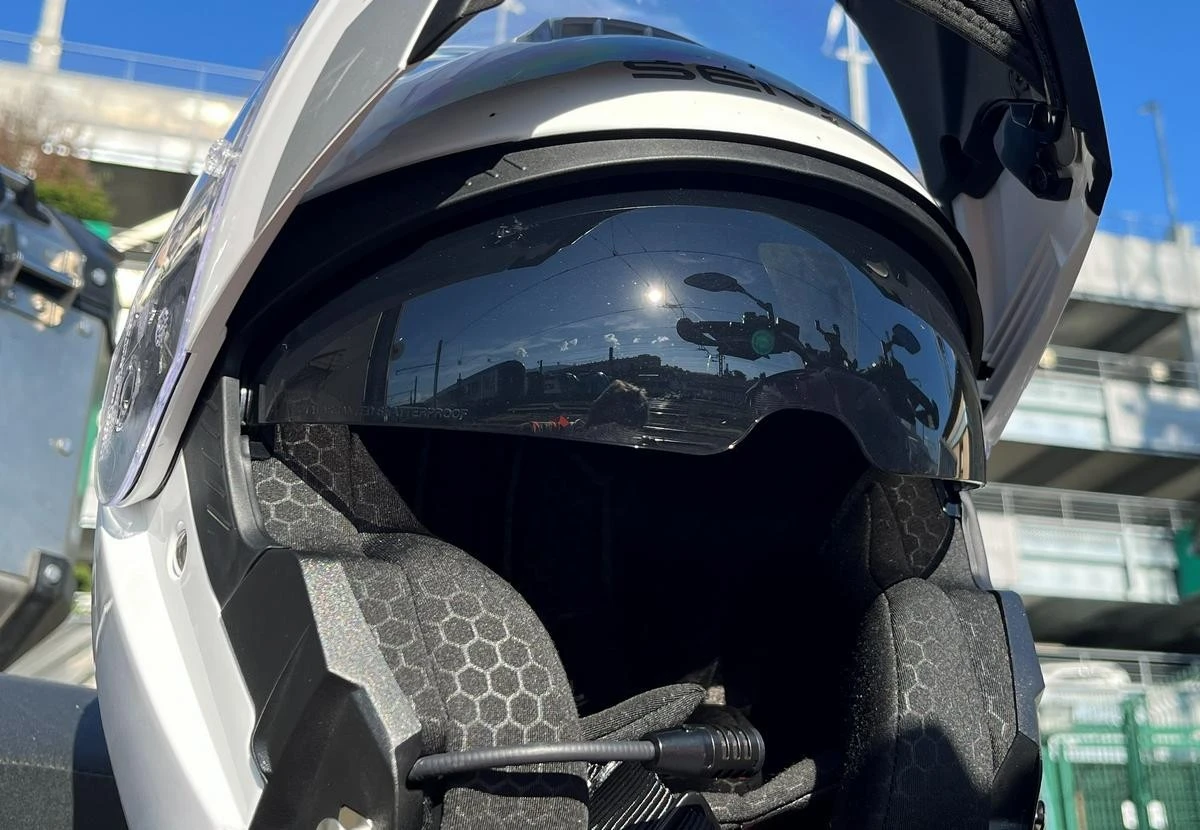
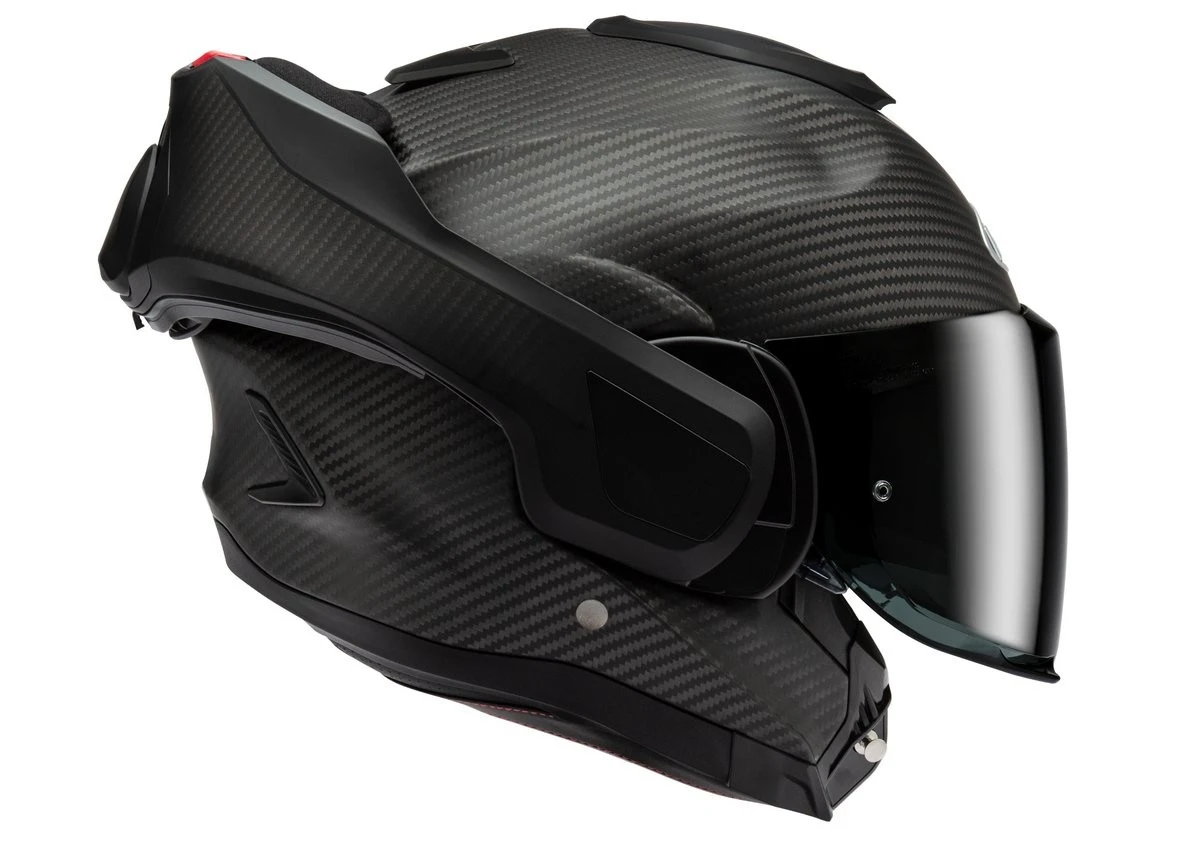
When you have several helmets in the closet, there’s one that stands out: the one you grab when you head out on the spur of the moment. Right now, that ’s the Specter . Once you try this model, which comes standard with connectivity, you’ll move beyond mere curiosity and come to appreciate the practicality of Sena’s modular helmet.
An already extensive lineup
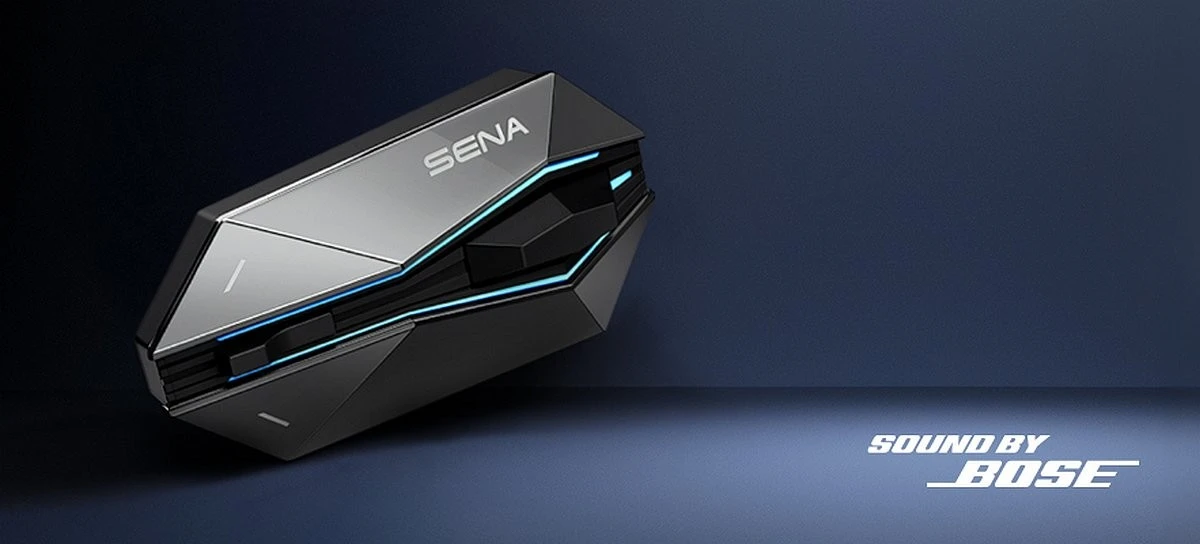
Of the modular helmets, I should clarify. A leading brand in the world of intercoms, Sena has developed a whole series of helmets for different uses and various levels of comfort. Within this family, the Specter sits at the top of the range. It stands out with the longest battery life (35 hours of talk time), second-generation Harman Kardon sound, a shell combining fiberglass and Kevlar, the Wave Intercom to complement the Mesh system, and a dose of AI in the microphone to filter out noise.
Right out of the box, the Specter makes a great first impression. Although very understated (it’s currently only available in white or black), it exudes a certain class with its subtle graphics and a seamless, unobtrusive intercom integration—a far cry from aftermarket modules.
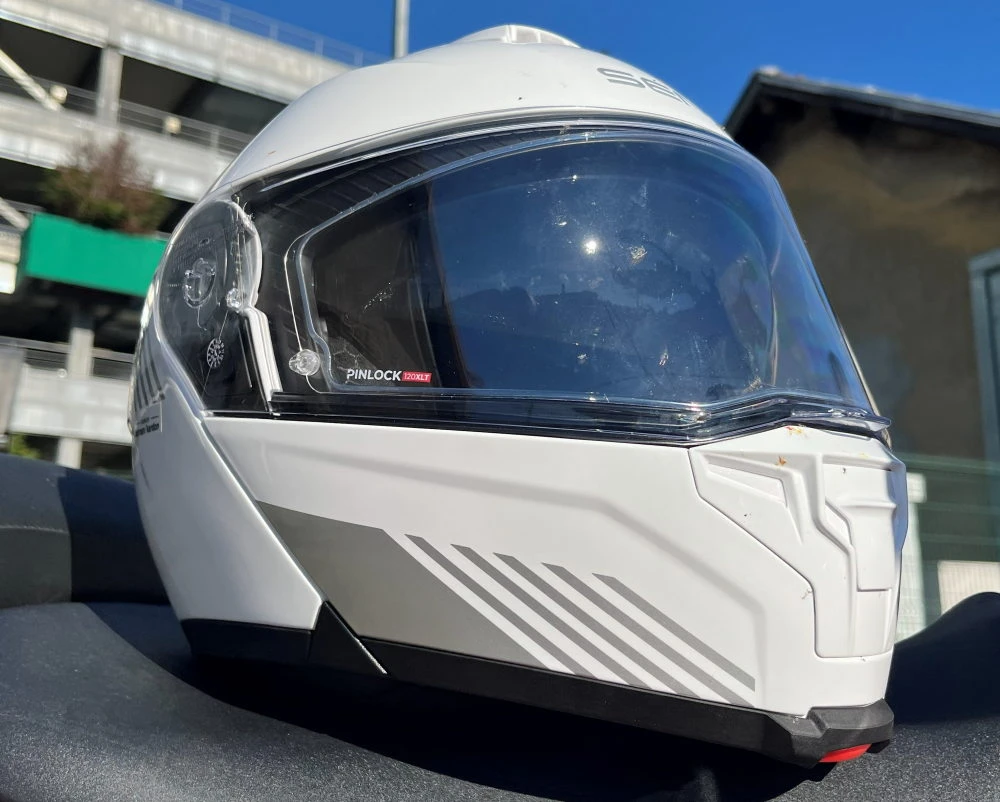
Because that’s one of the major strengths of Sena helmets: the intercom is built-in from the start, an integral part of the helmet. No more spending two hours removing the lining, threading wires, adjusting the system, or getting everything oriented correctly. Everything is already set up—all you have to do is sync it with your smartphone.
So let’s take it for a spin right away. When you put it on, the Specter confirms those first impressions. The interior is pleasant and soft, with an immediate sense of comfort. Personally, I find that the sides don’t extend far enough over the cheeks. And while you feel comfortable right away, the level of comfort isn’t as high as that of the top brands—which, let’s not forget, are 20% to 30% more expensive.
So you’ll have no qualms about setting out on a long ride. The weight is very respectable for a modular helmet, so there’s no need to worry about neck strain. While riding, you barely feel the “weight shift” when the chin bar is in the closed position.
It lifts up very intuitively, just like the visor, thanks to its large central tab that’s right at your fingertips. However, the tinted inner screen tickles the tip of your nose when you lower it. I have a big nose, okay; but other people have noticed this too with their noses.
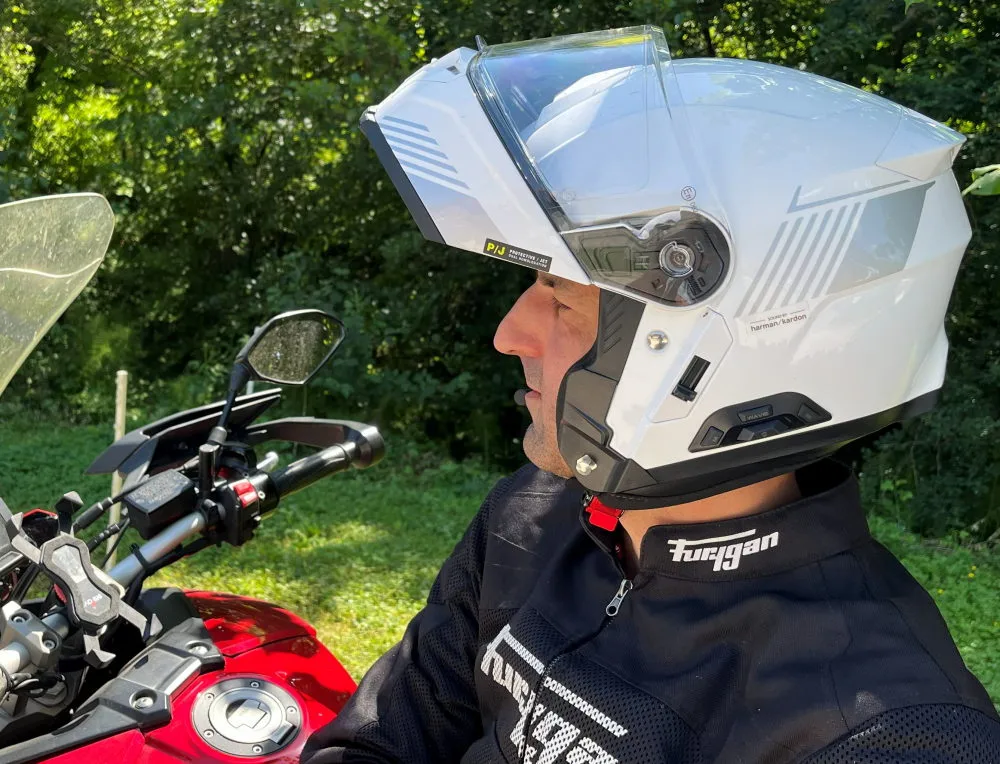
Once it’s up, you quickly forget it’s there, and it opens up a wide field of vision. The Pinlock (included in the box) is barely noticeable. The first part of the ride on a crossover bike revealed a moderate noise level; it was only when switching to a roadster—and thus riding without protection—that the helmets’ true noise levels became apparent. The Specter, like all flip-up helmets, generates a bit more noise than a full-face helmet but doesn’t cause any annoying disturbances. It produces more wind noise than actual noise.
Nothing surprising there. Before going any further, let’s turn it on to take advantage of its technological features. The voice assistant greets us by informing us of the volume level, the activated brake lights, and the connected phone. A brief and perfectly informative check-up. Pretty quickly, I switch the audio to radio mode—via my smartphone since the Sena doesn’t have one (too bad).
It makes up for this with high-quality sound, excellent vocal clarity, and bass that strives for depth but can’t quite reach it due to the inevitably small size of the speakers. Don’t be fooled—don’t turn the volume up too high. The power is there, and it can get really loud.
For the various functions available via the control unit, you’ll need to study the user manual a bit or keep a quick summary handy. While riding, the controls are naturally accessible, with well-placed buttons. If needed, about fifteen voice commands make life easier.
Let’s make a quick call to test the microphone’s capabilities. With the chin guard open, the person on the other end hears some background noise, but the conversation comes through very clearly. You can talk up to about 70 km/h.
With the visor closed, the person on the other end thinks you’re calling from a car—one of those with meticulous soundproofing. From the rider’s perspective, audio quality is excellent up to 110–120 km/h and remains audible up to 140 km/h with volume adjustment. Beyond that— and especially in Germany—it’s like having a conversation with Trump: you can’t understand a thing.
Sensitivity must be adjusted in the smartphone menu based on your riding environment. Because the Specter is constantly listening and automatically lowers the music when external noises (such as hard acceleration or loud sounds) are mistaken for the user speaking. The listening pleasure of a good song is compromised when the volume keeps fluctuating.
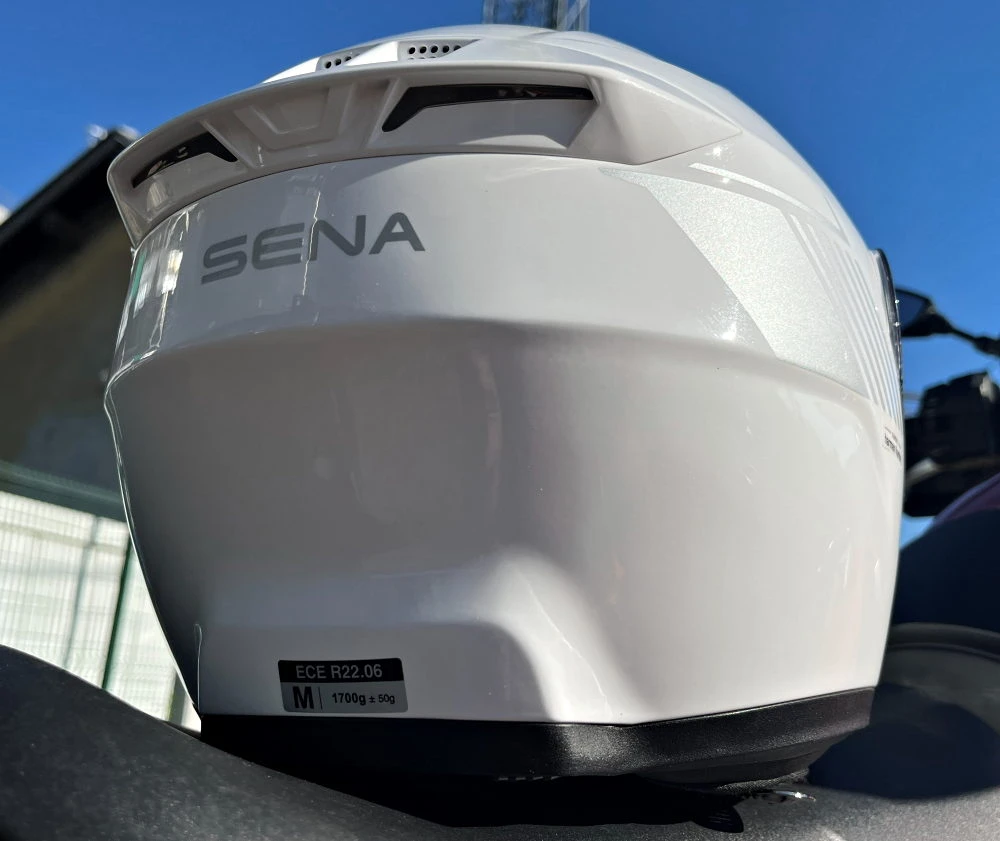
Since the intercom isn’t detachable, charging must be done via a USB port at the back of the helmet. This forces you to lay the helmet on its side to avoid crushing the connector. Unless you open the chin guard—the helmet then naturally rests on its front, freeing up plenty of space to leave the port and cable unobstructed.
A minor but tricky point: since the system is fully integrated, it’s impossible to remove the intercom when you need to switch helmets (due to a crash or wear and tear) to install it on your new helmet.
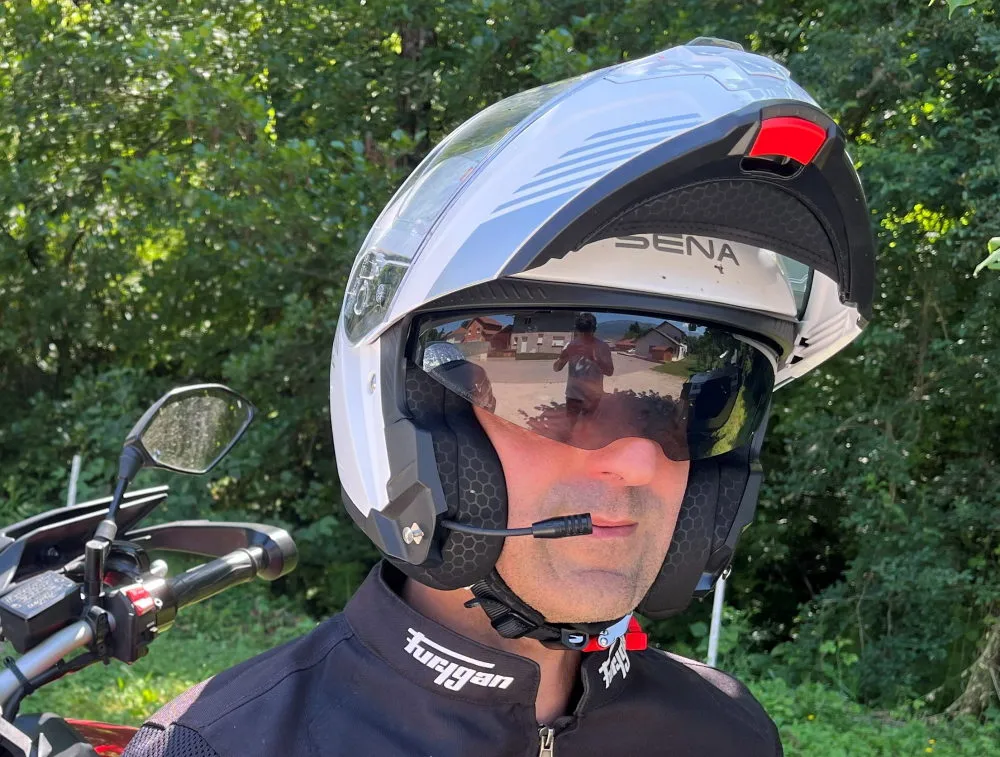
Aside from choosing a motorcycle—an exercise that’s at once passionate, technical, personal, and deeply committed—a key moment in a rider’s daily life is their helmet. Sure, it’s the only thing protecting their head, but it can mean so much more. The story of a rider with a replica helmet, a loyalty to a brand, or the one you snatched from Dad’s shelf as a kid to try on.
Today, things are much more complicated with new technological solutions: built-in or add-on intercoms, heads-up displays, taillights, cameras, radios, phone connectivity...
Not simple. That’s exactly why the Specter offers a dose of simplicity in a fully connected package. Its price may seem high, but it includes a helmet plus a system comparable to the Sena 60S (which already costs as much as a helmet). So, it’s definitely worth considering.

 Share
Share
 helmet
 Gloves
 jacket
 braking
 Chain kit
 Oils
Oils Find an intercom
 Parts
Parts Luggage
 Tires
Tires

Bikers' reviews