
Motorcycle specifications Kawasaki 500 H1 MACH III 1975 An engine to bend you in 3


presentation of the 500 H1 MACH III 1975
by the end of the 60s, the Japanese were already clearly mounting a major offensive on the world motorcycle industry front. Honda with its CB 450 and Suzuki with its T 500 steal the show. The market is changing, and motorcyclists want more. The time has come for more power, more performance, more displacement. Kawasaki wanted a piece of the pie: in 1967, the Akashi-based company launched the Top Secret N 100 project. The aim was to display technical characteristics that were breathtaking for the time: a 500cc engine capable of producing 60 hp (i.e. 120 hp per liter) and offering an acceleration potential of 13" for the 400-meter D.A. race.
Kawasaki took two different approaches to the design and development of what was destined to become the most powerful production motorcycle of its day.
powerful technical development
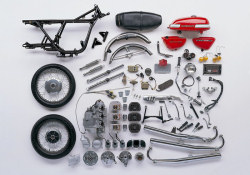
The second approach involved the development of a revolutionary new mechanical architecture, the complete opposite of the technical solutions favoured at the time. In designing the world's fastest motorcycle, engineers would have to re-examine all their technical certainties and, to this end, build either a twin-cylinder or a three-cylinder, two-stroke, air-cooled "L" engine.
In the end, both two- and three-cylinder engines were developed in parallel.
In the case of the three-cylinder, the crucial point was to choose between in-line and L-shaped engine architecture. With this problem solved, Kawasaki began experimenting with the most delicate aspect of three-cylinder motorization: how best to cool the central cylinder. To test the respective cooling capacities of the two engine architectures, the technical team in charge of the project prepared a prototype version of each engine, with a view to studying its operation in the laboratories of Osaka University's Faculty of Technology.
After a long series of tests, and having collected all the necessary data on the heating and cooling characteristics of each engine, the information gathered was used to evaluate every technical detail, from the optimum length of the cooling fins to the ideal cylinder design.
All these tests led to the conclusion that cooling efficiency was not significantly affected by the parallel arrangement of the cylinders, and the manufacturer finally decided to opt for the in-line "three-legged" architecture.
At the same time as the study of the three-cylinder architecture was being pursued, Kawasaki was also making rapid progress on the development and testing of its rotary distributor engine feed system. Initial tests suggested a very promising power output. Nevertheless, from the moment the three-cylinder engine architecture was chosen, the technical team devoted itself primarily to developing the three-cylinder two-stroke engine block that would eventually become a mechanical legend.
All these efforts culminated in June 1967 with the H1 block: an engine delivering 60 hp at 7,500 rpm, giving 120 hp per liter. Two different engines were developed at the same time, but in the final analysis, the manufacturer chose to continue along the sole path of the radical new three-cylinder two-stroke transfer engine.
When it came to series production, the technical team was mainly faced with the question of how to prevent the spark plugs of this "monstrous" engine block from clogging at low revs. The KIPS light management system commonly used today did not yet exist, and in the absence of this type of exhaust regulation, it was particularly difficult to obtain the ideal combustion of gases at all engine speeds.
Kawasaki's technical team overcame this challenge by using a technology used on two-stroke competition engines. The cutting-edge CDI (Capacitor Discharge Ignition) technology used on the latest evolution of the KR-3 factory machine (equipped with a liquid-cooled 125cc V-twin 4-cylinder) was chosen for the H1.
This electronic ignition system began by converting the original voltage from 12V to nearly 400V, then increasing it to 25,000 and then 30,000 volts through the use of a thyristor-based circuit. The resultant powerful spark was a significant improvement in gas combustion efficiency. The adoption of the CDI system also made it possible to fully utilize the high ignition potential of the spark plugs, resulting in a significant reduction in the volume of unburned gases in the cylinders.
At the same time, using the very latest technology and the know-how and experience the company had acquired in developing successful models such as the A1, A7 and KR-3, the technical team succeeded in producing an engine block that fully met expectations, particularly in terms of maximum speed.
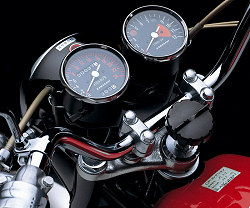
Suspension was another area requiring intensive study. Inspired by the type of front fork that Ceriani had just launched in Italy, the technical team developed the very first telescopic fork with integrated springs, destined to equip Japan's first large-displacement motorcycle. At the same time, the team also opted for a rear suspension featuring shock absorbers with three preload adjustment positions.
Working with unwavering determination and unshakeable conviction, the technical team overcame one obstacle after another, eventually reaching the final stage of dynamic testing of the first prototype. At the end of this long quest to produce the world's fastest motorcycle, the members of the technical team were delighted to see their first test machine break the 190 km/h barrier without a hitch.
But without forgetting that they had achieved their goal, they then had to face the most serious technical challenge of all: to be able to ride continuously at speeds close to 190 km/h, speeds that are unforgiving for tire tread. In order to develop a tire capable of withstanding prolonged high speeds without worry, the engineers collaborated with Dunlop to develop the revolutionary K77 tire. This new tire was closer to racing casings than to the conventional mounts used for road bikes, as it abandoned the traditional textile carcass for a nylon one. Once development of the new tire was complete, testing resumed and final development of the new machine was completed on schedule.
With the development of the mechanical base and chassis components proceeding without a hitch, the team responsible for the machine's design began to think about how to create the style best suited to the status of what was destined to become the fastest motorcycle on the planet.
The sculpted "Eguri"-style shape of the fuel tank - one of the most striking features of the Mach III's design - was one of the major styling characteristics of the overall machine line originally defined in the USA, with the exception of the asymmetrical arrangement of the three exhaust silencers, which was devised by the Japanese factory team. Although this unusual exhaust arrangement went completely against the US designers' recommendations for a symmetrical design, it was nevertheless retained for performance reasons.
Finally, some 14 months after the initial launch of the N100U project in July 1967, and taking full advantage of the technical know-how available at the time, Kawasaki completed construction of the very first Mach III in September 1968.
As soon as production began in early 1969, Kawasaki took care to ship the first examples of the new machine to the four corners of the globe, where it immediately received an enthusiastic welcome from specialists and magazines alike. Its superb engine rivalled the 7- and 1/2-stroke 4-strokes of the day.
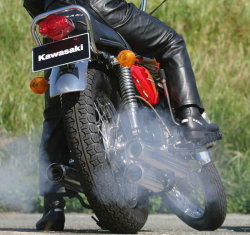
The very competitive launch price in the USA (US$ 995, when the average price for a 750cc machine was around US$ 1,400), quickly built up the dazzling success of the new machine, and it became a genuine "best seller" almost overnight.
The new Kawasaki in its grey "Peacock" livery with black stripes appeared on the Japanese market in September 1969 as the 500 SS Mach III, again at a very competitive price.
June 1970 saw the launch of the red version with white stripes, which benefited from a few minor changes.
This was followed in September 1971 by the H1A, a variant of the model that dropped the "Eguri"-style tank.
In January 1972, the factory launched the H1B with battery-powered ignition, front disc brakes and a front fork borrowed from the H2. A steering damper was also added, and the machine became known as the "Rainbow".
The H1D, launched in 1973, had a seat side cover similar to that of the H2, its CDI system was that of the H2, and both the steering damper and the rear drum vent were removed. Subsequently, the H1E, equipped with a new CDI system, was transformed into the H1F with a different paint scheme.
In all, more than 110,000 units of the various H1 models left the Akashi plant, destined for countries all over the world.
It's now 40 years since Kawasaki began developing the 500 H1 Mach III. But even today, the H1 still arouses the same passion and envy among a huge number of Kawasaki fanatics all over the world.
The H1 legend is more alive than ever!
Info and images: Kawasaki
by Greg
Greg is the founder of Motoplanete—a website created in 2001 to share his passion with his friends and showcase as many motorcycle models as possible to his readers. Self-taught and a jack-of-all-trades, his discovery of the world of motorcycles led him to work as a photographer, rider, team manager, web developer, graphic designer, editorial assistant, and editor-in-chief.
 Share
Share
Key facts Kawasaki 500 H1 MACH III (1975) : What you need to know before you buy
Highlights
- Performances
- Engine
Weak points
- Consumption
- Partie-cycle
Prices
| Basic version | |
|---|---|
 France France |
€
|


Performance
- Max speed : approximately 190 km/h (118.10 mph)
- Average fuel consumption : 15 liters/100km (0.16 mpg)
-
Estimated range
: 107 km (66 miles)
Calculated range until tank is empty, not verified.
Specifications Kawasaki 500 H1 MACH III 1975
- Chassis
- Frame : Double tubular steel cradle
- Fuel capacity : 16 liters (4.23 US gallons)
- Seat height : 780 mm (30.71 in)
- Length : 2,095 mm (82.48 in)
- Width : 840 mm (33.07 in)
- Min height : 1,080 mm (42.52 in)
- Wheelbase : 1,400 mm (55.12 in)
- Dry weight : 185 kg (408 lb)
- Front axle
- Telescopic fork Ø 36 mm
- Braking 1 disc Ø 296 mm (11.65 in), 4-piston caliper
- Front tire : 3 / 25 - 19 → Order this type of tire
- Pressure : 1.8 bar
- Transmission
- 5 stage gearbox , manual
- Secondary by chain
- Rear axle
- 2 lateral shock absorbers
- drum brakes Ø 180 mm (7.09 in) (simple came)
- Rear tire : 4 / 0 - 18 → Order this type of tire
- Pressure : 2.2 bar
- Motor
- 3 cylinders online , 2 strokes
- 3 carburetors Ø 28 mm
- Cooling system : by air
- 498 cc
- 59 ch (58.20 hp) to 8,000 rpm
- 5.40 mkg to 6,500 rpm
- Power-to-Weight Ratio : 3.18 kg/ch
- Torque-to-Weight Ratio : 34.26 kg/mkg
- Compression : 6.8 : 1
- Practical information
Essentials

 Motoblouz

 LaBécanerie



Gallery


Used
Compare the 500 H1 MACH III to its competitors
FAQ Your frequently asked questions about the 500 H1 MACH III 1975
- What is the power of the 500 H1 MACH III?
-
The 500 H1 MACH III 1975 develops a power of 59 ch (58.20 hp)
- What is the torque of the 500 H1 MACH III?
-
The maximum torque of the 500 H1 MACH III 1975 is 5.40 mkg to 6,500 rpm.
- What is the maximum speed of the 500 H1 MACH III?
-
The 500 H1 MACH III 1975 is capable of reaching a top speed of approximately 190 km/h (118.10 mph) on the track.
- What is the weight of the 500 H1 MACH III?
-
The 500 H1 MACH III 1975 has a a dry weight of 185 kg (408 lb).
- What is the fuel consumption of the 500 H1 MACH III?
-
Average fuel consumption is estimated at 15 l/100km (0.16 mpg) according to the WMTC cycle.
- QWhat is the seat height of the 500 H1 MACH III?
-
To ensure good accessibility, the 500 H1 MACH III 1975 offers a minimum seat height of 780 mm (30.71 in).
- What is the price of the 500 H1 MACH III?
-
, in France, in France
- What size tires should I put on my 500 H1 MACH III?
-
The standard size for a 500 H1 MACH III 1975 is 3 / 25 - 19 for the front, and 4 / 0 - 18 for the rear.
News
-
GIVI HLP Headlight Protector: Ténéré 700 and R1300GS
-
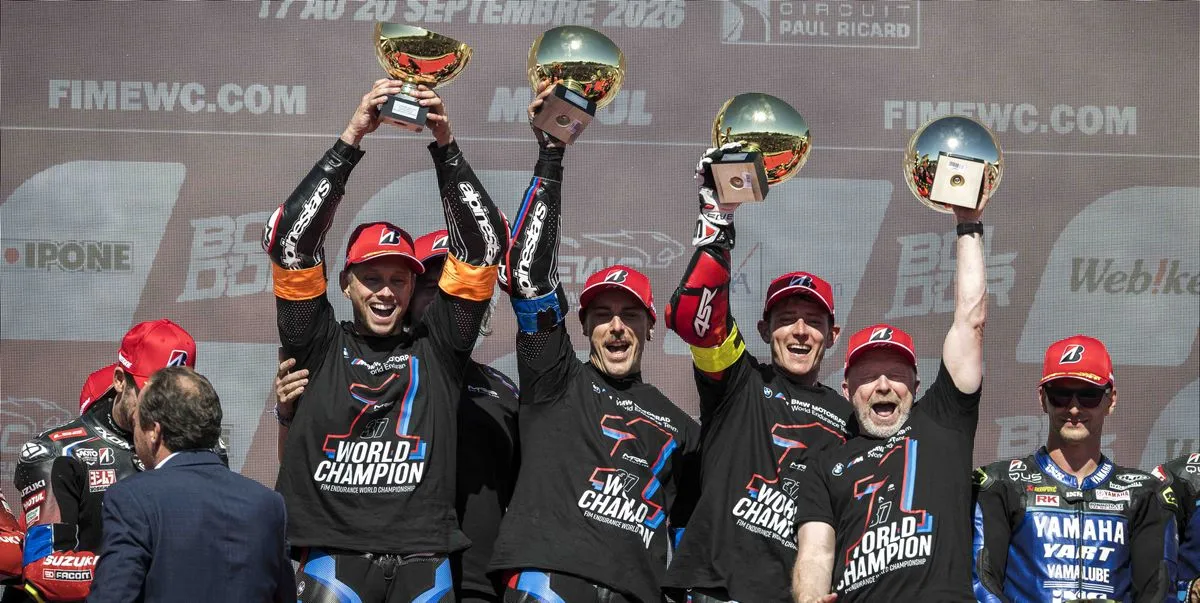
Victory and the championship title for BMW at the 2026 Bol d'Or.
-
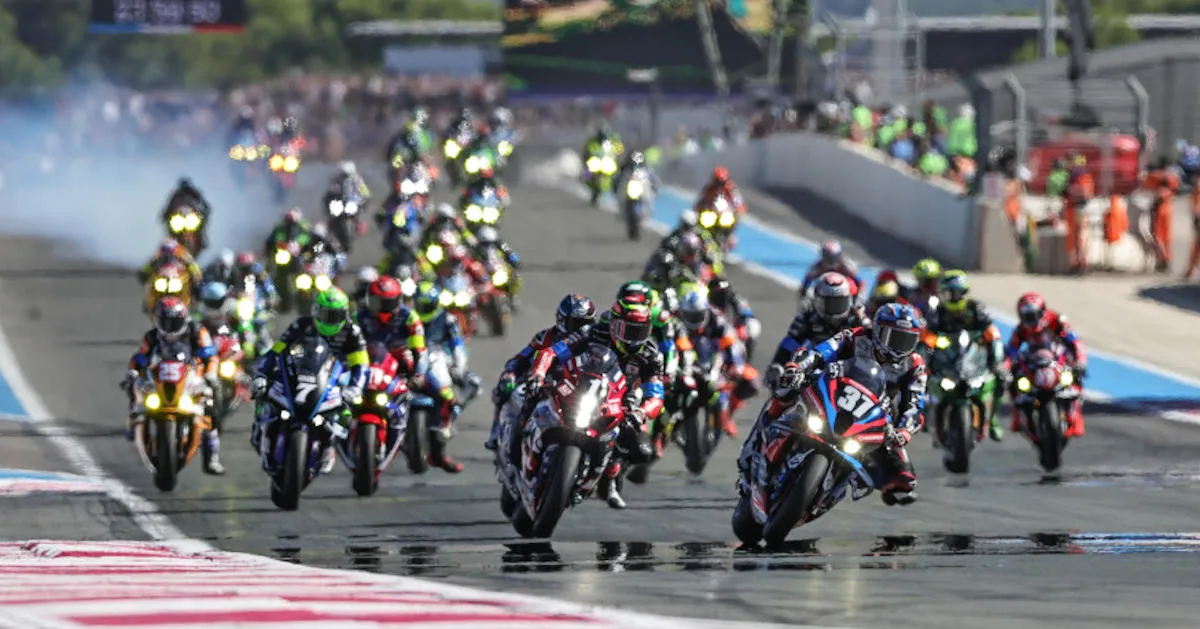
The 89th Bol d'Or: A Celebration of Racing Passion.
-
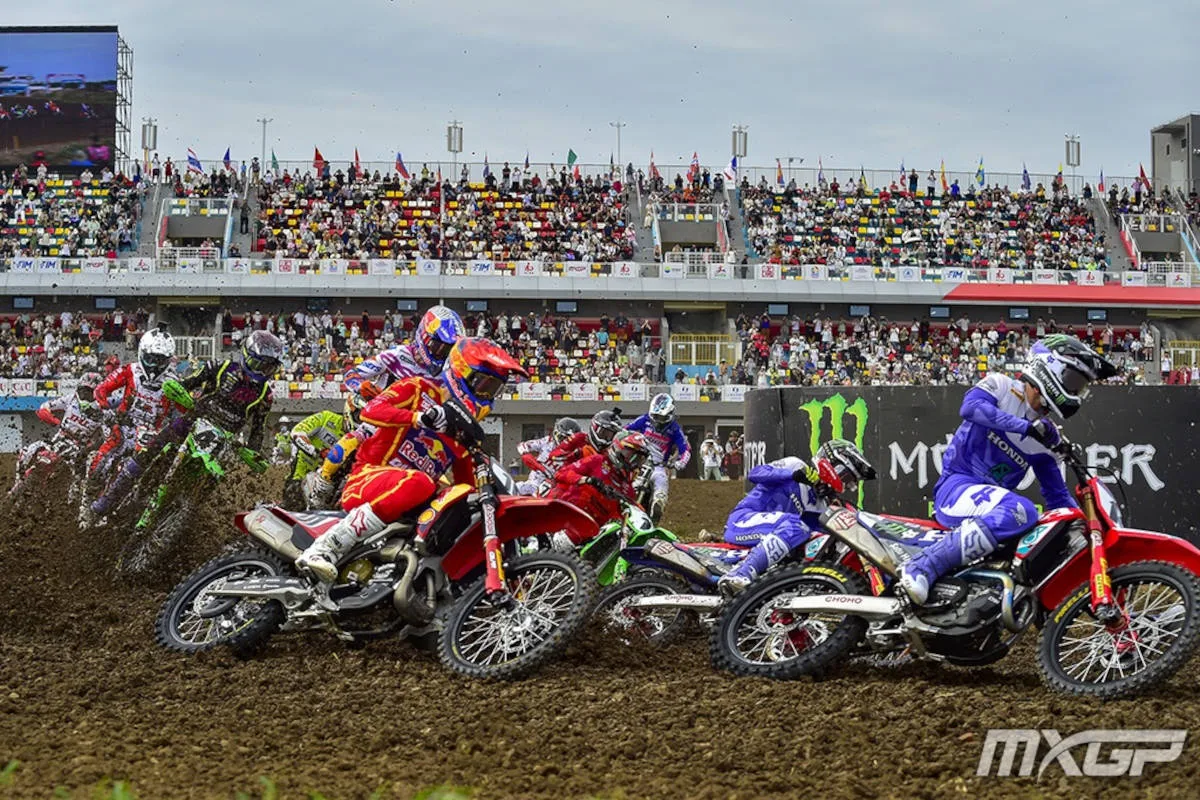
2026 MXGP of China: Herlings Unbeatable, McLellan Delays the MX2 Title
-
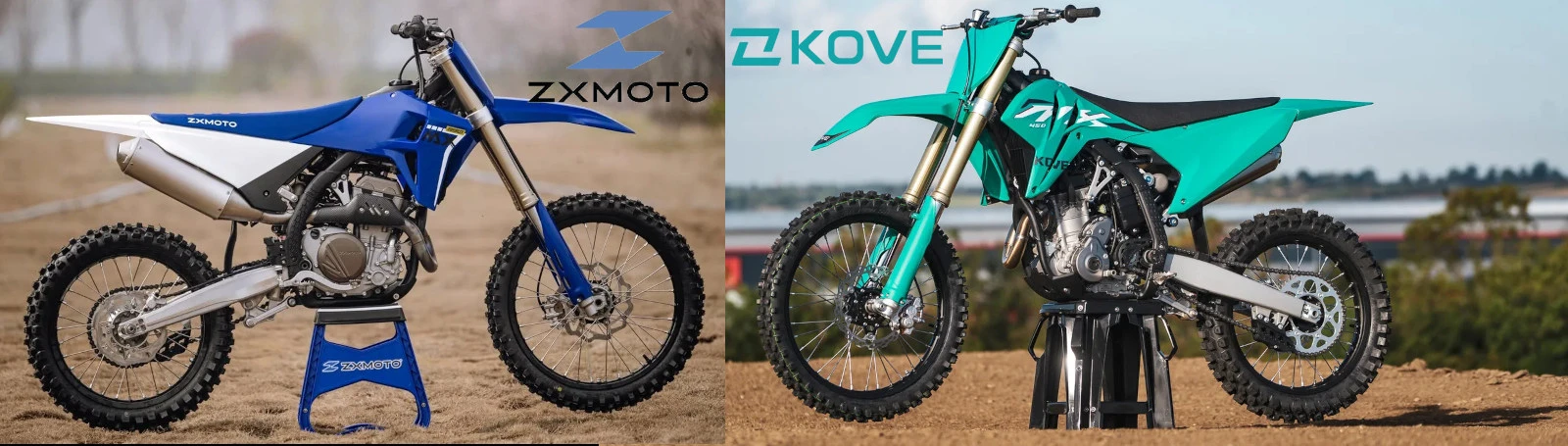
MXGP 2027: Kove and ZXMoto Join the Championship
-
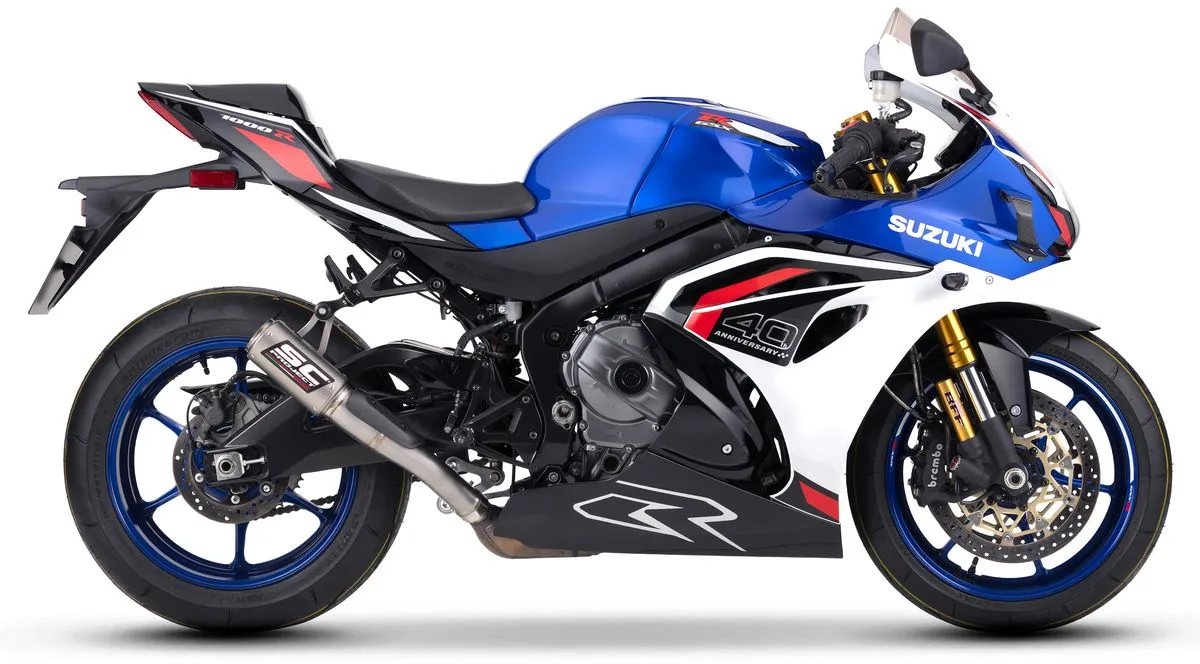
SC Project is working on the 2026 Suzuki GSX-R1000R.
-
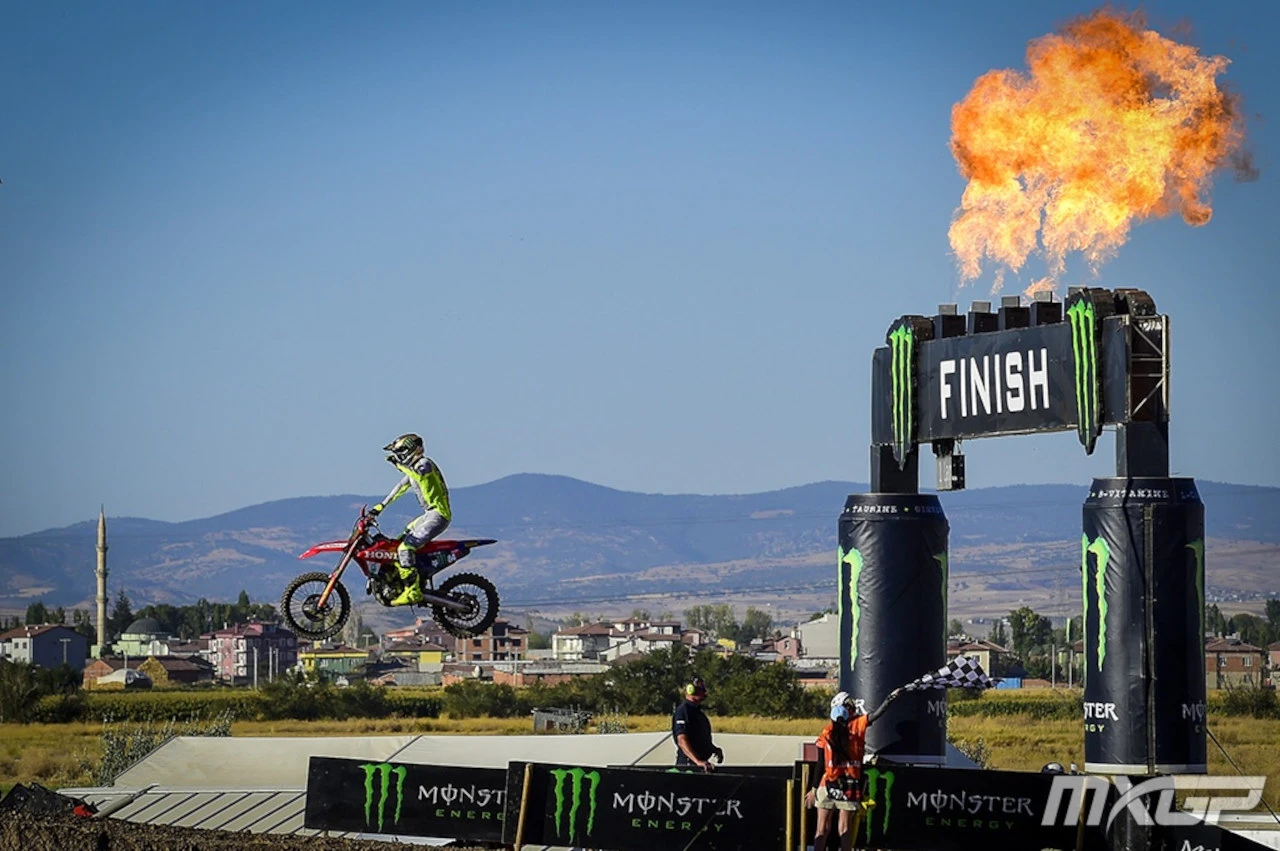
2026 MXGP of Turkey: Herlings Crowned World Champion!
-
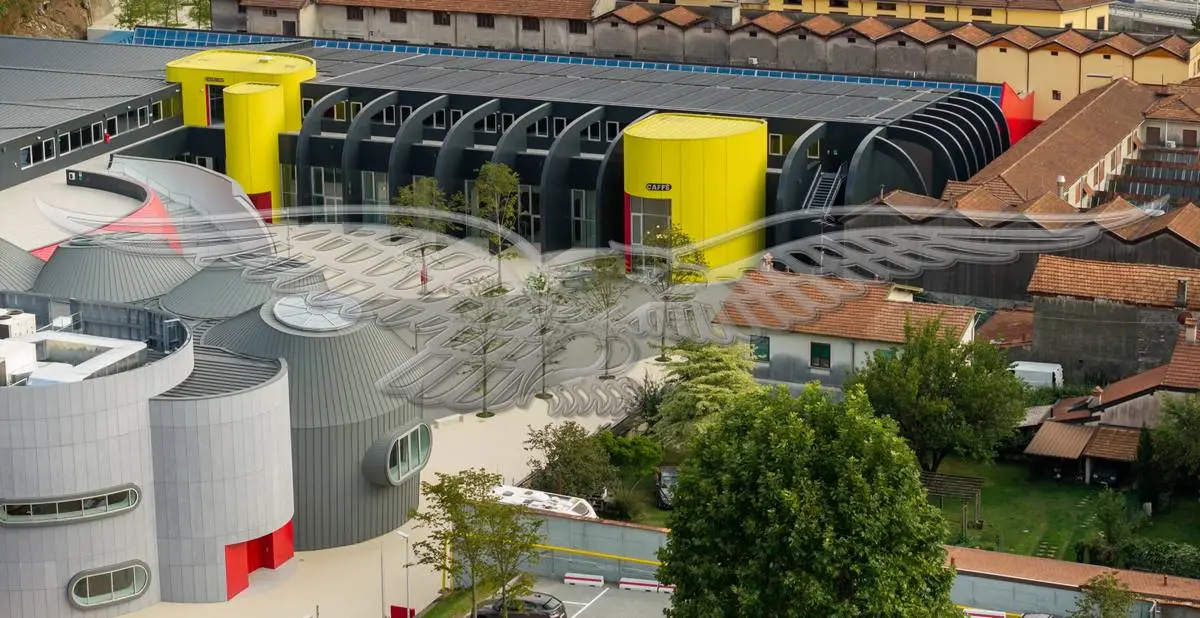
Moto Guzzi: In Mandello, the historic factory is taking on a new scale.
-
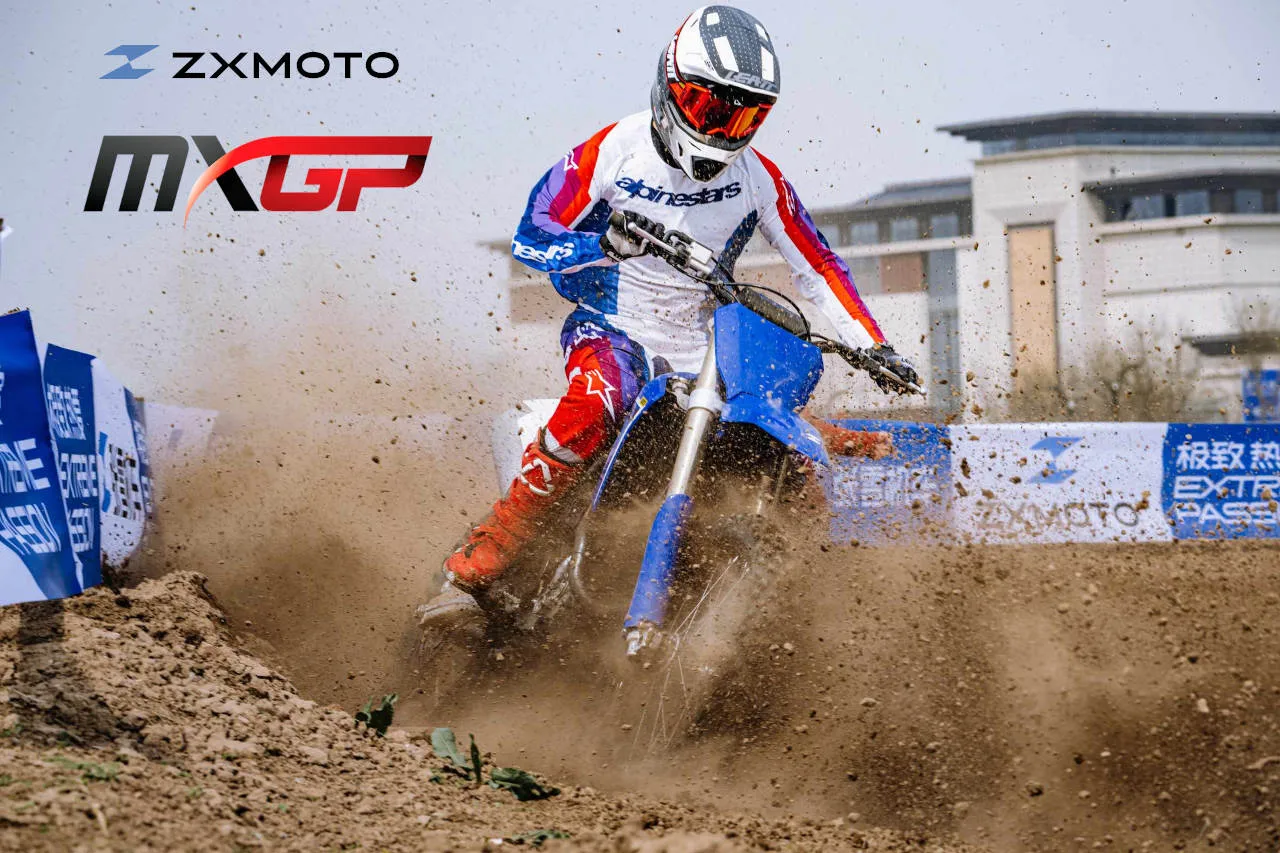
ZXMoto in MXGP 2027: The Hypothesis of an Off-Road Earthquake
-
The new motorcycle models of 2026 and the evolutions.

Bikers' reviews Leave a review - 6 reviews