

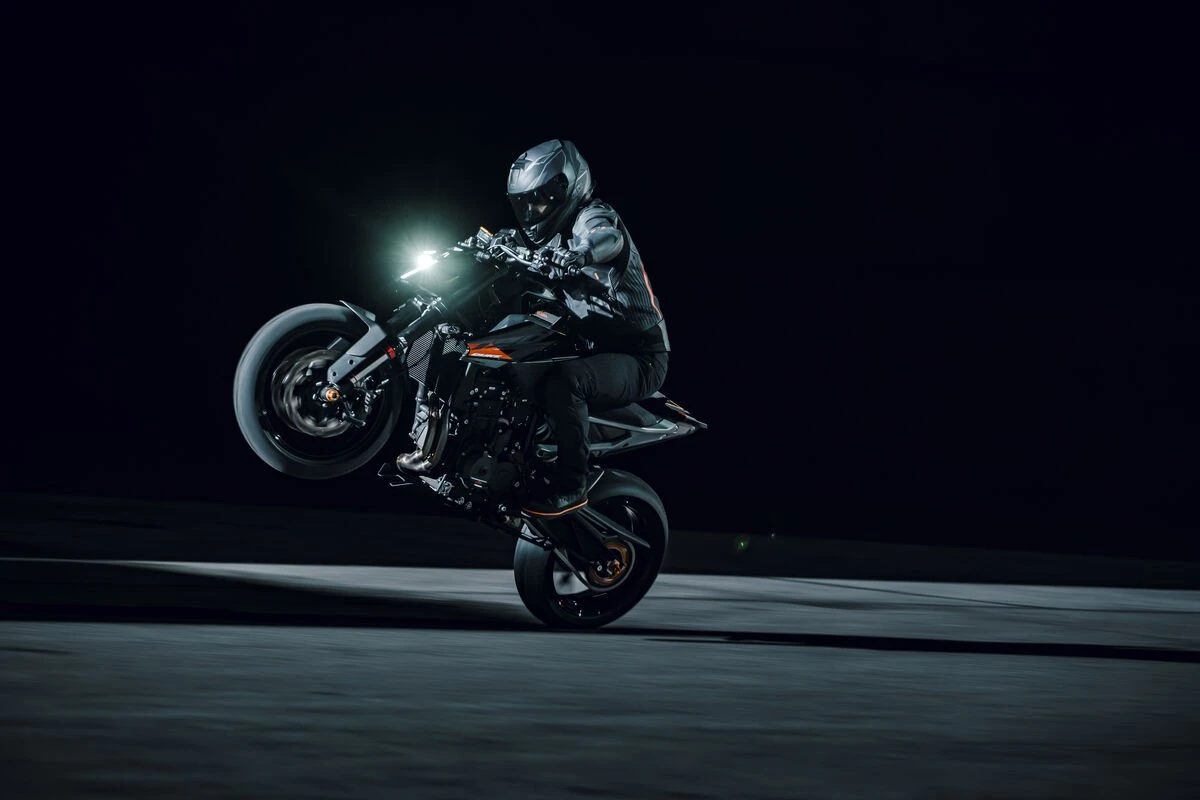
The 790 Duke isn't exactly a gentle bike. While not exactly a villain, it doesn't hesitate to elbow its way through to give its competitors a run for their money. But for 2027, KTM decided it was time for it to step up its game, develop some style, and embrace the family’s expressive character—all while honing its road-going capabilities.
To understand this machine’s DNA, you have to remember its official nickname given by Mattighofen: “The Scalpel.” Contrary to what one might think, “Duke” translates to “Duc” (the title of nobility). The term “Scalpel” was coined by KTM’s marketing team to convey the image of a surgical instrument, capable of carving through the road with millimeter-level precision. And for 2027, the blade has been significantly sharpened. While the technical foundation remains largely the same, the 2027 version introduces a host of new features that radically change the riding experience compared to the previous model year.
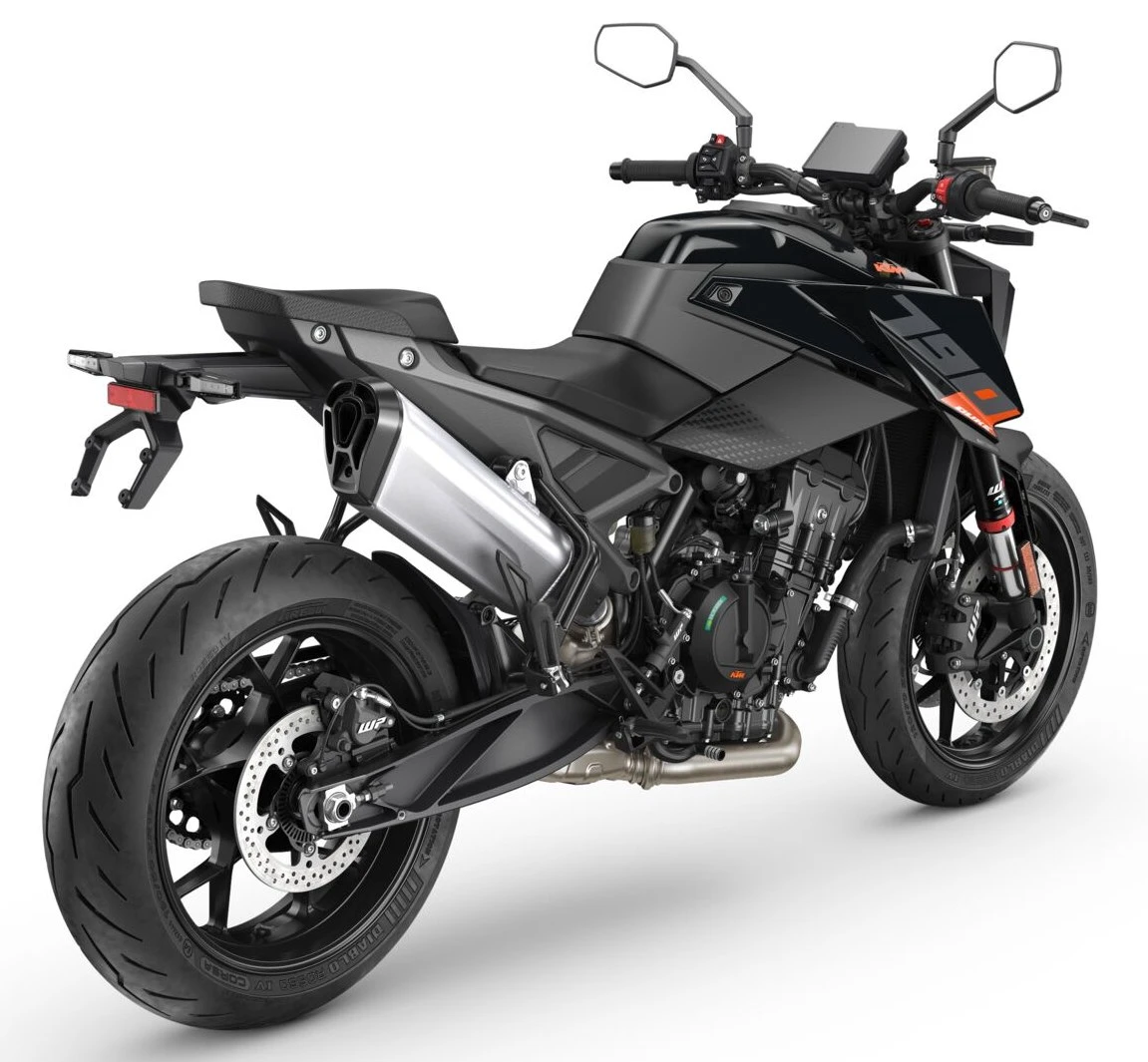
A “Facehugger” look inherited from the queens of Mattighofen
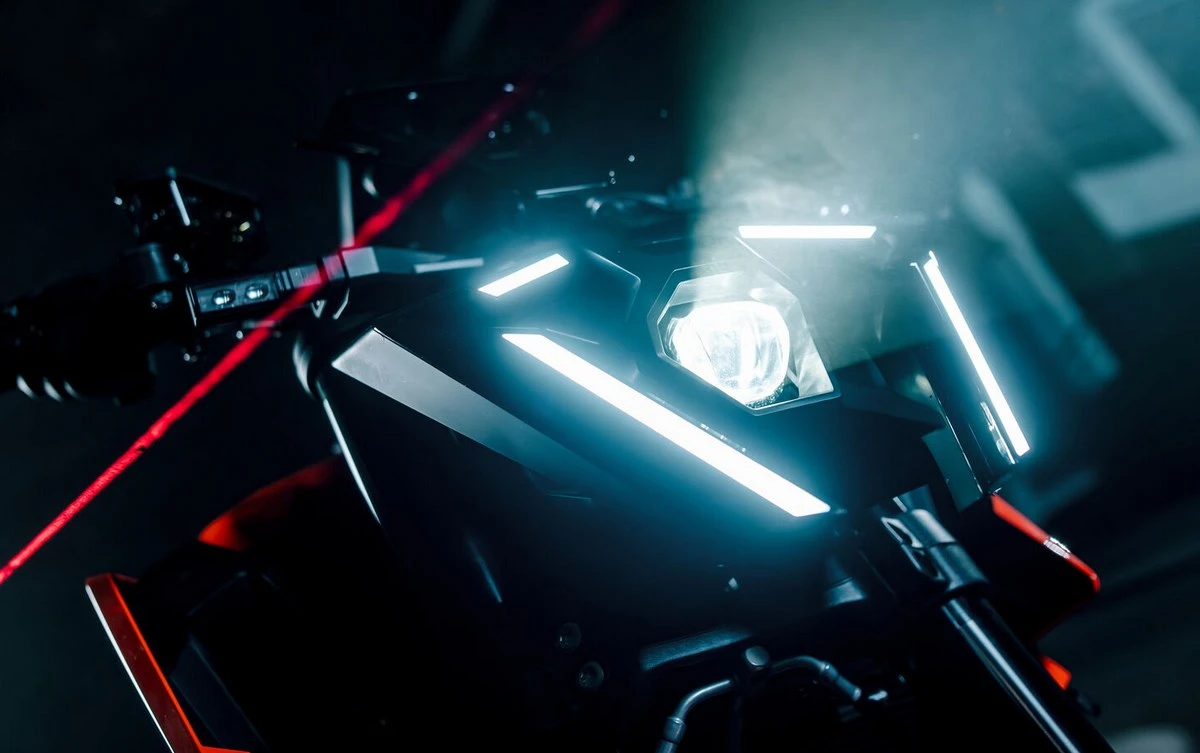
Its youthful days and previous wasp-like front end are now a thing of the past. The 790 Duke adopts the brand’s new visual signature: a recessed dual LED headlight, derived from that of the 990 Duke and 1390 SuperDuke R. This continued commitment to experimental, bold styling ensures the roadster remains striking, distinctive, eye-catching, and sometimes misunderstood.
Taking advantage of this facelift, Mattighofen has revised numerous elements:
- Bodywork: Less prominent side panels and a redesigned fuel tank (which loses 0.5 liters in capacity).
- Details: New turn signals, mirrors, and brake fluid reservoir.
- Chassis: An all-new, one-piece cast aluminum subframe that directly integrates the air box.
- Riding position: A more engagedriding position with a sleeker seat (with improved padding) and footpegs raised by 7 mm and set back by 2 mm.
A culture clash: WP Apex suspension and… WP brakes!
It’s in the dynamic department that the break with the previous generation is most pronounced. The 2027 790 Duke significantly increases its suspension travel, providing a wider operating range for the WP Apex components. The 43-mm inverted fork features progressive springs (soft at the beginning of the stroke, firm at the end to prevent bottoming out) and offers 5-click adjustment for compression (left leg) and rebound (right leg). The rear shock absorber offers the same adjustment options for rebound and preload.
When it comes to braking, there’s a surprise. The J.Juan calipers are gone, replaced by… WP components! Following in the footsteps of the 390 Duke, the 790 adopts KTM’s in-house braking solution, featuring Austrian-made 4-piston radial calipers gripping 300 mm rotors (with master cylinders also by WP). The system delivers more power and requires less lever effort. At the rear, there’s a 240 mm single-piston disc. The final change to the chassis: the stock Maxxis tires have been replaced with much sportier Pirelli Diablo Rosso IV tires.
An unchanged LC8c engine, but tailored for the A2 license
Under the fuel tank, there’s no revolution. The LC8c parallel-twin engine remains mechanically identical. As playful and enjoyable as ever, it retains its core characteristics with a global power rating set at 105 chevaux at 9,500 tr/min.
However, KTM continues its targeted policy by limiting European models to 95 chevaux (70 kW) at a lower rpm (8,000 tr/min) to allow for legal conversion to the A2 version (47.5 ch). Torque also remains unchanged at 87 Nm. The exhaust system features a noticeable increase in volume, a sign that the Austrian engine needs to breathe to meet the latest environmental standards without losing its character.
Cutting-Edge Electronics and the End of “Demo Mode”
The instrument panel retains its 5-inch color TFT screen. While the graphics remain unchanged—KTM’s digital ergonomics continue to set the standard—the housing and screen coating have been improved for greater durability and readability.
In terms of rider aids, the offerings are still divided into two categories:
| Standard Equipment | Optional Pack |
|
Traction Control (MTC) 3 Riding Modes Cornering ABS Supermoto ABS Mode |
Launch Control Cruise Control Fine-Tuning of Wheel Spin and Wheelies Additional Track Riding Mode Engine Slip Control (MSR) Telemetry screen |
KTM has listened to feedback and eliminated a frustrating feature: Demo Mode is gone. There will no longer be the frustration of testing all the free features during the first 1,500 kilometers only to have them locked out if you didn’t make a purchase at the dealership. From now on, it’s clear: either you pay at the time of purchase, or you do without.
Technical Evolution: Head-to-Head Comparison of the 2026 vs. 2027 KTM 790 Duke
To accurately gauge the effort made by Mattighofen, here’s a comparison of the technical specifications:
| Specifications | 2026 KTM 790 Duke | 2027 KTM 790 Duke |
| Fuel Tank | 14.5 liters | 14 liters |
| Front suspension travel | 140 mm | 150 mm |
| Rear travel | 150 mm | 170 mm |
| Front Brakes | J.Juan 4-piston calipers | WP 4-piston calipers |
| Tires | Maxxis Supermaxx ST | Pirelli Diablo Rosso IV |
| Dry weight | 169 kg | 167 kg |
| Seat height | 825 mm | 825 mm |
Mid-size competition on the prowl
The Scalpel is back in the ring, but the mid-size roadster category is one of the most competitive on the market. The 790 Duke will face three major rivals:
-
Honda CB 750 Hornet: The Japanese model boasts an ultra-aggressive price point and a very dynamic 270 engine (92 ch for 190 kg fully fueled), but its chassis remains much more basic and non-adjustable compared to the Scalpel’s new WP components.
-
Yamaha MT-07: The perennial sales leader emphasizes the playful character of its CP2 engine (73.4 ch). Significantly less powerful than the KTM, it relies on its accessibility and urban agility to win over riders, even though it lags behind in terms of cutting-edge electronics.
-
Triumph 765 Street Triple R: It’s the most dangerous rival when it comes to pure precision. Its three-cylinder engine roars out up to 120 ch, and its front end is superb. Although more expensive, it competes directly with the KTM for the title of the most effective machine on the track and on winding roads.
-
CFMOTO 800 NK: It’s a twist of fate. The 800 NK uses an engine directly derived from… KTM’s LC8c engine block! Thanks to the partnership between the two brands, CFMOTO offers a formidable technical clone (95 ch, adjustable KYB suspension, giant display) sold at an unbeatable price. The 790 Duke will have to step up its game to justify its premium status against its Asian cousin.
-
QJ Motor SRK 800 RR: The Chinese giant is deploying its firepower in every possible way. With components from top brands (Brembo brakes, Marzocchi suspension) and an aggressive pricing strategy, these manufacturers are no longer content with just producing low-cost models: they’re directly challenging KTM’s dynamic performance.
The right price to stay competitive?
Refreshed and battle-tested rather than completely redesigned, the most versatile of the Duke models has what it takes to solidify its position in the market. Its polarizing design won’t be to everyone’s taste, but it offers enough improvements (adjustable suspension, WP brakes, weight reduction) to make you want to turn the key in the ignition.
The pleasant surprise comes from the price: since the parent company realized it was better to remain aggressive against the competition, the 2027 KTM 790 Duke retains the price of the previous version.

 Share
Share
 helmet
 Gloves
 jacket
 braking
 Chain kit
 Oils
Oils Find an intercom
 Parts
Parts Luggage
 Tires
Tires

Bikers' reviews