
Motorcycle specifications Suzuki GS 750 1976 Suzuki wins


presentation of the GS 750 1976
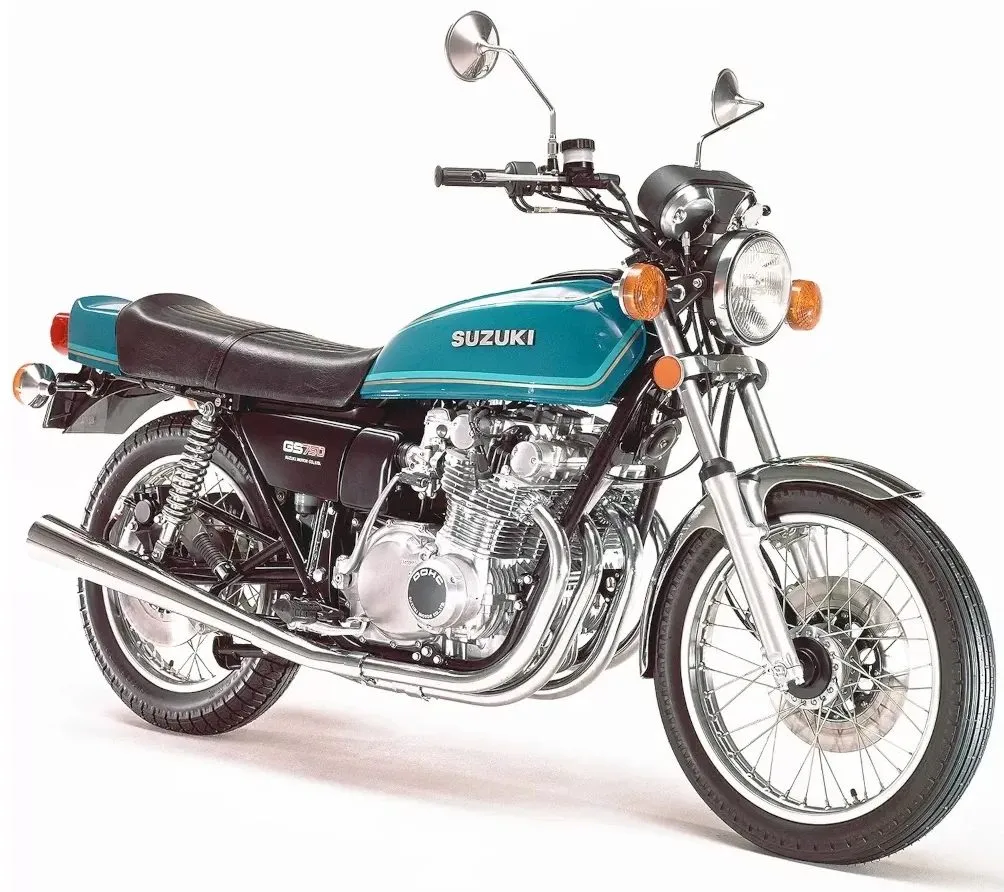
In 1976, the performance motorcycle arena was a cauldron of fierce competition. Suzuki, a major player that had built its reputation on 2-stroke expertise and its GT models, was at a crossroads. The time for bold but economically fragile experiments - such as the GT 750 or the daring RE5 rotary engine project - was coming to an end. What was needed was a response, a machine capable of taking on the 4-stroke titans Honda and Kawasaki.
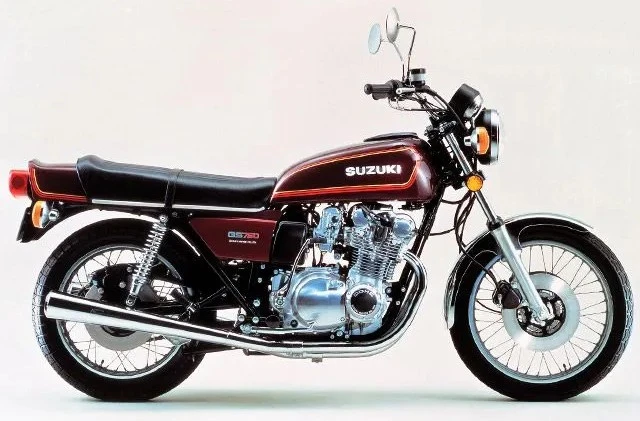
Hamamatsu's answer was the GS 750.
Rather than innovate at all costs, Suzuki was cautious but also rigorous. The GS 750 is an exercise in refinement and homogeneity, designed to produce the best interpretation of the Universal Japanese Motorcycle (UJM) formula. It arrived as the most competent and well-balanced machine in its class, laying the foundations for Suzuki's future success in the decade to come.
Its 7-and-a-half heralds the future
At the heart of this new era was an engine designed for reliability and performance: Suzuki's first large-displacement 4-cylinder 4-stroke.
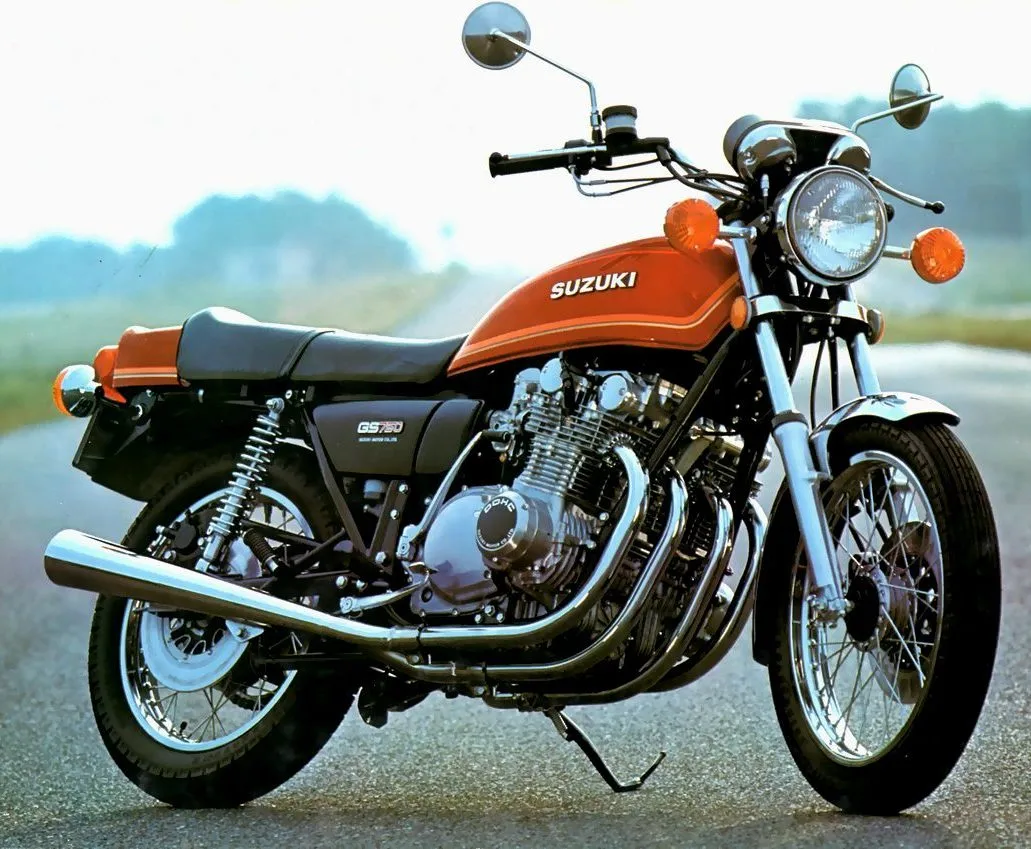
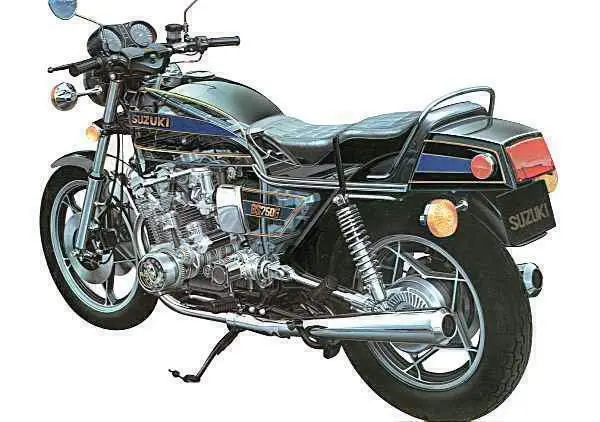
It was an air-cooled, transverse in-line 4 with a DOHC cylinder head and two valves per cylinder. With a displacement of 748 cm³, this block delivered maximum power of 68 bhp at 8,500 rpm. The engine was renowned for its great flexibility and ability to climb quickly up the rev range, surpassing its rivals in terms of modern feel and raw performance. The whole package was managed by a precise five-speed gearbox.
A much-improved chassis
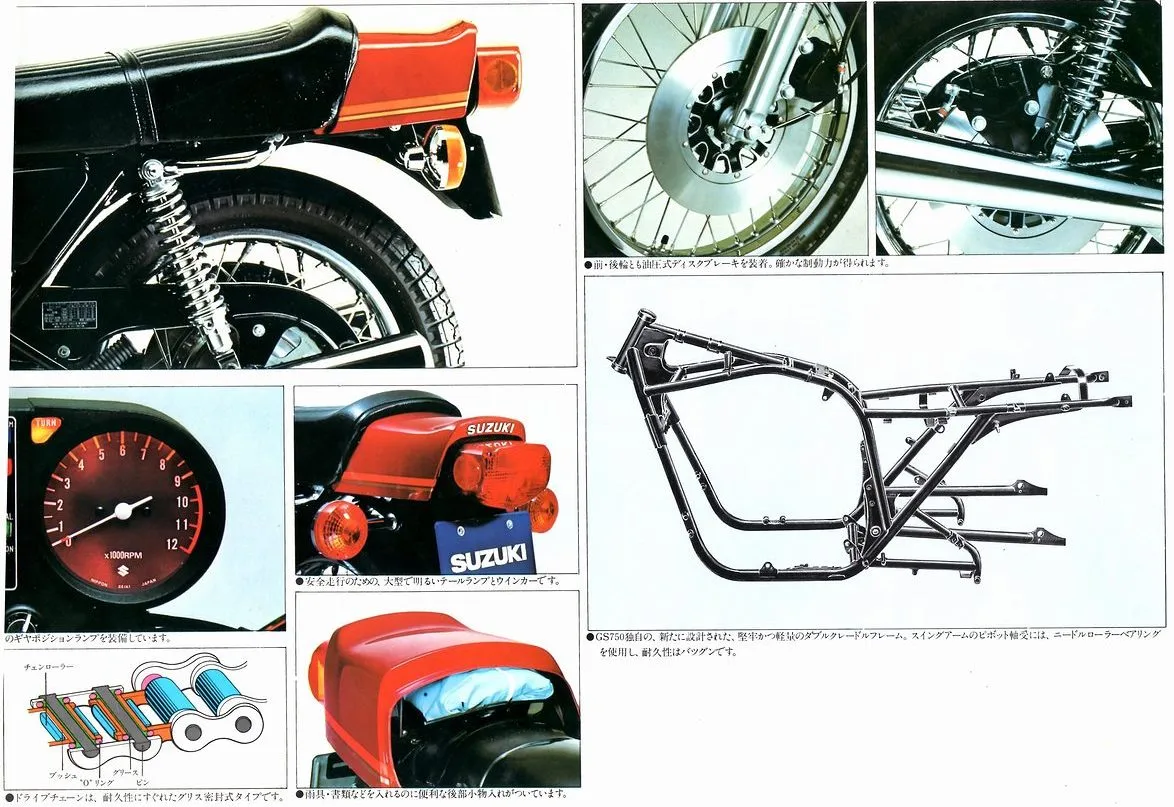
Suzuki's real masterstroke lay in the chassis. While competitors often struggled to manage the power of their big cubes, the GS 750 established itself as the Japanese big bike with the best handling of its time.
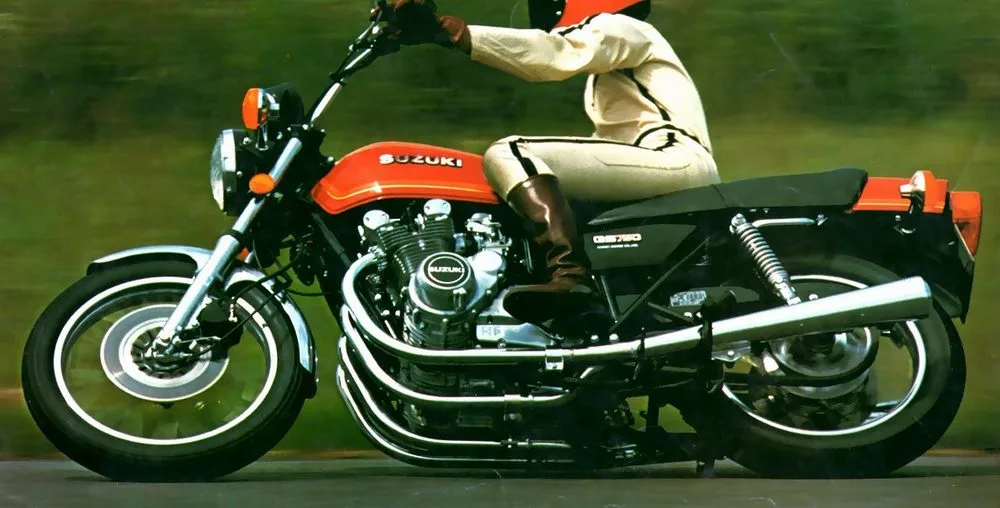
The chassis was rigid, giving the bike exemplary stability and handling that seemed ahead of other UJMs. From the outset, braking was provided by a disc system - single disc at the front (double as an option, soon increased to two) and rear, with a piston on each side.
The beginning of its sporting dimension
The GS 750 knew how to get noticed. It was one of the few motorcycles of the '70s to feature a gear indicator on the dashboard. With a dry weight of 221 kg, it was far from being a featherweight, but its power and rigorous chassis made it a very efficient machine on the road.
However, it was in competition that the GS 750 made its name. In 1977, the legendary alliance between Suzuki and "Pop" Yoshimura was born. A heavily modified GS 750 made its AMA Superbike debut and won its first race at Laguna Seca. This victory, over bikes such as the Ducati 750SS that were renowned for their handling, proved the superiority of the GS's technical base.
The GS 750 didn't just improve on the UJM formula; it redefined it and paved the way for a line of iconic models, including the highly acclaimed GS 1000 and, eventually, the GSX-R series of lightning bolts. For purists, it remains one of the most refined and underrated machines of the classic era.
M.Bi. - Manufacturer photos
by Greg

Greg is the founder of Motoplanete—a website created in 2001 to share his passion with his friends and showcase as many motorcycle models as possible to his readers. Self-taught and a jack-of-all-trades, his discovery of the world of motorcycles led him to work as a photographer, rider, team manager, web developer, graphic designer, editorial assistant, and editor-in-chief.
 Share
Share
Key facts Suzuki GS 750 (1976) : What you need to know before you buy
Prices
| Basic version | |
|---|---|
 United States United States |
$2,195
|
Model sold in 1976
Performance
- Max speed : approximately 200 km/h (124.30 mph)
- Average fuel consumption : 6.40 liters/100km (0.37 mpg)
-
Estimated range
: 281 km (175 miles)
Calculated range until tank is empty, not verified.
Specifications Suzuki GS 750 1976
- Chassis
- Two-seater saddle
- Frame : Double cradle steel frame
- Fuel capacity : 18 liters (4.76 US gallons)
- Oil capacity : 3.40 liters (0.90 US gallons)
- Length : 2,225 mm (87.60 in)
- Width : 855 mm (33.66 in)
- Min height : 1,170 mm (46.06 in)
-
Min. ground clearance : 150 mm (5.91 in)
- Wheelbase : 1,490 mm (58.66 in)
- Dry weight : 221 kg (487 lb)
- Weight when fully loaded : 246 kg (542 lb)
- Front axle
- Telescopic fork Ø 35 mm / Kayaba (KYB)
- Braking 1 disc Ø 292 mm (11.5 in), single-piston caliper
- Transmission
- 5 stage gearbox , manual
- Secondary by chain
- Rear axle
- 2 lateral shock absorbers
- Preload and rebound adjustment
- Braking 1 disc Ø 292 mm (11.5 in), single-piston caliper
- Motor
- 4 cylinders online , 4 strokes
- 4 Mikuni Ø 26 mm carburetors
- Cooling system : by air
- 2 ACT
- 2 valves per cylinder
- 748.60 cc
- 68 ch (67.10 hp) to 8,500 rpm
- 6 mkg (58.80 Nm) to 7,000 rpm
- Power-to-Weight Ratio : 3.29 kg/ch
- Torque-to-Weight Ratio : 36.83 kg/mkg
- Compression : 8.7 : 1
- Starting system : electric and kick
- Practical information
- Country of manufacture : Japan
Essentials



 Motoblouz

 LaBécanerie



Gallery
Models
1976
Used

Compare the GS 750 to its competitors
Compared to its direct competitor, this GS 750 holds a particularly dominant position, establishing itself as the benchmark across several key criteria. It outperforms the segment by combining power output of 68 ch, torque of 6 Nm, and top speed of 200 km/h. Its torque-to-weight ratio of 36.83 kg/Nm limits its punch at low revs.
Price
Fuel consumption
Range
Torque
Power
Power-to-Weight ratio
Torque-to-Weight ratio
Speed
FAQ Your frequently asked questions about the GS 750 1976
- What is the power of the GS 750?
-
The GS 750 1976 develops a power of 68 ch (67.10 hp)
- What is the torque of the GS 750?
-
The maximum torque of the GS 750 1976 is 6 mkg (58.80 Nm) to 7,000 rpm.
- What is the maximum speed of the GS 750?
-
The GS 750 1976 is capable of reaching a top speed of approximately 200 km/h (124.30 mph) on the track.
- What is the weight of the GS 750?
-
The GS 750 1976 has a a dry weight of 221 kg (487 lb), a weight when fully loaded of 246 kg (542 lb).
- What is the fuel consumption of the GS 750?
-
Average fuel consumption is estimated at 6.40 l/100km (0.37 mpg) according to the WMTC cycle.
- What is the price of the GS 750?
-
The price of the GS 750 1976 is $2,195 in the United States
News
-
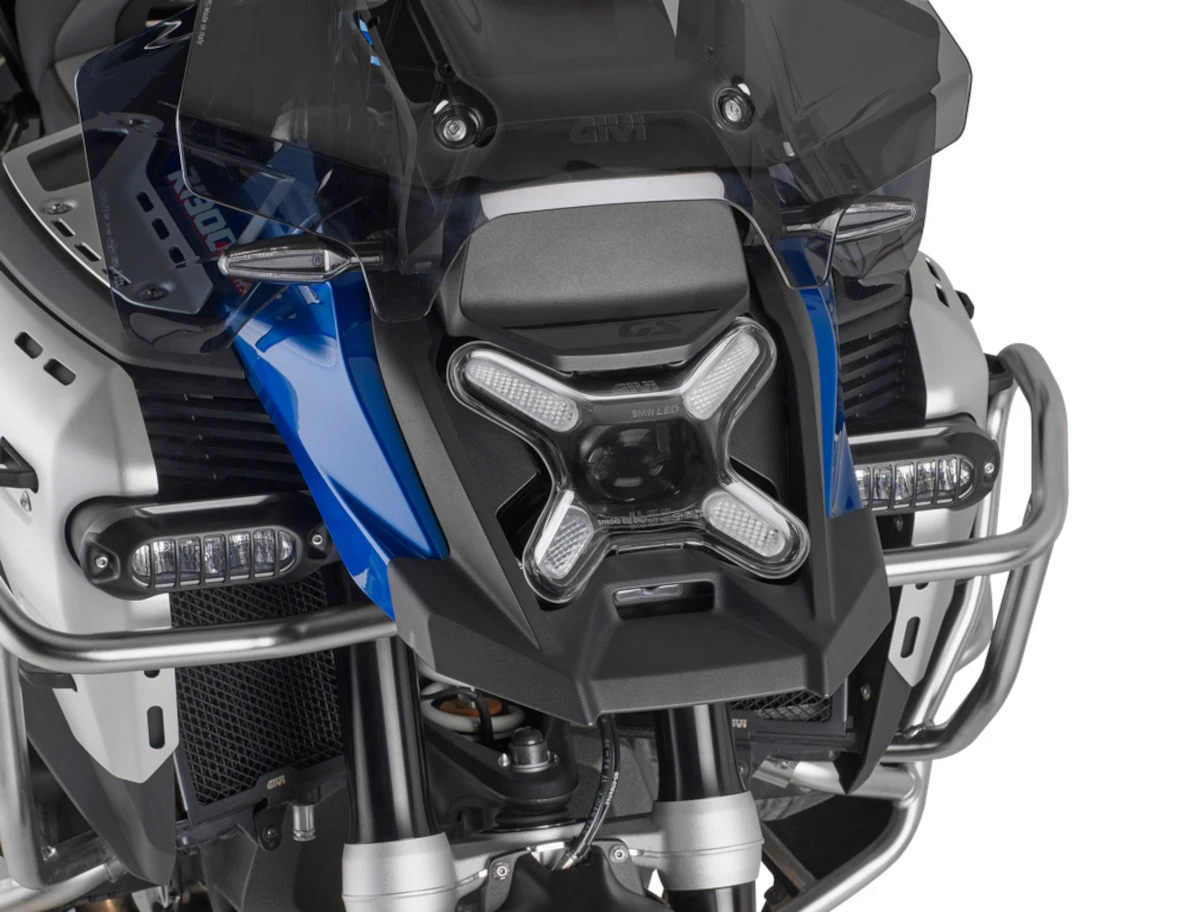
GIVI HLP Headlight Protector: Ténéré 700 and R1300GS
-
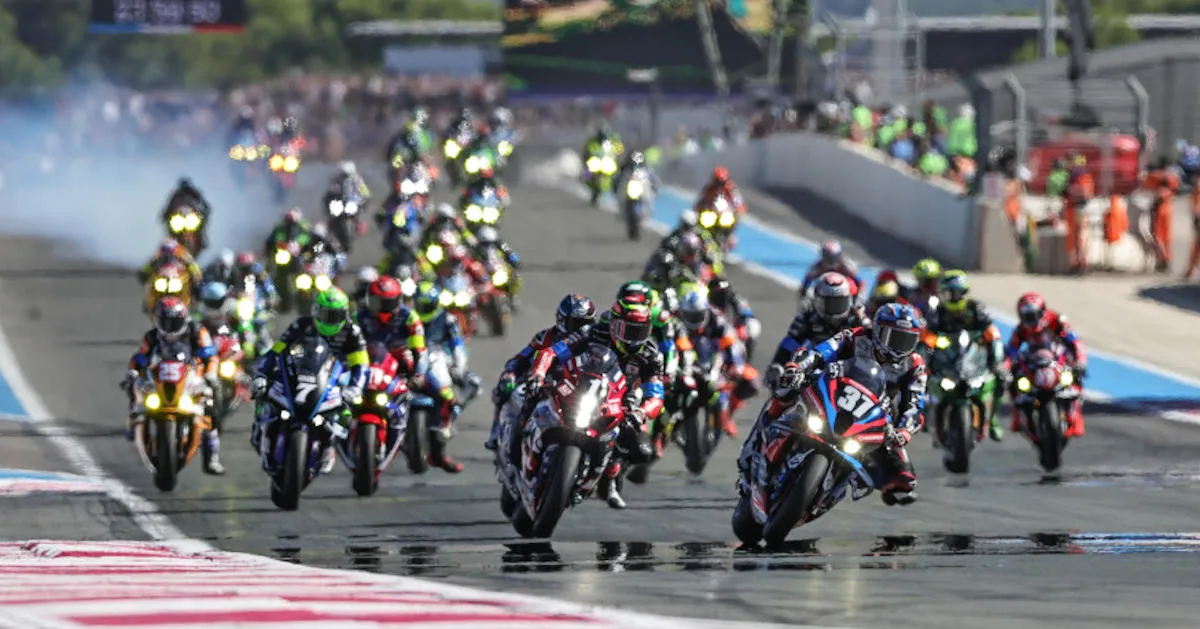
Victory and the championship title for BMW at the 2026 Bol d'Or.

-
The 89th Bol d'Or: A Celebration of Racing Passion.
-
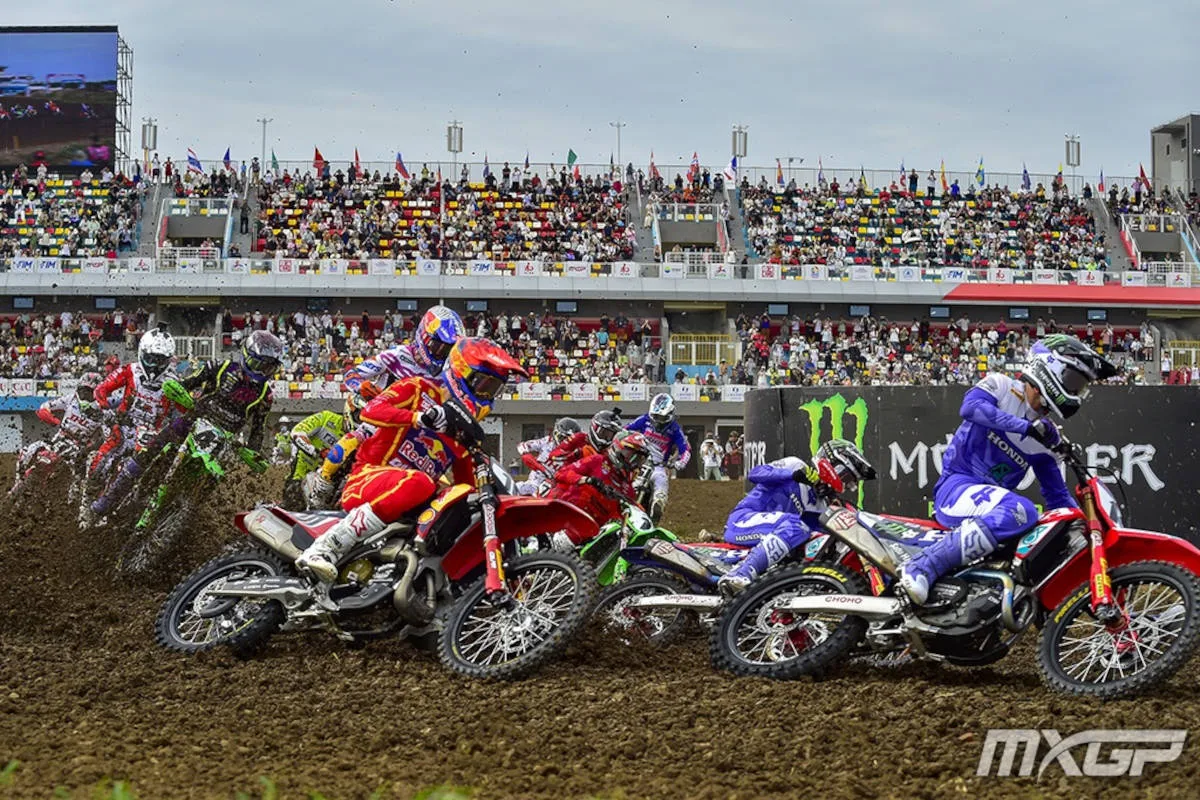
2026 MXGP of China: Herlings Unbeatable, McLellan Delays the MX2 Title
-
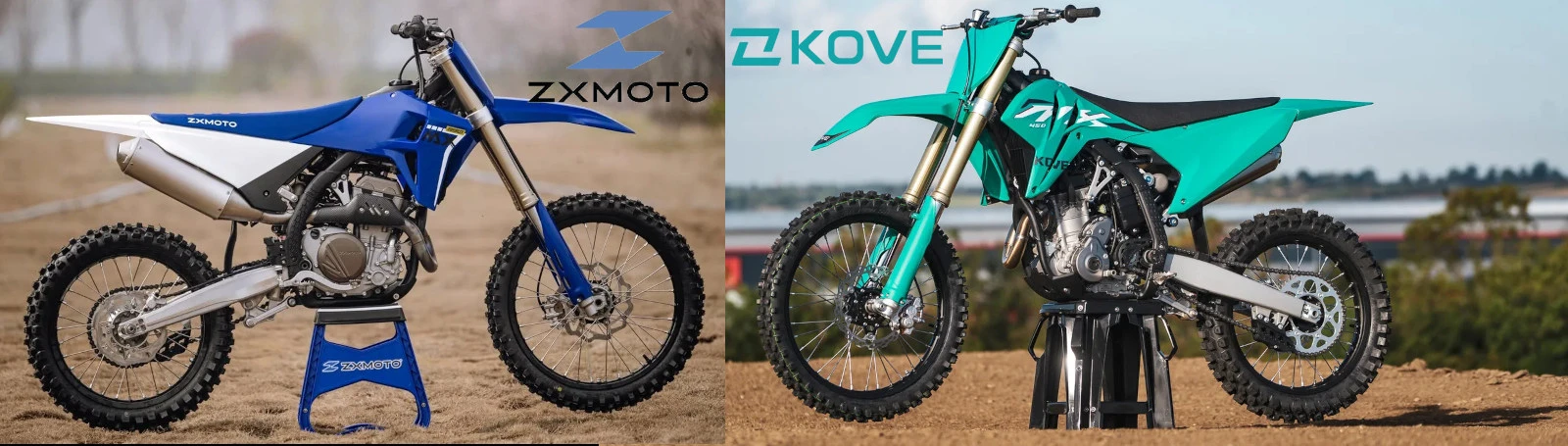
MXGP 2027: Kove and ZXMoto Join the Championship
-
SC Project is working on the 2026 Suzuki GSX-R1000R.
-
2026 MXGP of Turkey: Herlings Crowned World Champion!
-
Moto Guzzi: In Mandello, the historic factory is taking on a new scale.
-
ZXMoto in MXGP 2027: The Hypothesis of an Off-Road Earthquake
-
The new motorcycle models of 2026 and the evolutions.

Bikers' reviews Leave a review - 1 review