
Motorcycle specifications Ducati 1260 Multistrada 2019 Growling under the trees


presentation of the 1260 Multistrada 2019
Why Multistrada? Because Ducati claims to be able to handle all types of road, and its trail bike boasts 4 bikes in 1. To the sirens of urban, sport, touring and enduro riding. Of course, it couldn't compete with a GSX-R on the racetrack, or caper like an EXC in a rocky skirmish. But this all-round performer is no stranger to surprises. Today, after several evolutions, it extends its history by improving a series of elements and boosting its engine. The threat in the maxi-trail segment raises its game with this 1260 Multistrada.
In guts, but not in style. Ducati has been very cautious when it comes to the visual reworking of its multi-card trail bike. A touch of firmness for the fairing panels, a reworked profile for the wheels - 340g lighter - and a 'Testastretta DVT' plate inserted on the belt cover.on the front belt cover, revised saddles (the passenger seat is still adjustable to two heights), a new license plate holder and LED rear indicators. The redesign is complete. Now we can find out what justifies the change of name.
It all seems to be part of those evenings when wine loosens tongues too much. Jealousy exists everywhere, and often in the heart of the village. And when the trail saw that the 'diffferent' XDiavel cousin had a bigger engine than she did, things got a bit smoky at the Sunday get-together. Before the MTS could throw a tantrum, the engine-makers calmed the rivalry while fanning the flames. The Testastretta twin retains its DVT variable valve timing, increases the piston stroke from 67.9 to 71.5 mm, and reaches a cubic capacity of 1262 cm3 - the same dimensions as the cruiser block. But it's not a question of ego. It's all about filling out the torque curve. From now on, on the 13.2 mkg maxi, 85% is available from 3500 rpm. At 5500 rpm, that's 18% less than on the previous 1200.
It pays to have changed cylinders, connecting rods and crankshaft. And as you'd expect, the watts are up, with an inflated value of 116.2 kW at 9500 rpm, or 158 hp.
Wait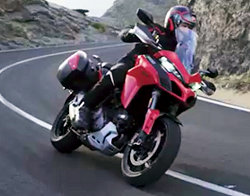
Yes, but no. Let's try to keep things simple with the salad of yesterday's and today's measurement systems. When the Multistrada engine adopted the DVT, Ducati measured power on a dynamic dyno. The result was 160 horsepower. Recently, the measurement policy has changed and the data is taken from a static dyno. For the same engine, this drops performance to 152 units. The 1260 block undergoes the same type of measurement to reveal its 158 horsepower, which is ultimately more than the old mill, but not with the same rules.
Let's return to the mechanics themselves to find out what else has changed. A different breath can only be achieved with various adaptations on the inlet and outlet sides. The air intakes have been redesigned, as have the exhaust and its manifold, and we end with new mufflers - visually very similar to the old ones.
As you'd expect, the on-board technological arsenal has been enriched and recalibrated. But first, let's not forget the essentials. What holds the wheel together. The real link between the wheels. The chassis. Ducati's quality is always top-notch, with a handsome monobracket, a 48 mm inverted fork - soft and fully adjustable, like the shock absorber - 17-inch wheels and a tubular steel trellis frame. Slightly reworked, with a column angle increased by one degree (from 24 to 25), a 48 mm longer swingarm and a 55 mm longer wheelbase. This should make the Multistrada 1260 even more stable, especially when cornering. Should you wish to slow it down, braking remains of the same caliber as on the old model, so it's not naughty, with Brembo monobloc radial 4-piston brakes for 320 mm tracks. For the front, the rear will make do with a 265 mm disc and twin-piston caliper. To control this, a radial master cylinder, hoses, DOT, sensors, wires and an inertial unit are present. And it's now that the electronics reveal their big portfolio of activities.
Before, you'd brake and watch out. Yesterday, you still braked, but the ABS sometimes (often?) kept you out of trouble. Today, it's the algorithms that do the braking. With Bosch 9.1ME Cornering ABS, braking distribution, anti-lock braking and rear-wheel anti-dribble vary according to the angle of the bike and the riding mode selected. This means you can choose between total safety, permissiveness or selective freedom. More details in the Riding Modes section at the end.
There's no dogma in the Riding Modes, which let you select the bike's mood and responsiveness at will. Sport - Touring - Urban - Enduro. Each mode adapts the different assistances to simplify your selection. What are they? Traction control, with 8 levels of interference. Anti-wheeling, also with 8 levels. Power modes. ABS, with 3 intervention levels. No shifter as standard, but cruise control, auto-cancelling indicators, hands-free starting and a hill-start assistant, Vehicle Hold Control (VHC). This system, first introduced on the Multistrada 1200 Enduro, locks the rear wheel to make restarting easier. Ducati loves to cram its machines full of technical extras. A little anecdote to underline the work of the motorcycle computer specialists? The engine brake reacts differently according to the gear ratio engaged.
The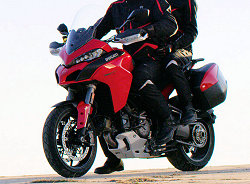
With its new 1262 cm3 twin, the Multistrada changes neither form nor substance, but seriously strengthens its engine availability. As one of the most powerful trail bikes on the market, this ground-breaking road-holding missile can be adapted to meet your every need. Depending on your tastes and investment capacity, the 1260 Multistrada is available in standard, S, S D-air and Pikes Peak versions.
M.B - Manufacturer's photos
riding Modes :
Sport Mode - 158 hp and 13 m/kg of torque, combined with low traction control (DTC) and anti-wheeling (DWC) intervention, and Level 2 ABS setting. The combination of rear anti-dribble and cornering ABS is ideal for experienced riders who want to test their limits.
Touring mode - 158 hp delivered with smoother, less direct throttle response. Active safety is enhanced by higher DTC and DWC sensitivity levels to maintain stability. The ABS is set to intervention level 3, ideal for Touring, allowing the rear wheel anti-dribble and ABS Cornering to be triggered, while optimizing the combined effect of front and rear braking.
Urban mode - Power is reduced to 100hp. DTC and DWC are set to a high level for maximum safety on imperfect urban roads. ABS is set to level 3.
Enduro mode - sets engine power to a maximum of 100 hp, with an off-road orientation. DTC and DWC are low and ABS is set to level 1, suitable for off-road use on low-grip surfaces: rear-wheel anti-dribble detection is deactivated, cornering detection deactivated and ABS acts only on the front wheel.
by Greg
Greg is the founder of Motoplanete—a website created in 2001 to share his passion with his friends and showcase as many motorcycle models as possible to his readers. Self-taught and a jack-of-all-trades, his discovery of the world of motorcycles led him to work as a photographer, rider, team manager, web developer, graphic designer, editorial assistant, and editor-in-chief.
 Share
Share
Key facts Ducati 1260 Multistrada (2019) : What you need to know before you buy
Prices
| Basic version | |
|---|---|
 France France |
18,590€
|


Performance
- Max speed : approximately 240 km/h (149.10 mph)
- Average fuel consumption : 5.20 liters/100km (0.45 mpg)
-
Estimated range
: 385 km (239 miles)
Calculated range until tank is empty, not verified.
History

Specifications Ducati 1260 Multistrada 2019
- Chassis
- Frame : tubular steel mesh
- Fuel capacity : 20 liters (5.28 US gallons)
- seat height adjustable between 825 mm and 845 mm
- Wheelbase : 1,585 mm (62.40 in)
- Dry weight : 209 kg (461 lb)
- Weight when fully loaded : 232 kg (511 lb)
- Front axle
- Reverse telehydraulic fork Ø 48 mm, Wheel travel : 170 mm (6.69 in)
- Braking 2 discs Ø 320 mm (12.6 in), radial mounting, 4-piston caliper
- Front tire : 120 / 70 - 17 → Order this type of tire
- Pressure : 2.5 bar
- Transmission
- 6 stage gearbox
- Secondary by chain
- Rear axle
- Mono-damper, Wheel travel : 170 mm (6.69 in)
- Braking 1 disc Ø 265 mm (10.43 in), 2-piston caliper
- Rear tire : 190 / 55 - 17 → Order this type of tire
- Pressure : 2.5 bar
- Motor
- two-cylinder 90° L-shape , 4 strokes
- injection Ø 56 mm
- Cooling system : liquid
- 2 ACT, distrib variable
- 4 valves per cylinder
- 1,262 cc
- 158 ch (155.80 hp) to 9,500 rpm
- 13.20 mkg to 7,500 rpm
- Power-to-Weight Ratio : 1.34 kg/ch
- Torque-to-Weight Ratio : 15.83 kg/mkg
- Compression : 13 : 1
- Standard equipment
- Brake assist : ABS in curves
- Practical information
Essentials
 Motoblouz
 LaBécanerie


Gallery


Models
2020

2019

2018

Used
Find this used 1260 Multistrada on MotoPlanete


Compare the 1260 Multistrada to its competitors
Compared to its 5 direct competitors, this 1260 Multistrada holds a particularly dominant position, establishing itself as the benchmark across several key criteria. It outperforms the segment by combining riding range of 385 km, weight of 209 kg, and torque-to-weight ratio of 15.83 kg/Nm. Its overall spec sheet reveals no noticeable weak points in this segment.
Acceleration
Fuel consumption
Range
Torque
Power
Power-to-Weight ratio
Torque-to-Weight ratio
Speed
CO² emissions
FAQ Your frequently asked questions about the 1260 Multistrada 2019
- What is the power of the 1260 Multistrada?
-
The 1260 Multistrada 2019 develops a power of 158 ch (155.80 hp)
- What is the torque of the 1260 Multistrada?
-
The maximum torque of the 1260 Multistrada 2019 is 13.20 mkg to 7,500 rpm.
- What is the maximum speed of the 1260 Multistrada?
-
The 1260 Multistrada 2019 is capable of reaching a top speed of approximately 240 km/h (149.10 mph) on the track.
- What is the weight of the 1260 Multistrada?
-
The 1260 Multistrada 2019 has a a dry weight of 209 kg (461 lb), a weight when fully loaded of 232 kg (511 lb).
- What is the fuel consumption of the 1260 Multistrada?
-
Average fuel consumption is estimated at 5.20 l/100km (0.45 mpg) according to the WMTC cycle.
- QWhat is the seat height of the 1260 Multistrada?
-
To ensure good accessibility, the 1260 Multistrada 2019 offers a minimum seat height of 825 mm (32.48 in). The integrated adjustment allows you to adjust the riding position to suit your needs.
- What is the price of the 1260 Multistrada?
-
The price of the 1260 Multistrada 2019 is 18,590€ in France
- What size tires should I put on my 1260 Multistrada?
-
The standard size for a 1260 Multistrada 2019 is 120 / 70 - 17 for the front, and 190 / 55 - 17 for the rear.
- Where can I find high-quality used 1260 Multistradas?
-
You can find used 1260 Multistrada at great prices on MotoPlanete, in the section dedicated to them—models from professionals and private sellers, as well as spare parts.
News
-
GIVI HLP Headlight Protector: Ténéré 700 and R1300GS
-
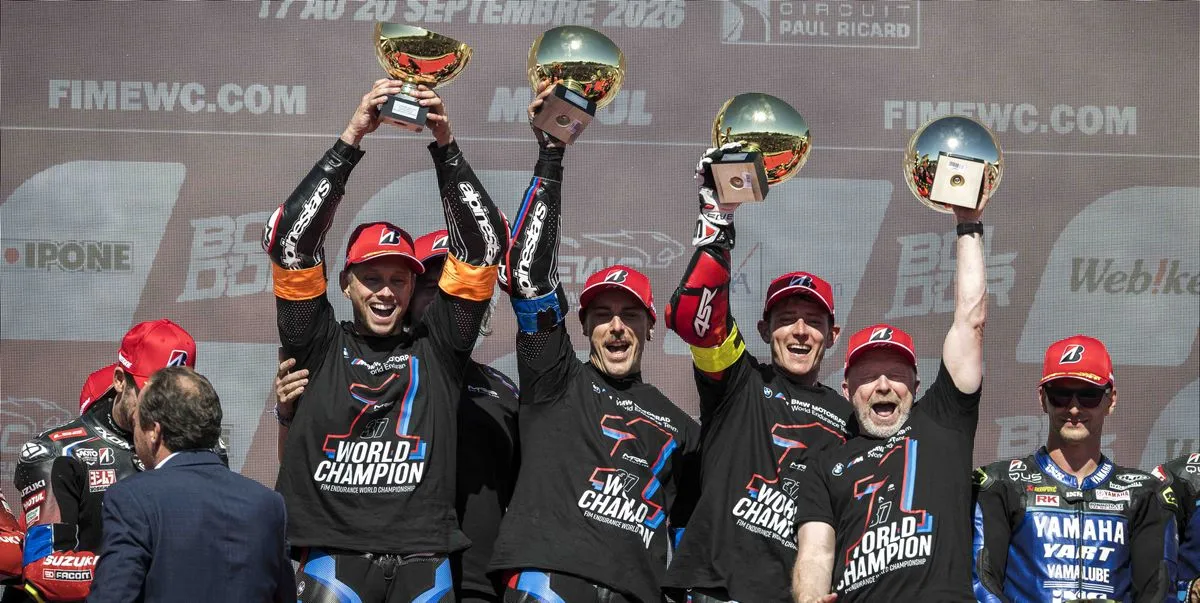
Victory and the championship title for BMW at the 2026 Bol d'Or.
-
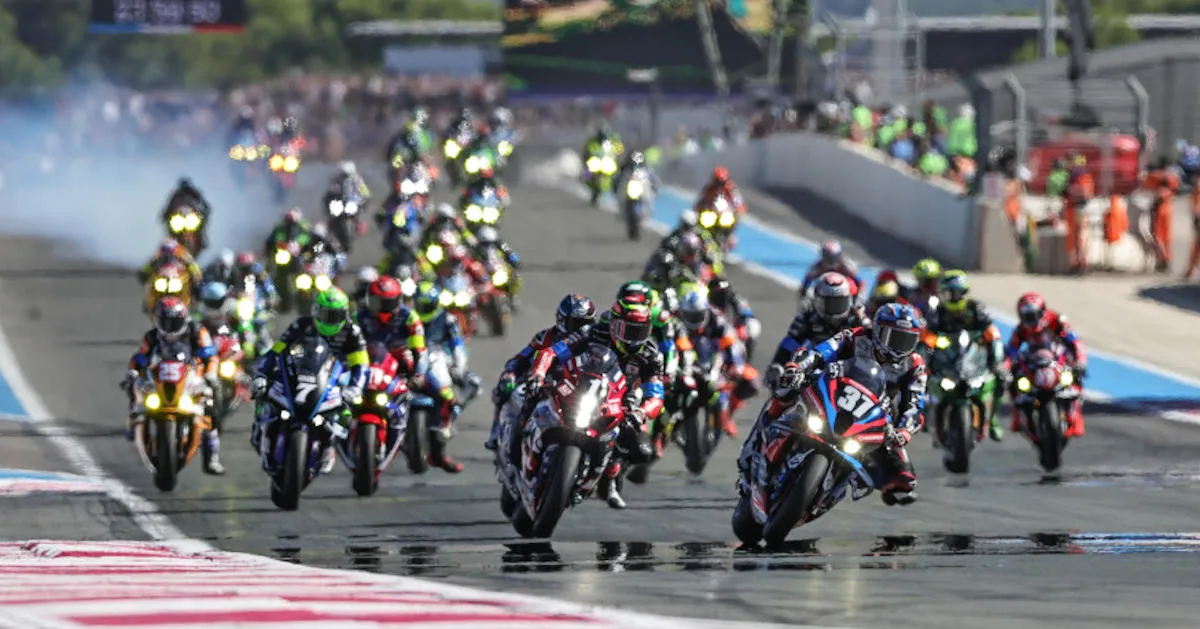
The 89th Bol d'Or: A Celebration of Racing Passion.
-
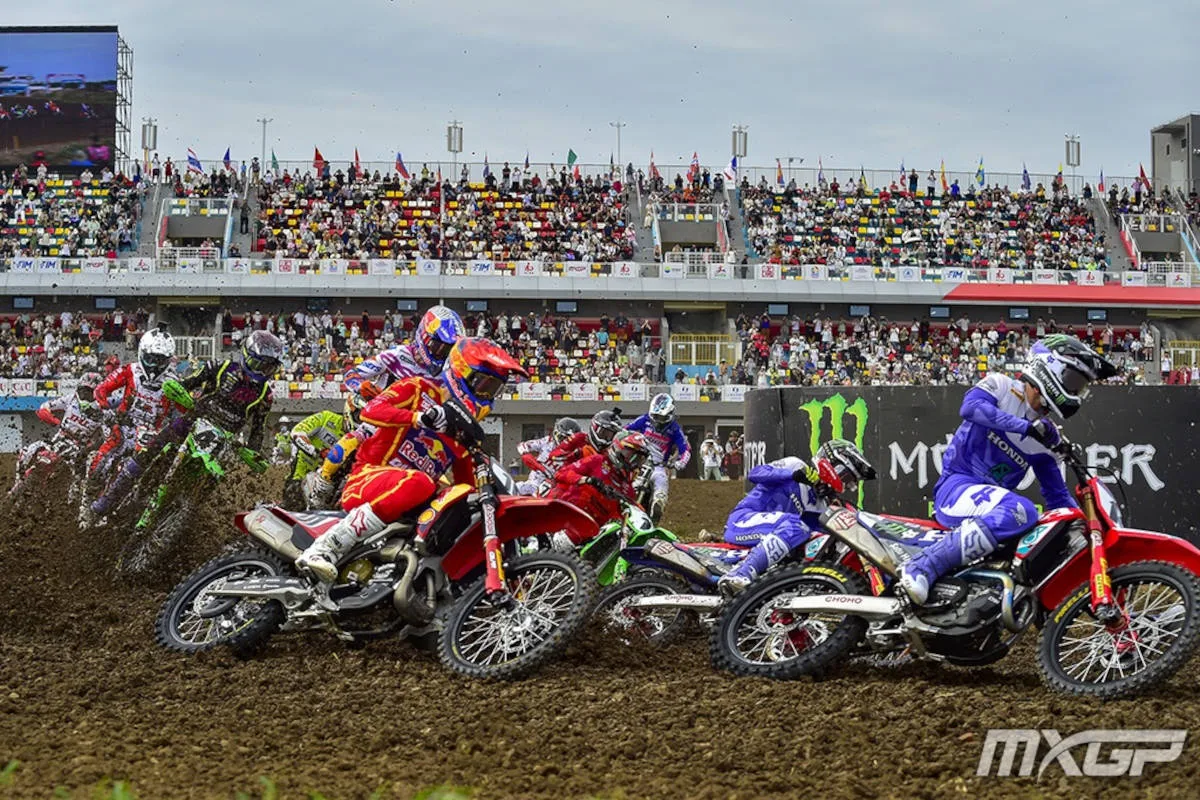
2026 MXGP of China: Herlings Unbeatable, McLellan Delays the MX2 Title
-
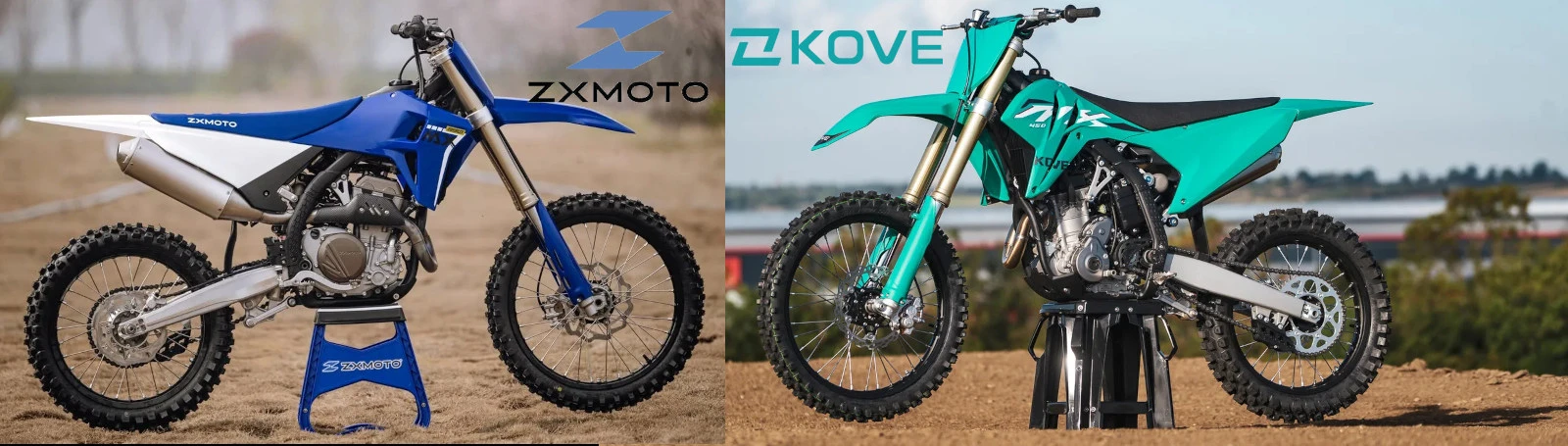
MXGP 2027: Kove and ZXMoto Join the Championship
-
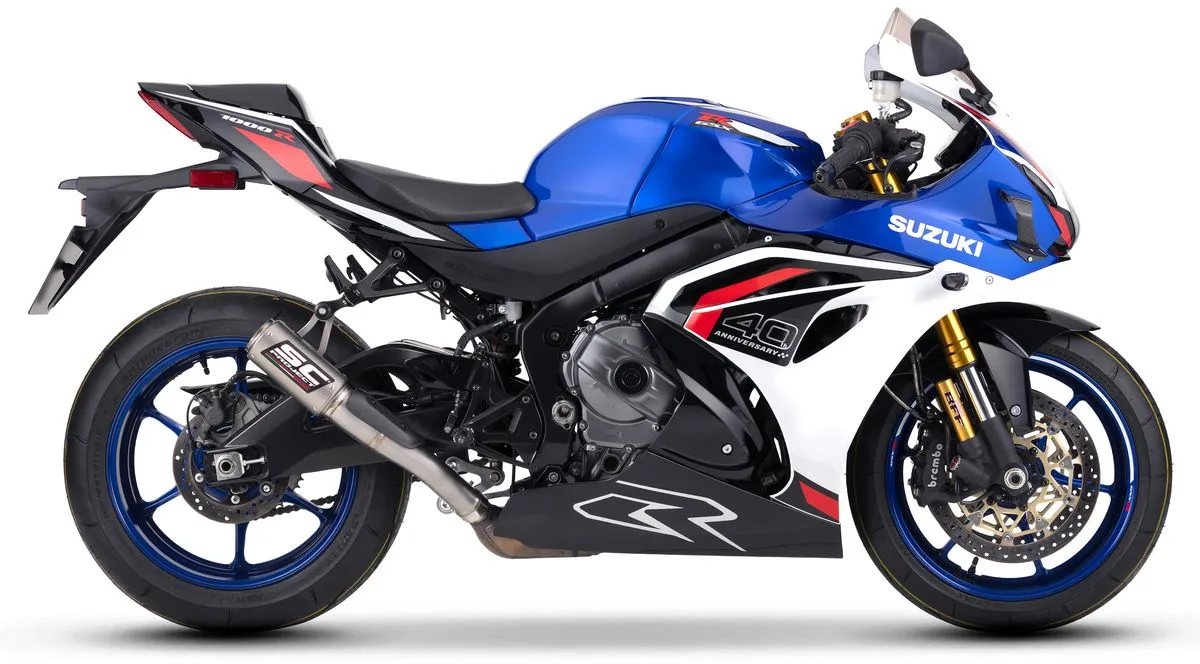
SC Project is working on the 2026 Suzuki GSX-R1000R.
-
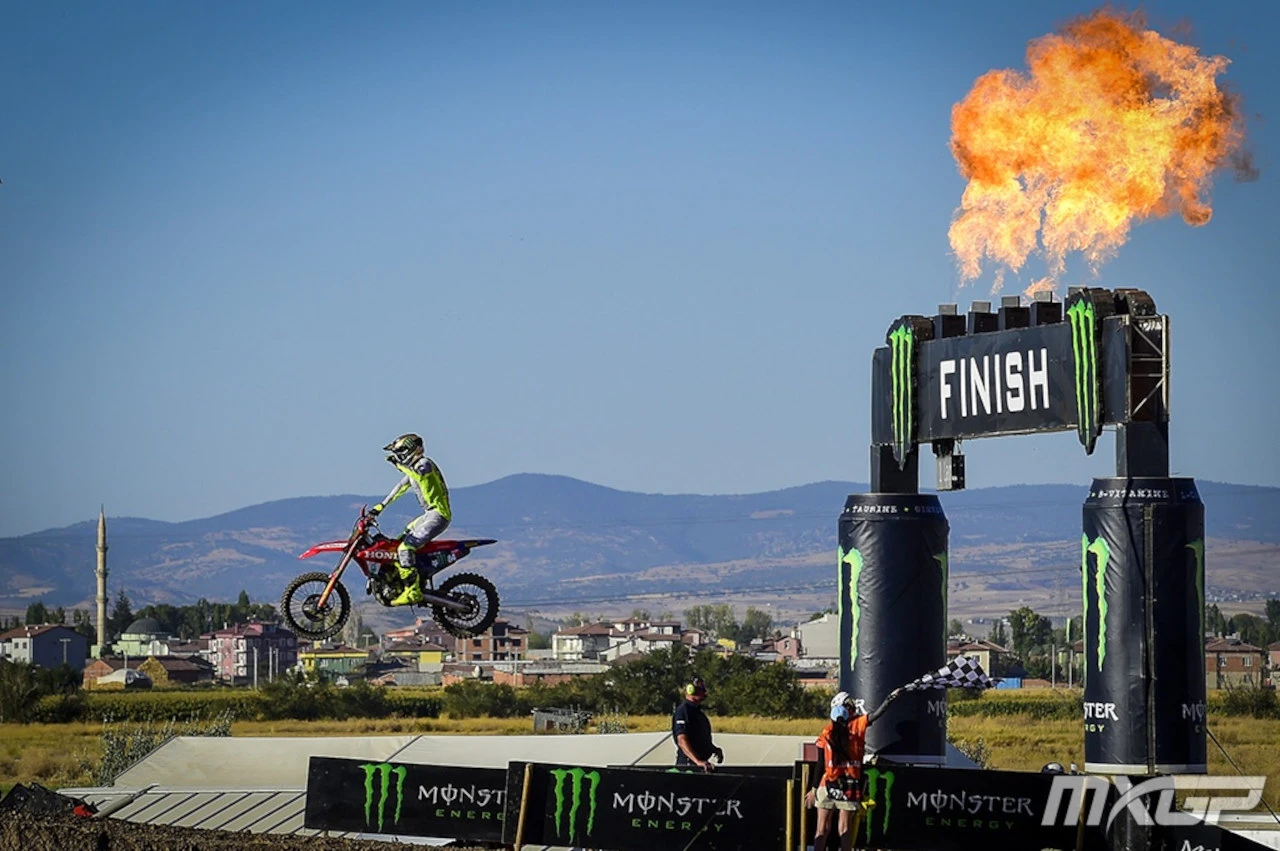
2026 MXGP of Turkey: Herlings Crowned World Champion!
-
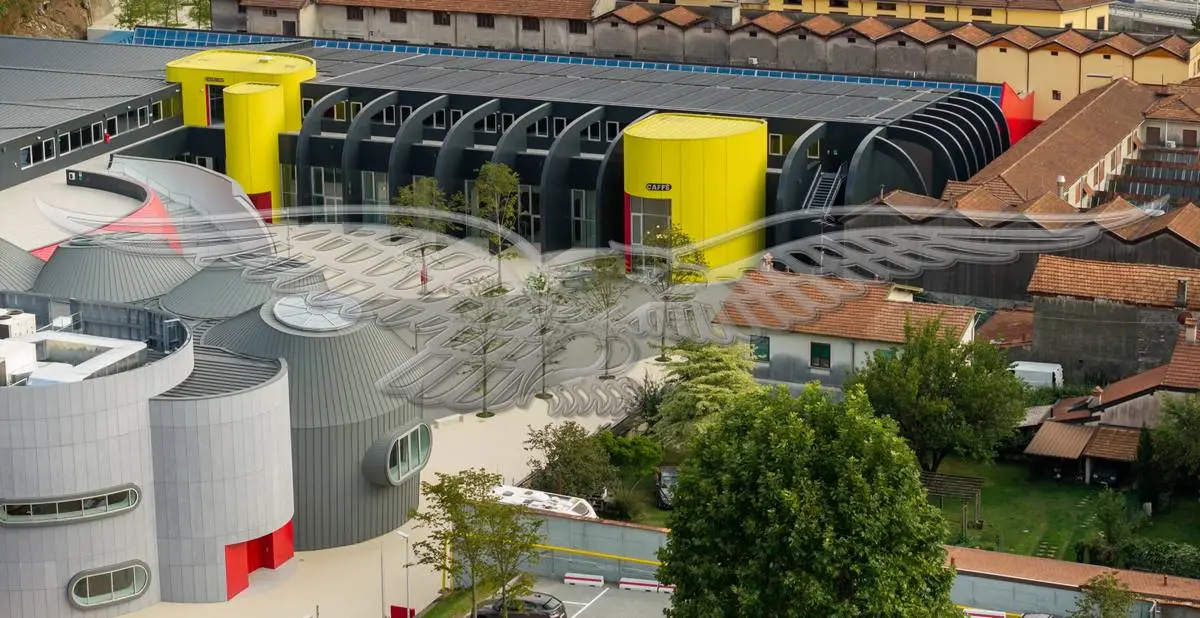
Moto Guzzi: In Mandello, the historic factory is taking on a new scale.
-
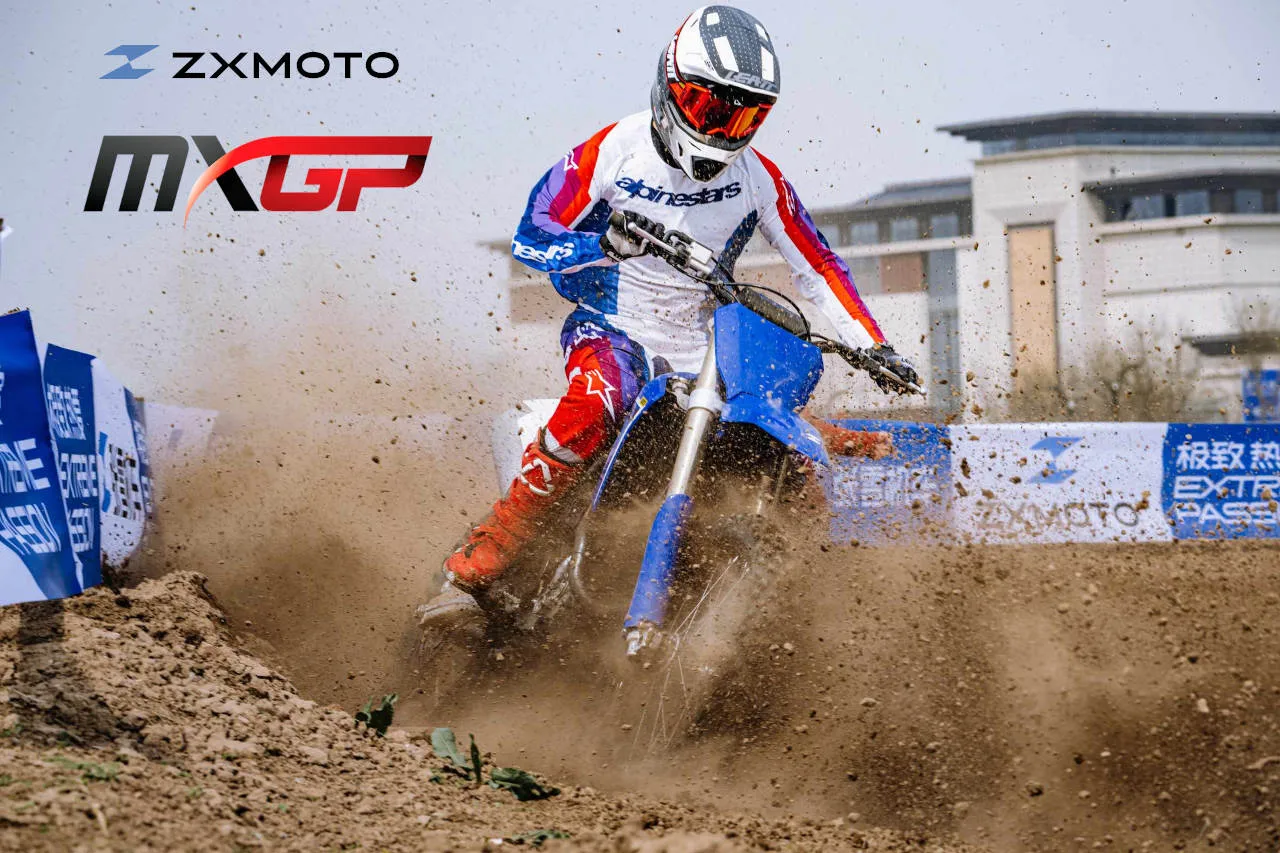
ZXMoto in MXGP 2027: The Hypothesis of an Off-Road Earthquake
-
The new motorcycle models of 2026 and the evolutions.

Bikers' reviews Leave a review - 1 review
Every time I get back on this bike I'm amazed by its ability to give me pleasure ...
comfort power ease of riding and speed..
Voila! Rating : 5/5 Respond to Dominjque w