









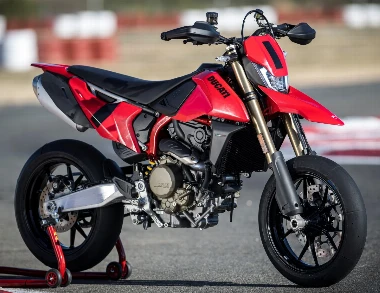




Ducati is the most famous of Italian motorcycle brands. And one of the last to survive.
The Bologna-based manufacturer maintains a strong image, both on the racetrack and on the road. But surprisingly, the company's beginnings are not in motorcycling at all.
1. Industrial Origins (1926-1945): From radio to war
The Ducati story begins far from the racetrack, in Italy between the wars. In 1926, the brothers Bruno, Adriano and Marcello Ducati, at the instigation of their father Antonio, founded the Società Scientifica Radio Brevetti Ducati in Bologna. The company specialized in the production of radio components, notably capacitors and rectifiers, and quickly established a solid reputation for the quality and precision of its products. The company prospered, opening a new factory in the Borgo Panigale district in 1935. Unfortunately, this factory, which had become a strategic point for the Italian war industry, was heavily bombed during the Second World War, marking an abrupt halt in its development.
2. The Renaissance and the Motorcycle Era (1946-1960): The Cucciolo and the Beginning of the Ascension
In the aftermath of the war, Italy was in desperate need of affordable individual means of transport. In 1946, Ducati seized this opportunity by teaming up with engineer Aldo Farinelli to produce the "Cucciolo" (little puppy). This is a small 48 cm³ four-stroke engine, designed to be mounted on a bicycle. The Cucciolo is a phenomenal success, selling over 200,000 units in just a few years.
This success encourages Ducati to manufacture its own complete motorcycles. The first Ducati motorcycle, the Cruiser 175, is launched in 1952. It was the brand's first scooter and featured an automatic transmission. It was also at this time, in 1954, that a legendary figure joined the company: engineer Fabio Taglioni. It was under his impetus that Ducati turned its attention definitively to performance and racing.
3. The Fabio Taglioni Era (1960-1980): The Desmo and the Legend of the Singles
Fabio Taglioni was a mechanical engineering genius. He was the man behind two of Ducati's most emblematic technologies: he updated the desmodromic system (invented by Frenchman Claude Bonjour in 1893) and imposed the "L" engine architecture.
- The Desmo: the engineer perfected the desmodromic timing system, which he had already experimented with. Unlike a conventional engine where valves are closed by springs, the desmodromic system uses a camshaft and rocker arms to both open and close the valves mechanically. This system prevents the valves from panicking at high revs, boosting power and reliability. The "Desmo" became Ducati's technological emblem, inseparable from its identity.
- Singles: In the 1960s, Ducati made a name for itself in the racing world with its single-cylinder motorcycles, notably the 125 GP Desmo and the 250 Diana. These lightweight, high-performance bikes, equipped with desmodromic valve timing, dominated their class and forged the brand's sporting reputation.
- The L-Twin: Taglioni introduces the 90° V engine architecture, which Ducati later calls an L-Twin because of its layout. This engine offers a natural balance and reduces vibrations. The first production model to feature it is the Ducati 750 GT in 1971. This would be the start of a long line of V-twins that would define the sound and character of Ducati motorcycles.
- Victory at Imola (1972): the event that cemented the legend of Taglioni and the L-Twin was Paul Smart's victory on the Ducati 750 Imola Desmo at the 200 miles of Imola. This resounding success propelled Ducati onto the international scene and proved the superiority of its engine architecture in racing.
4. The Crisis and Renaissance Years (1980-1990): The Trellis frame and Superbikes
The '80s were a difficult period for Ducati. Faced with Japanese competition and financial difficulties, the company was bought out by the Castiglioni Group (Cagiva) in 1985. This marked the beginning of a new era.
- The trellis frame: It was under the aegis of Cagiva that engineer Massimo Bordi and designer Massimo Tamburini conceived the trellis frame, a tubular steel structure that is light, rigid and aesthetically recognizable. It's another pillar of Ducati design.
-The 851 and Superbike Domination: In 1987, Ducati launched the Ducati 851. Equipped with a desmodromic engine with 4 valves per cylinder and liquid cooling, the 851 was the brand's first modern Superbike. It marked the start of the era of dominance in the World Superbike Championship (WSBK). In 1990, Raymond Roche wins Ducati's first world title.
5. The Years of Glory and the Birth of Icons (1990-2000): 916 and Monster
The 90s are considered Ducati's golden age.
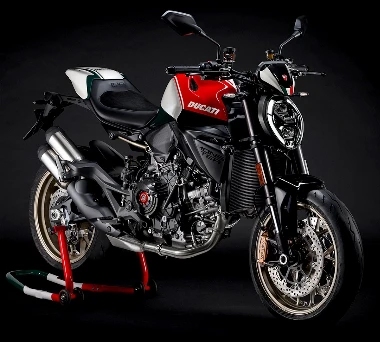
The Ducati Monster (1993): Launched in 1993, the Monster was a revolution. Designed by Miguel Galluzzi, it was inspired by the "less is more" philosophy. Devoid of fairings, with its exposed trellis chassis and V-twin engine at its heart, the Monster created a new category of motorcycle: the "naked bike". It instantly became a commercial success, and one of the best-selling motorcycles in the brand's history.
The Ducati 916 (1994): If ever a motorcycle embodied perfection in design and performance, it was the 916. Designed by Massimo Tamburini, it is a true work of art. Its single-sided swingarm, dual exhaust pipes under the seat and elegant, aggressive lines make it an icon. On the WSBK tracks, the 916 and its successor the 996, ridden by Carl Fogarty, dominate the championship outrageously, making "Foggy" a legend and Ducati a myth.
6. The Modern Era and the rise of MotoGP (2000 to the present): Desmosedici and Panigale
- Entry into MotoGP (2003): After a long period of dominance in Superbike, Ducati takes on the challenge of entering the premier class: MotoGP. The brand launched its first prototype, the Desmosedici V4, in 2003. Success followed in 2007, when Casey Stoner became world champion on the Desmosedici GP7.
- Acquisition by Audi (2012): After a period of financial difficulties, Ducati is acquired by the German Volkswagen Group, via its subsidiary Audi. This acquisition brings financial stability and new technological resources to the brand, enabling it to invest heavily in research and development.
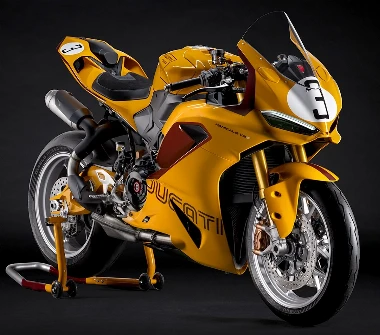
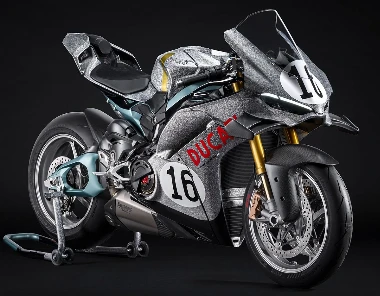
- The Panigale (2011): The Panigale, named after the factory's neighborhood, marks a technological milestone. It is the brand's first Superbike to abandon the trellis chassis in favor of an aluminum monocoque frame. Equipped with state-of-the-art electronics and a V-twin engine with over 200 hp, it pushed the limits of performance for a production motorcycle.
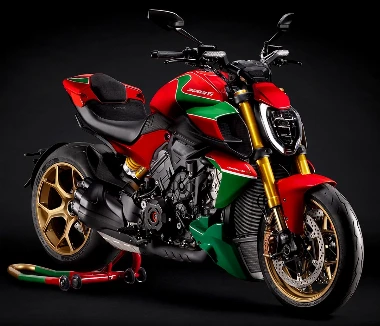
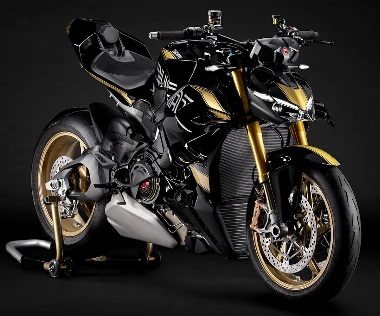
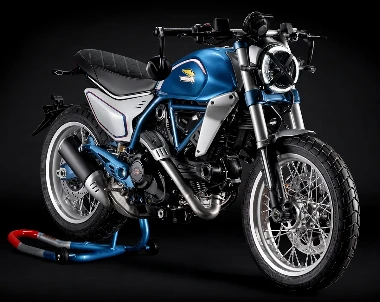
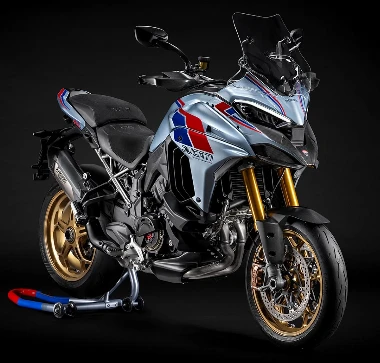
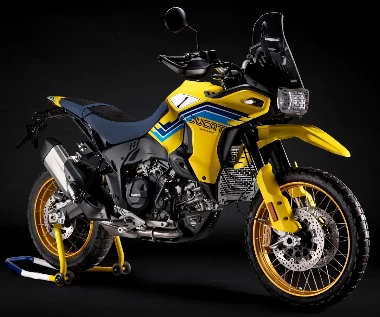
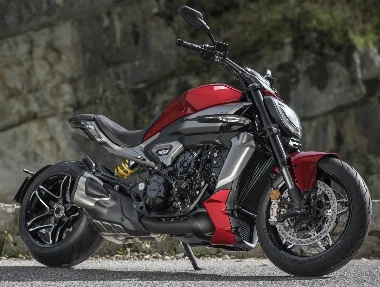
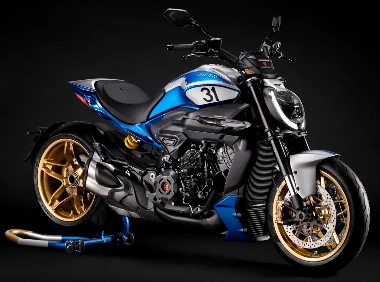
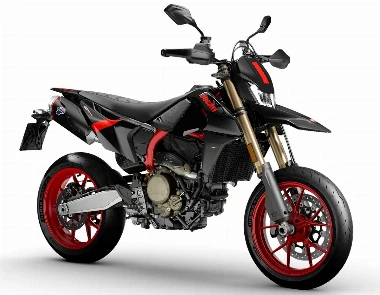
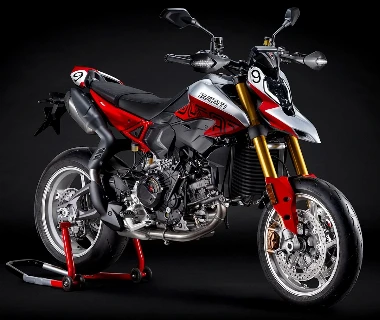
The Current Range: Today, Ducati offers a complete range of motorcycles that combine performance, design and technology: the Superbike Panigale, the ultra-powerful Streetfighter, the versatile Multistrada, the fun Hypermotard, and of course the Scrambler range, which was successfully relaunched in 2015, reviving its 60s-70s heritage.