

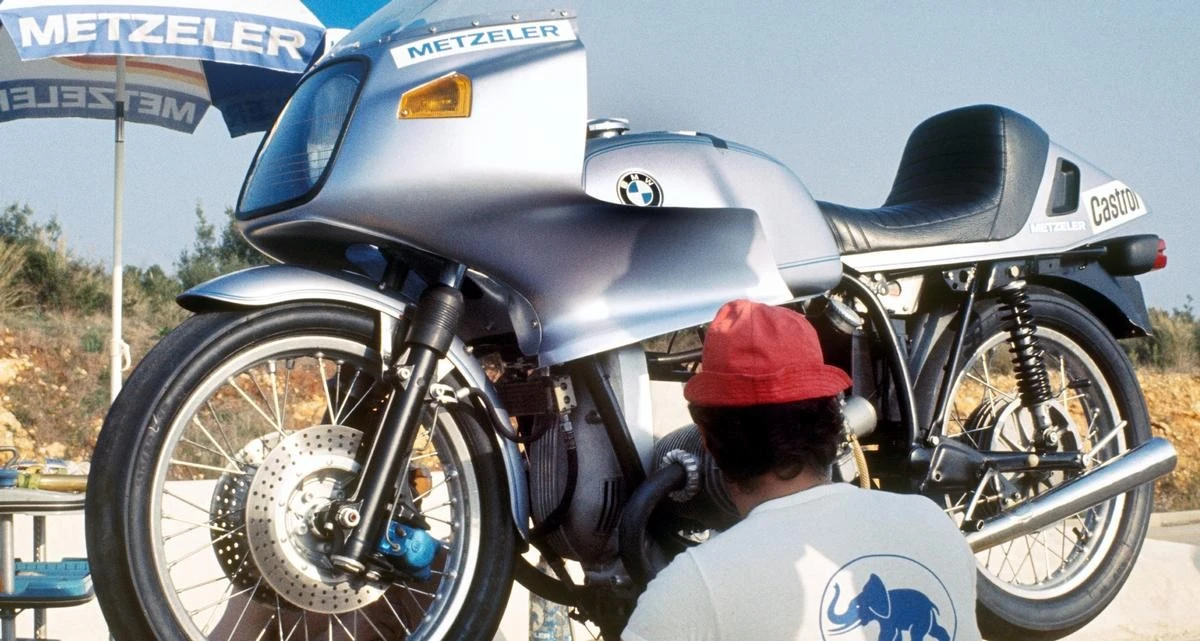
It is a family rich in history and iconic models, which BMW has skillfully developed over the past half-century. For decades, the abbreviation RS on BMW racing motorcycles stood for Rennsport (racing). But since the introduction of the R 100 RS in 1976, it has identified its production motorcycles as machines designed for dual use: Reise und Sport (travel and sport).
The RS Series
To this day, this model designation represents both touring capability and the pleasure of sporty riding. As the world’s first mass-produced motorcycle, the BMW R 100 RS debuted in 1976 with a full fairing mounted on the frame and developed in a wind tunnel, thereby defining the sport-tourer segment as we know it today.
With the R 1300 RS introduced last year, the German brand continues this 50-year tradition by offering a sport-tourer equipped with a twin-cylinder boxer engine whose DNA carries forward the versatile qualities of the RS concept into the future.
The versatility with which BMW Motorrad has implemented the “travel and sport” motto in its production motorcycles has been evident not only in models equipped with the boxer engine but also in 4-cylinder models.
Its 50th anniversary would be the perfect opportunity to create a special edition, but nothing has been announced on this subject. Perhaps a surprise later this year? In the meantime, and to mark the 50th anniversary of BMW RS motorcycle production, BMW looks back at the key milestones in the history of the RS:
The two-valve BMW RS Boxer models:
The R 100 RS was the third BMW equipped with the 1000 cc boxer engine, presented as a highlight at the IFMA show in 1976. As the world’s first production motorcycle, it came standard with a full fairing, aerodynamically optimized by Pininfarina and painted in a metallic silver with a slight blue sheen. It offered unprecedented protection from wind and weather and allowed for surprisingly high average speeds on the highway while maintaining a relaxed riding position. BMW thus reinterpreted the abbreviation RS (formerly Rennsport) to mean Reisesport (travel sport). In its final year of production, 1984, BMW celebrated the RS’s success with the R 100 RS Classic 500, a special edition limited to 500 units featuring a two-tone Madison Gray/Alaska Blue finish and white piping.
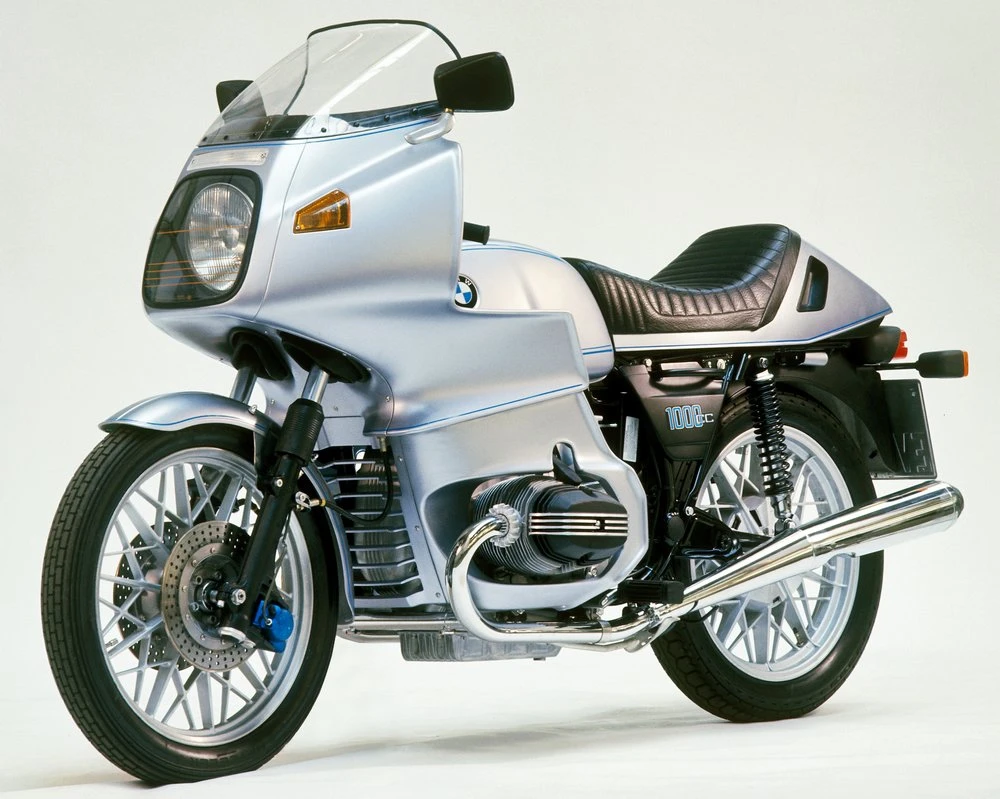
- Production period: 1976–1984
- Displacement: 980 cm³
- Power: 70 hp (51 kW) at 7,250 rpm
- Engine type: Twin-cylinder boxer
- Top speed: 200 km/h
BMW R 100 RS Nardo Record Bike
On October 29 and 30, 1977, BMW attempted to break several motorcycle world records in Nardo, Italy, with a modified R 100 RS. Record attempts were made over 10, 100, and 1,000 kilometers, as well as over 1, 6, 12, and 24 hours. Helmut Dähne, in collaboration with engine expert Helmut Bucher, boosted the power of the R 100 RS’s boxer engine to 84 hp. With a 19-inch rear wheel and the lower fairing removed, the motorcycle reached over 220 km/h. In total, the BMW team set five new world records: over 10 km, 100 km, 6 hours, 12 hours, and 24 hours.
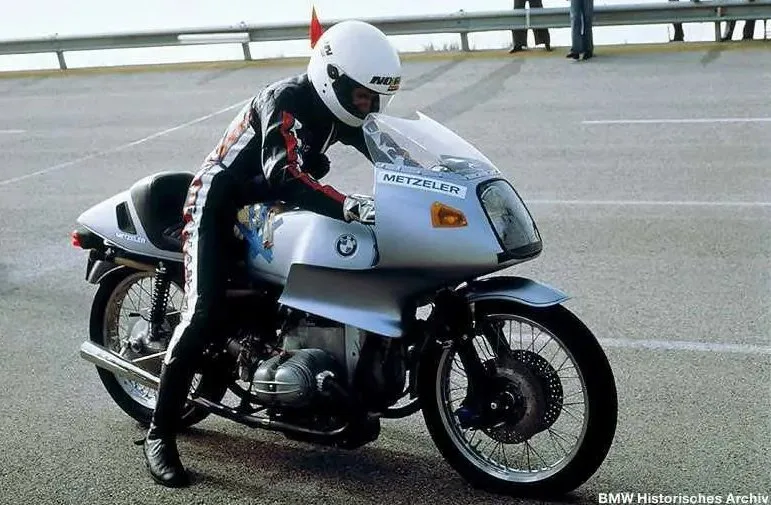
- Production period: 1977
- Displacement: 980 cm³
- Power: 84 hp (62 kW)
- Engine type: Twin-cylinder boxer
- Top speed: >220 km/h
BMW R 100 RS (Monolever)
For fans of the big 1000 cc two-valve boxers, the three- and four-cylinder K 75 and K 100 models, as well as the 800 cc boxers, were not considered viable alternatives. Particularly in the United States and Japan, calls for a return of the big boxer were growing increasingly urgent. It was therefore quite a sensation when BMW reintroduced the R 100 RS at the 1986 IFMA. Initially planned as a special edition limited to 1,000 units, BMW reintroduced the R 100 RS into its permanent lineup due to high demand and produced it until 1992.
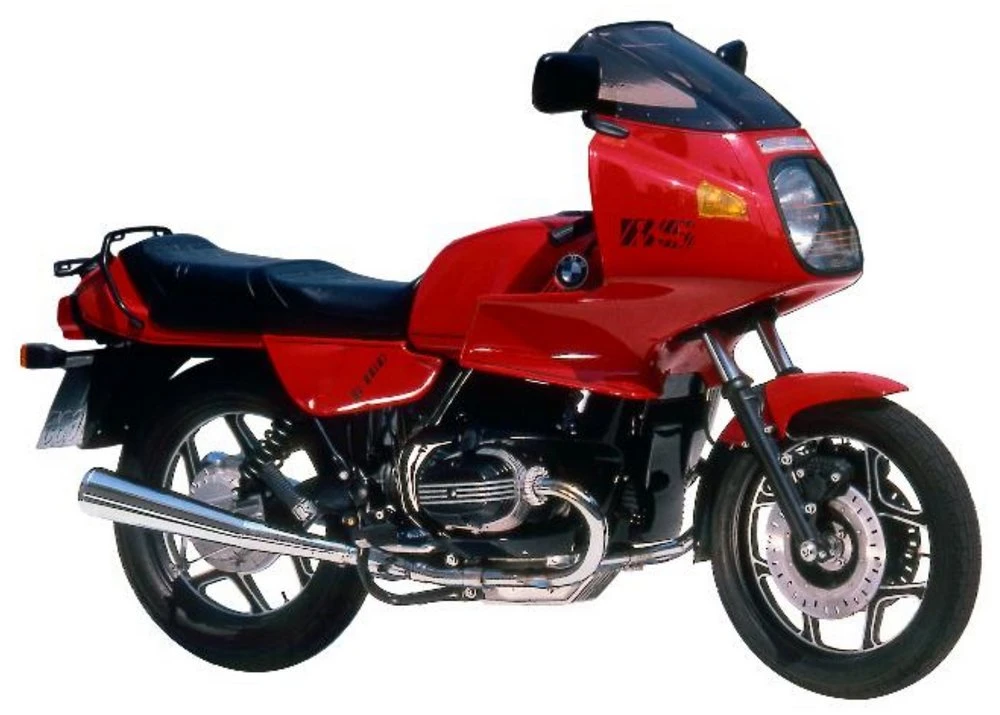
- Production period: 1986–1992
- Displacement: 980 cm³
- Power: 60 hp (44 kW) at 6,500 rpm
- Engine type: Twin-cylinder boxer
- Top speed: 185 km/h
The BMW RS Boxer four-valve models
Introduced in 1993, the R 1100 RS propelled the air-cooled boxer twin-cylinder concept into the future with four-valve technology, air/oil cooling, and modern digital fuel injection and ignition. The newly developed 1100 cc boxer engine delivered 50% more power than the previous two-valve generation while consuming less fuel. BMW also introduced an innovative front suspension system: the Telelever, offering high comfort and excellent stability under braking.
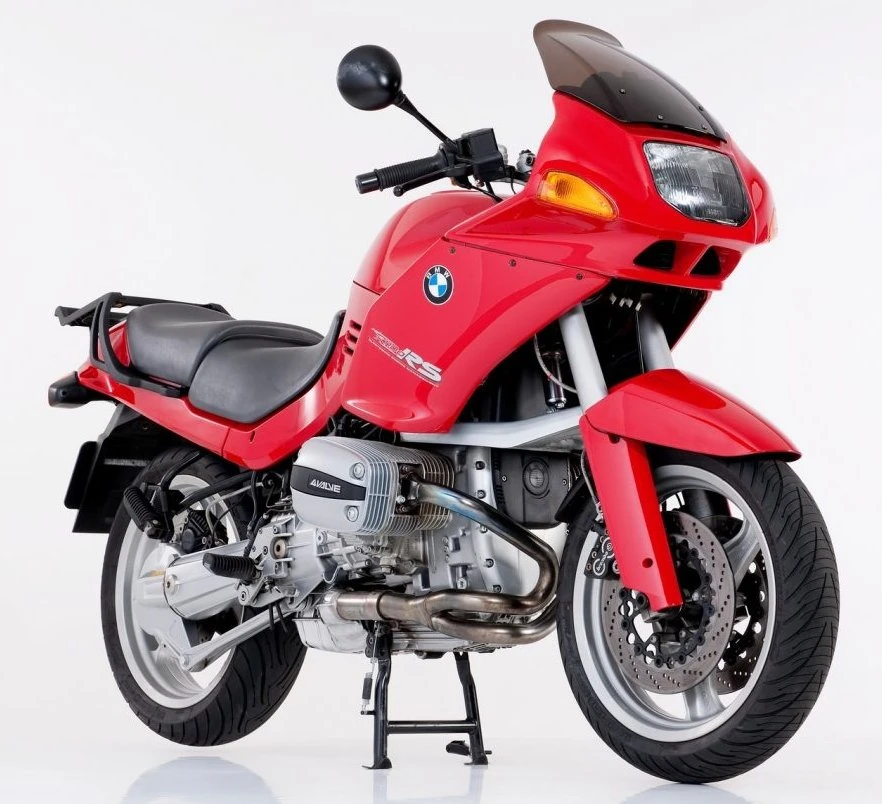
- Production period: 1992–2001
- Displacement: 1085 cc
- Power: 66 kW (90 hp) at 7,250 rpm
- Engine type: Twin-cylinder boxer
- Top speed: 215 km/h
When the R 1150 GS debuted in 1999, many riders wondered why the R 1100 RS hadn’t received the updated 1,130 cc engine first. BMW initially expected the R 1100 S, introduced in late 1998, to serve as the sportier successor to the R 1100 RS. However, many R 1100 RS owners did not consider the R 1100 S to be the desired evolution. When the R 1150 RT was launched in 2001, demand for a more powerful RS increased. Lacking the time for a complete redesign, BMW introduced the R 1150 RS in the fall of 2001, combining the RT’s engine and exhaust with the familiar fairing of the R 1100 RS. It received new color schemes and was available exclusively with a full fairing.
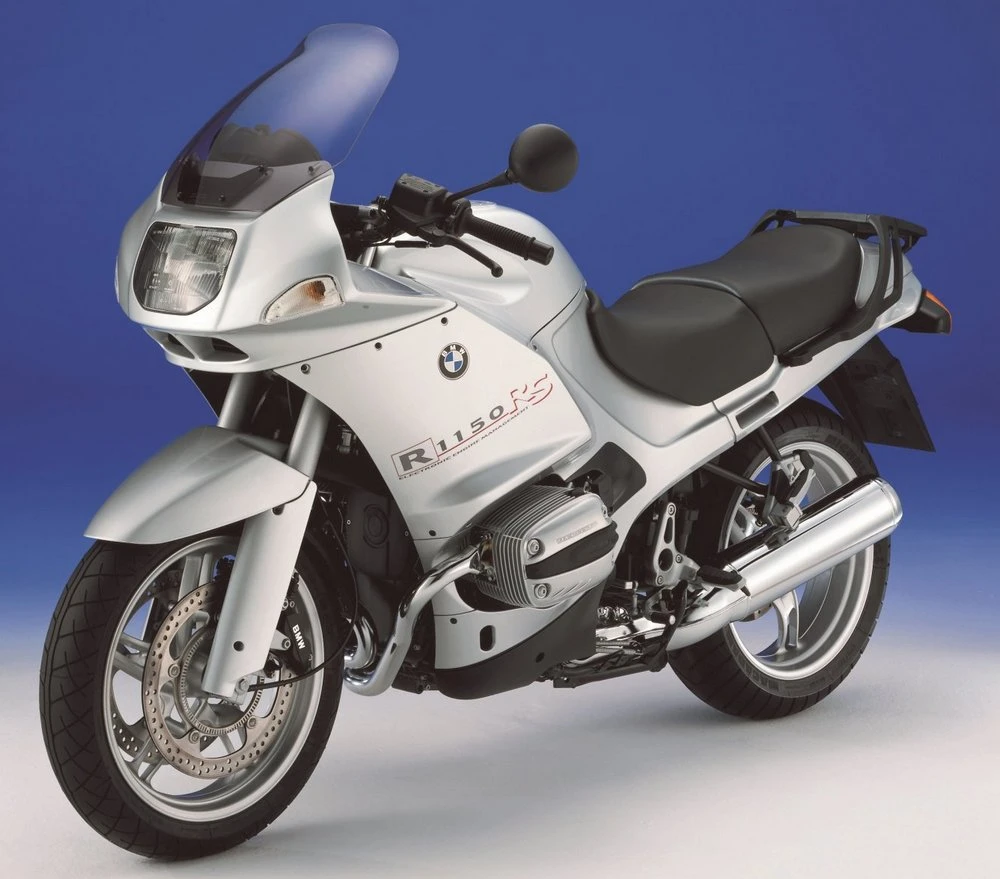
- Production period: 2000–2004
- Displacement: 1130 cm³
- Power: 95 hp (70 kW) at 7,250 rpm
- Engine type: Twin-cylinder boxer
- Top speed: 215 km/h
Unveiled in September 2014 at Intermot, the R 1200 RS represented the fifth generation of RS motorcycles with a boxer engine. One of its highlights was the liquid-cooled boxer engine with vertical rather than horizontal flow. Delivering 92 kW (125 hp) and 125 Nm, it offered excellent performance and great flexibility. It also introduced the BMW Dynamic ESA semi-active suspension.
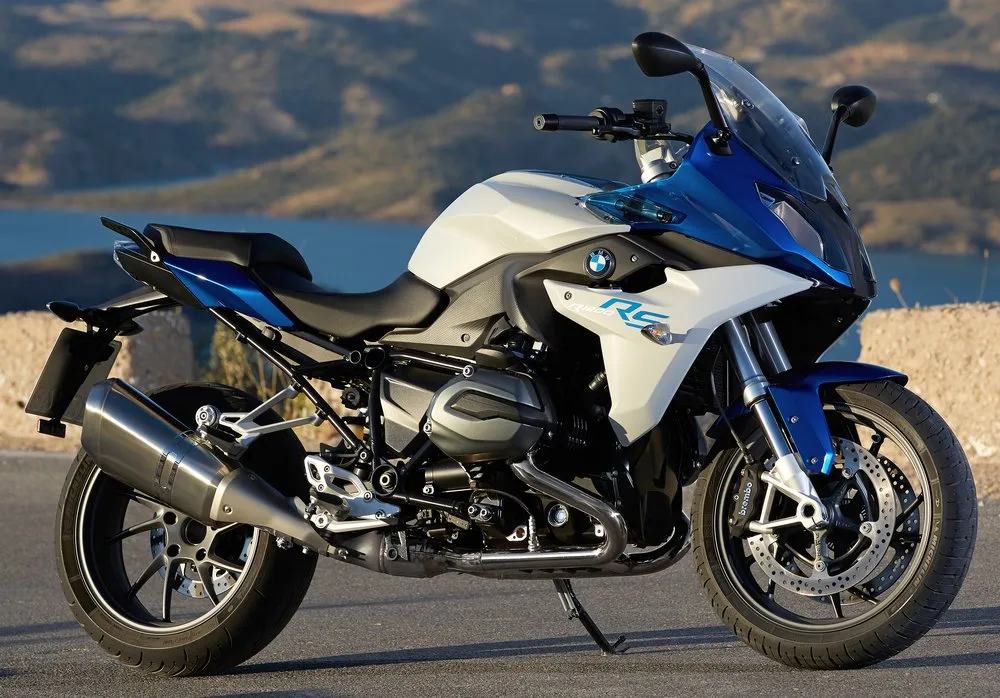
- Production period: 2015–2018
- Displacement: 1170 cm³
- Power: 92 kW (125 hp) at 7,750 rpm
- Engine type: Twin-cylinder boxer
- Top speed: 228 km/h
Unveiled at EICMA 2018 in Milan, the R 1250 RS featured a 1,254 cc boxer engine producing 100 kW (136 hp) and BMW ShiftCam technology for variable valve timing. Benefits included improved cylinder filling and higher torque at low and mid-range speeds. The chassis included a steel main frame, an upside-down fork, a single-sided swingarm, Dynamic Traction Control, and, as an option, Dynamic ESA Next Generation with automatic load compensation.
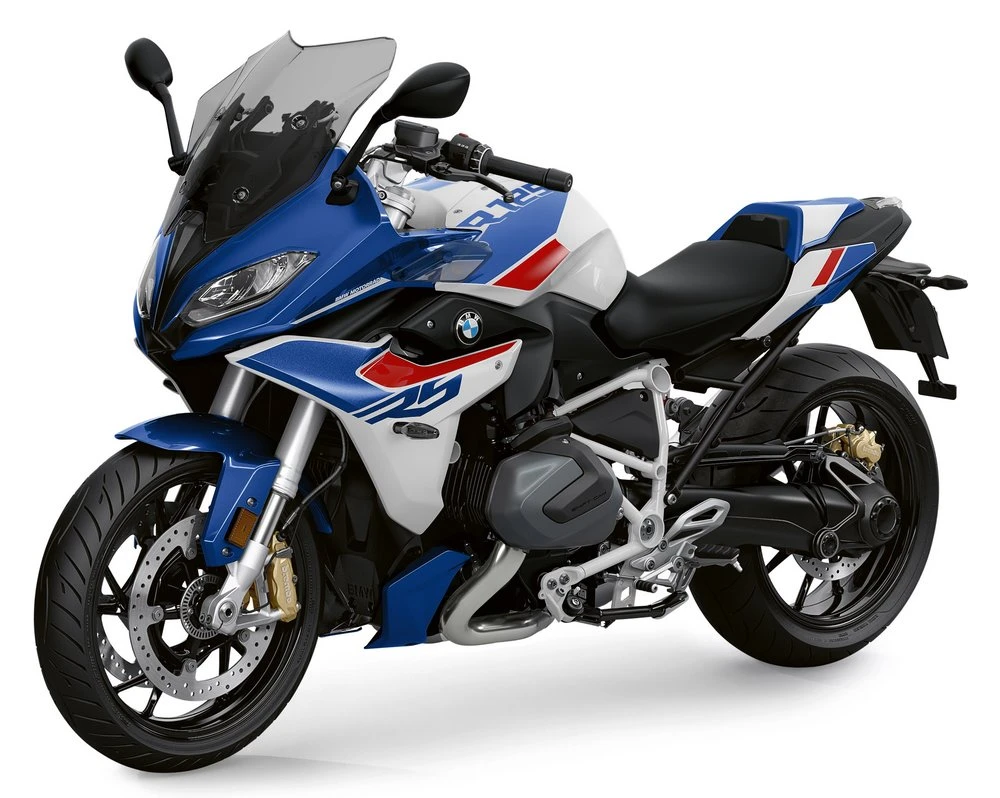
- Production period: 2018–2024
- Displacement: 1254 cm³
- Power: 100 kW (136 hp)
- Engine type: Twin-cylinder boxer
- Top speed: >200 km/h
The R 1300 RS is the latest sport-tourer featuring a refined boxer engine and dynamic design. With 1300 cm³ and an output of 107 kW (145 hp), it is the most powerful BMW boxer engine in series production to date. Standard equipment includes three riding modes and engine drag torque control (MSR). Options include the Automated Shift Assistant (ASA) and the Dynamic Suspension Adjustment (DSA) system with adjustable damping, spring rate, and load compensation. It is also the world’s first production motorcycle equipped with a telescopic fork featuring adjustable spring rate.
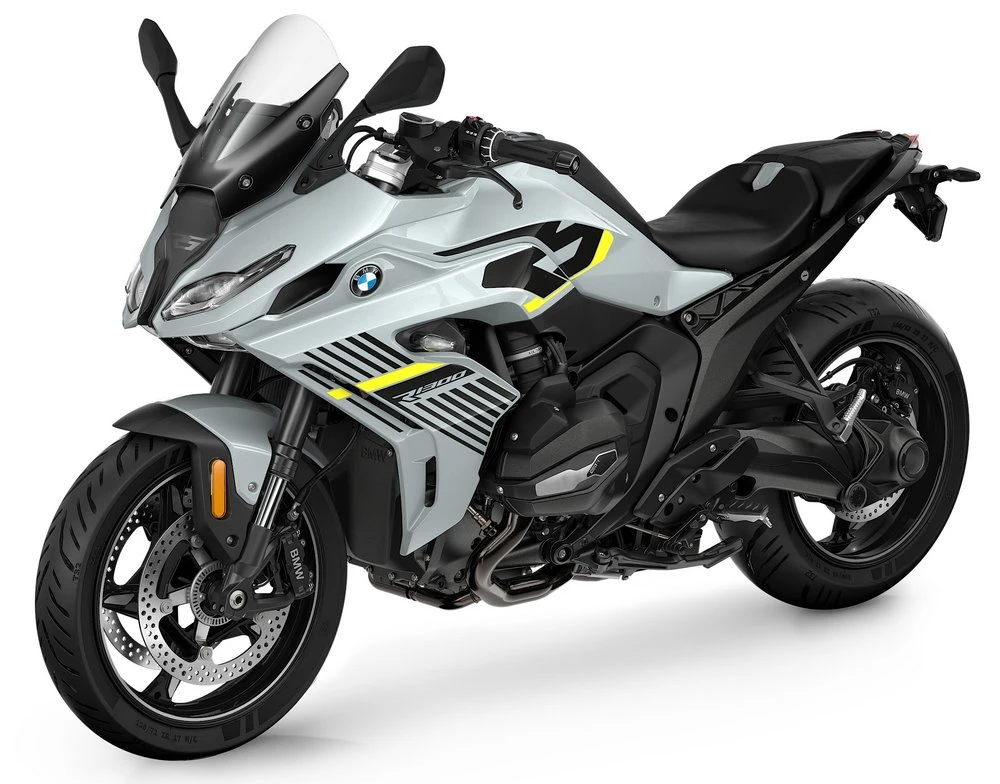
- Production period: since 2025
- Displacement: 1300 cm³
- Power: 107 kW (145 hp)
- Engine type: Twin-cylinder boxer
- Top speed: 240 km/h
The four-cylinder BMW RS models
BMW K 100 RS (Two-valve)
Introduced at the Paris Motor Show in 1983, the K 100 RS was the second member of the new K family. Technically identical to the base K 100 model, it featured a modern half-fairing with aerodynamic qualities. The low center of gravity created by the horizontally mounted engine and the relatively low weight made it agile and enjoyable to ride, even off the highway. It remained a common sight on the roads even 30 years after its introduction.
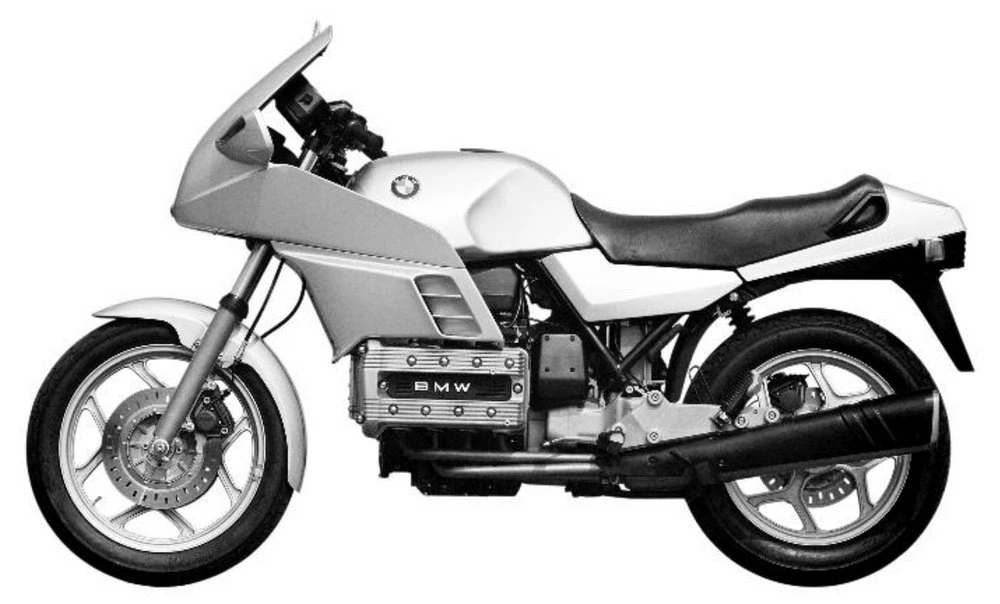
- Production period: 1983–1989
- Displacement: 987 cm³
- Power: 66 kW (90 hp) at 8,000 rpm
- Engine type: Inline-4
- Top speed: 220 km/h
BMW K 100 RS (Four-valve)
In 1989, the updated K 100 RS was introduced. Essentially a K1 equipped with the familiar RS fairing, the K 100 RS 4V featured all the technology of the K1 under its bodywork. With a two-up seat and the option to mount side cases again, it appealed to riders who wanted the K1’s technology without its polarizing looks and touring limitations.
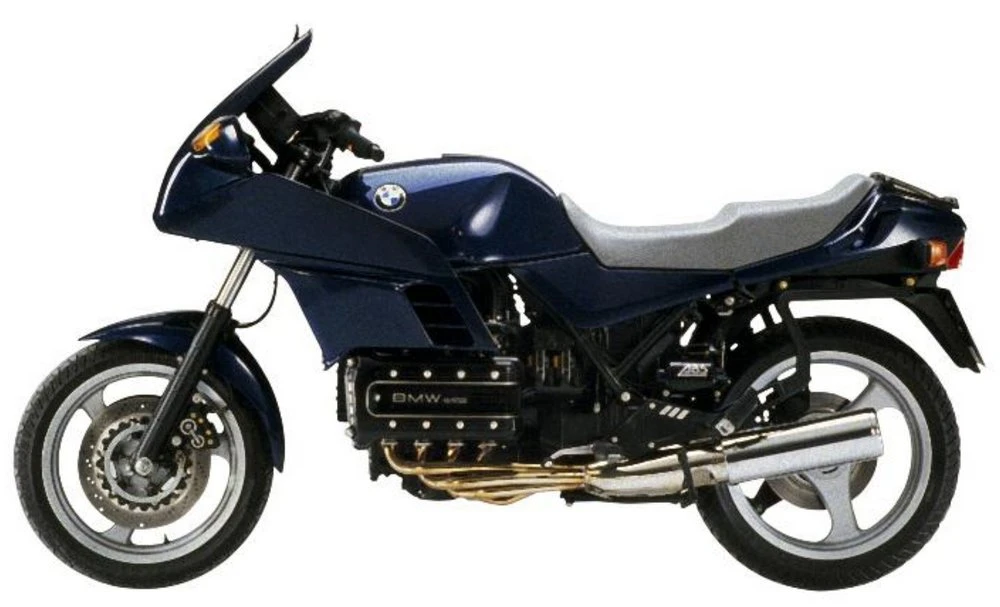
- Production period: 1989–1992
- Displacement: 987 cm³
- Power: 74 kW (100 hp) at 8,000 rpm
- Engine type: Inline 4-cylinder
- Top speed: 232 km/h
BMW K 1100 RS
Following the debut of the K 1100 LT, fans eagerly awaited the 1,100 cc engine in an RS chassis. The K 1100 RS arrived in 1992, featuring a facelift with the upper fairing from the K 100 RS and an all-new lower section. With excellent handling and strong all-around performance, it won several comparative tests in specialized magazines.
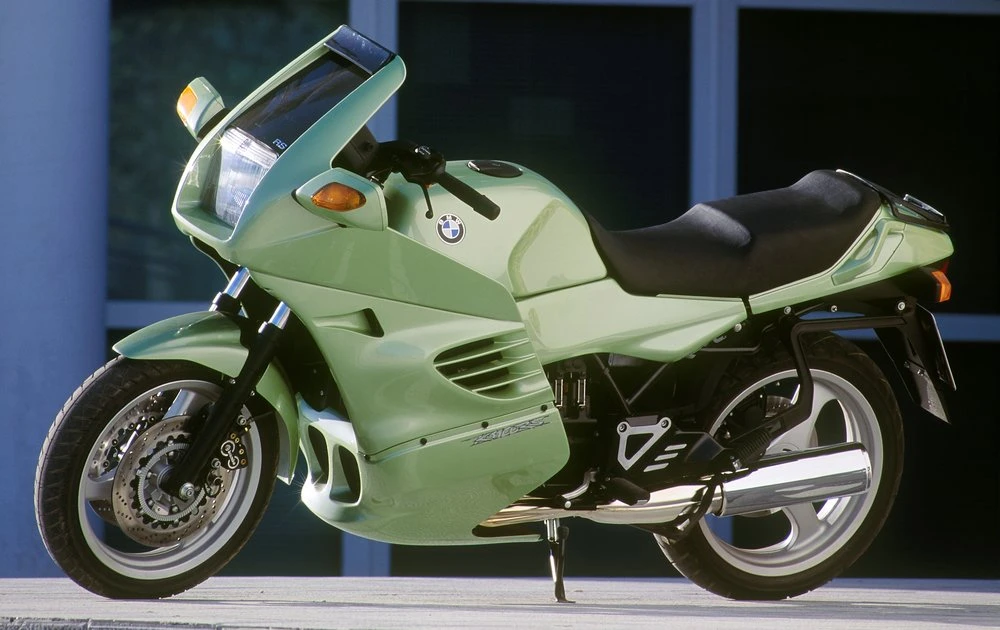
- Production period: 1992–1997
- Displacement: 1092 cc
- Power: 74 kW (100 hp) at 7,500 rpm
- Engine type: 4-cylinder inline
- Top speed: 220 km/h
For many years, BMW adhered to a voluntary agreement among manufacturers not to offer motorcycles with more than 100 hp on the German market. That changed in 1997 with the introduction of the K 1200 RS, delivering 130 hp from a 1,172 cc engine and a top speed of 245 km/h. As a large motorcycle , it offered excellent comfort on long-distance rides and saw a surge in sales following a facelift in 2001.
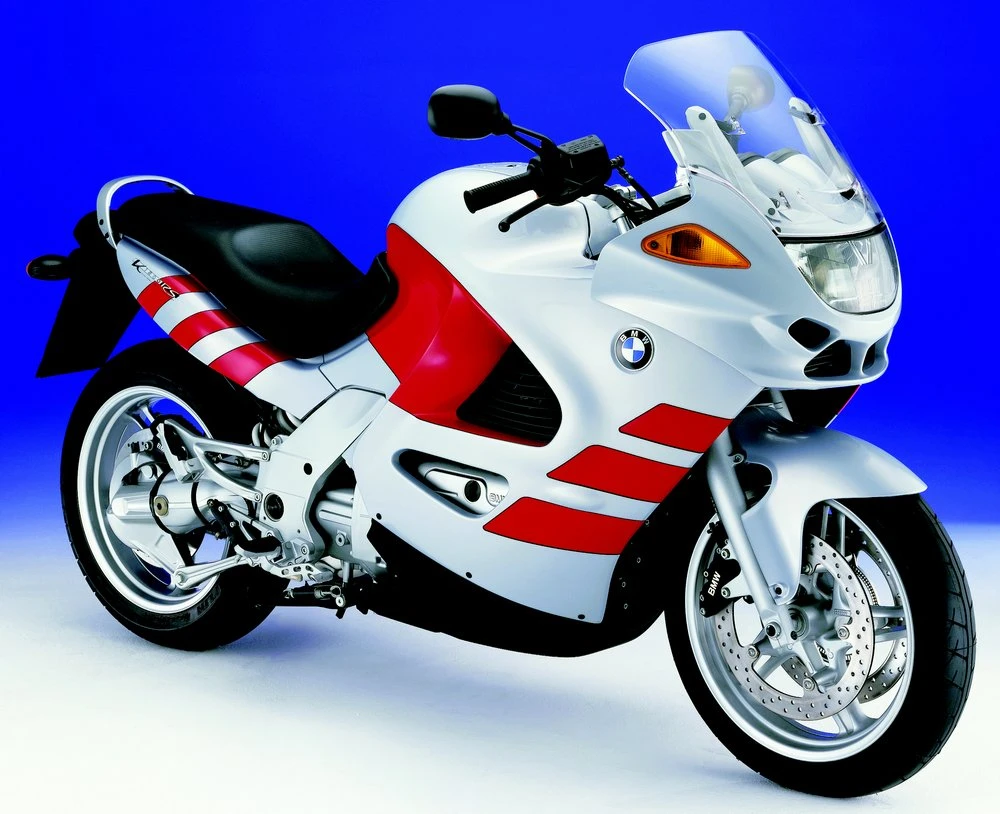
- Production period: 1996–2005
- Displacement: 1,171 cc
- Power: 96 kW (130 hp) at 8,750 rpm (98 hp version also available)
- Engine type: Inline 4-cylinder
- Top speed: 245 km/h (225 km/h for the restricted version)
Information and image credits: BMW
 Share
Share
 helmet
 Gloves
 jacket
 braking
 Chain kit
 Oils
Oils Find an intercom
 Parts
Parts Luggage
 Tires
Tires

Bikers' reviews