
Motorcycle specifications Honda CMX 500 Rebel 2027 Revised Insurrection
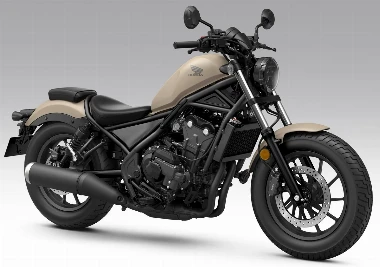

presentation of the CMX 500 Rebel 2027
The Honda 500 CMX is one of the best-selling custom bikes in France. No surprise there—it’s practical, affordable, easy to ride, low-maintenance, and shares the same engine as the NX, Hornet, and CBR. Who knows, maybe it’ll become even easier to ride!?!
As it happens, all the 500cc models in the lineup can be equipped with the E-Clutch automated clutch system. So, the CMX figured it was its turn.
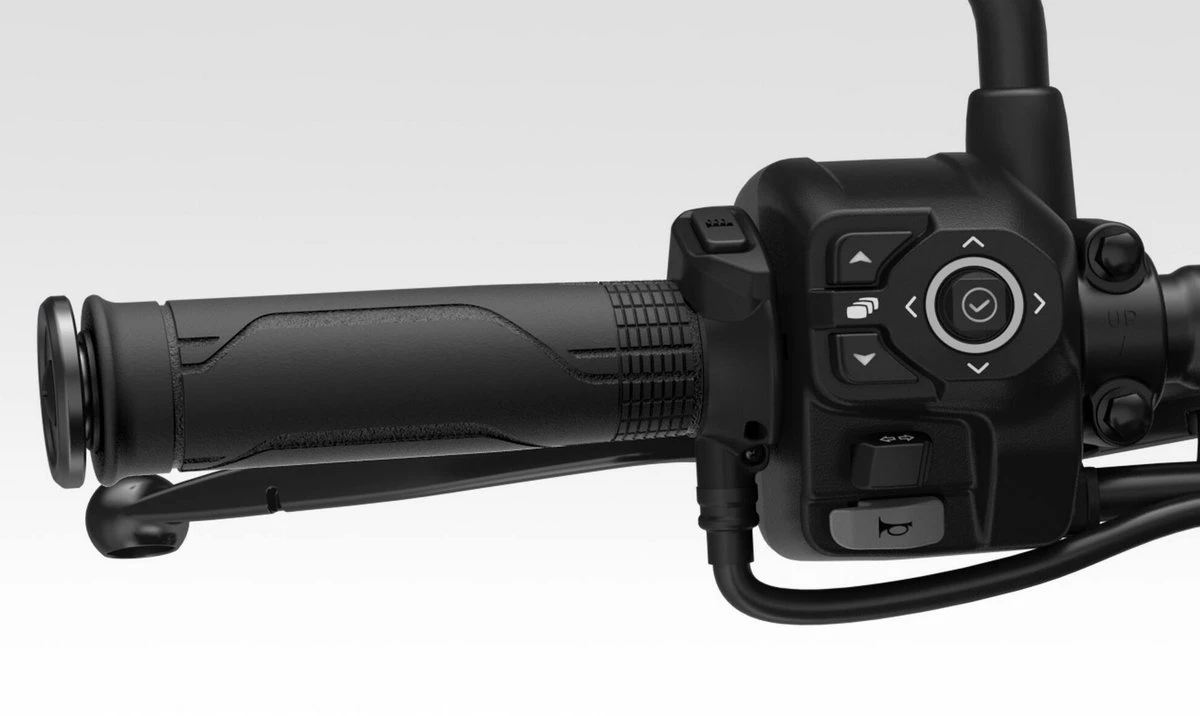
Its big brother, the 1100, is only available with a DCT transmission (here in France). So the entire Rebel family is now switching to a more or less automated transmission. With the E-Clutch, only the clutch receives electronic assistance, meaning you don’t have to touch the lever at all. A tap of the boot and the system handles everything, with three levels of “feel.” It’s like a shifter, except that the E-Clutch also manages the clutch when the bike is stopped. In short, you no longer need to touch the clutch—unless you want to. Be careful not to confuse this with Yamaha’s Y-AMT, which is capable of shifting gears for you.
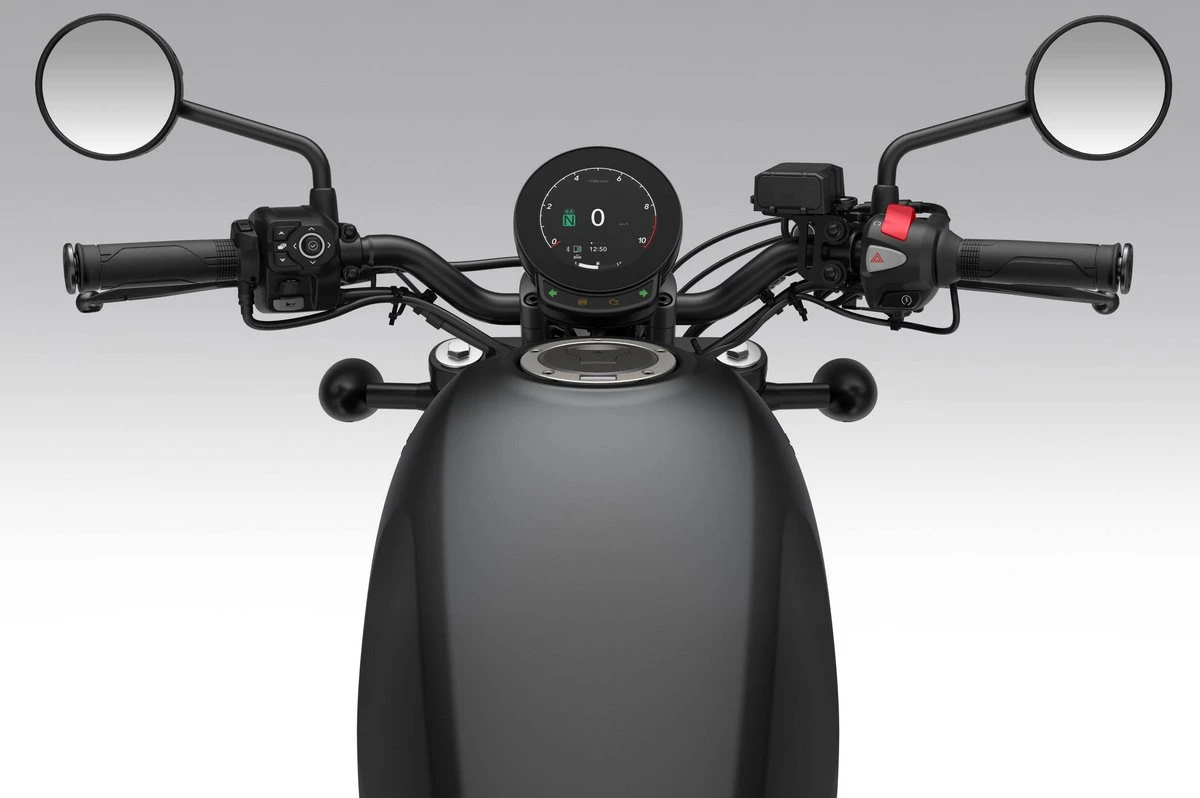
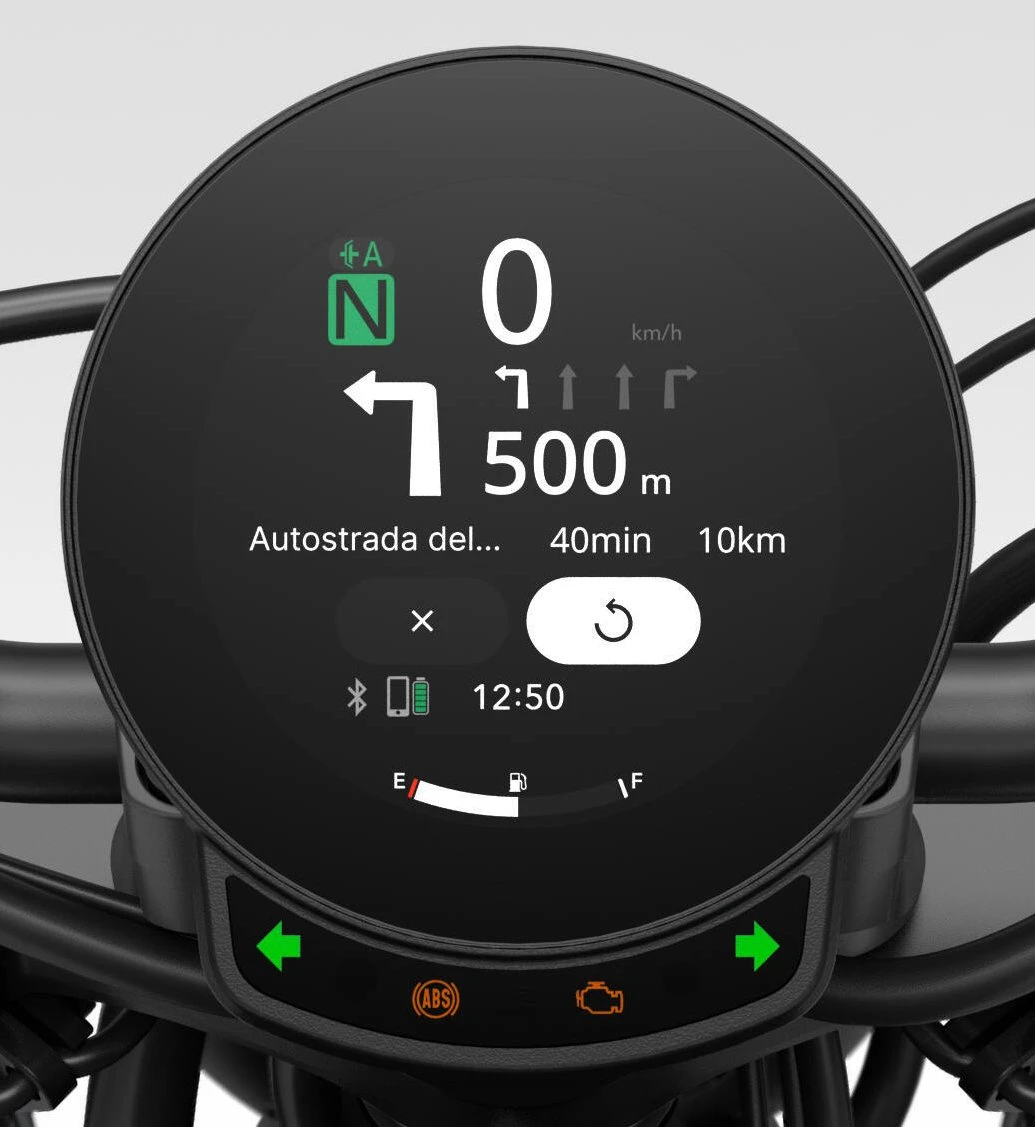
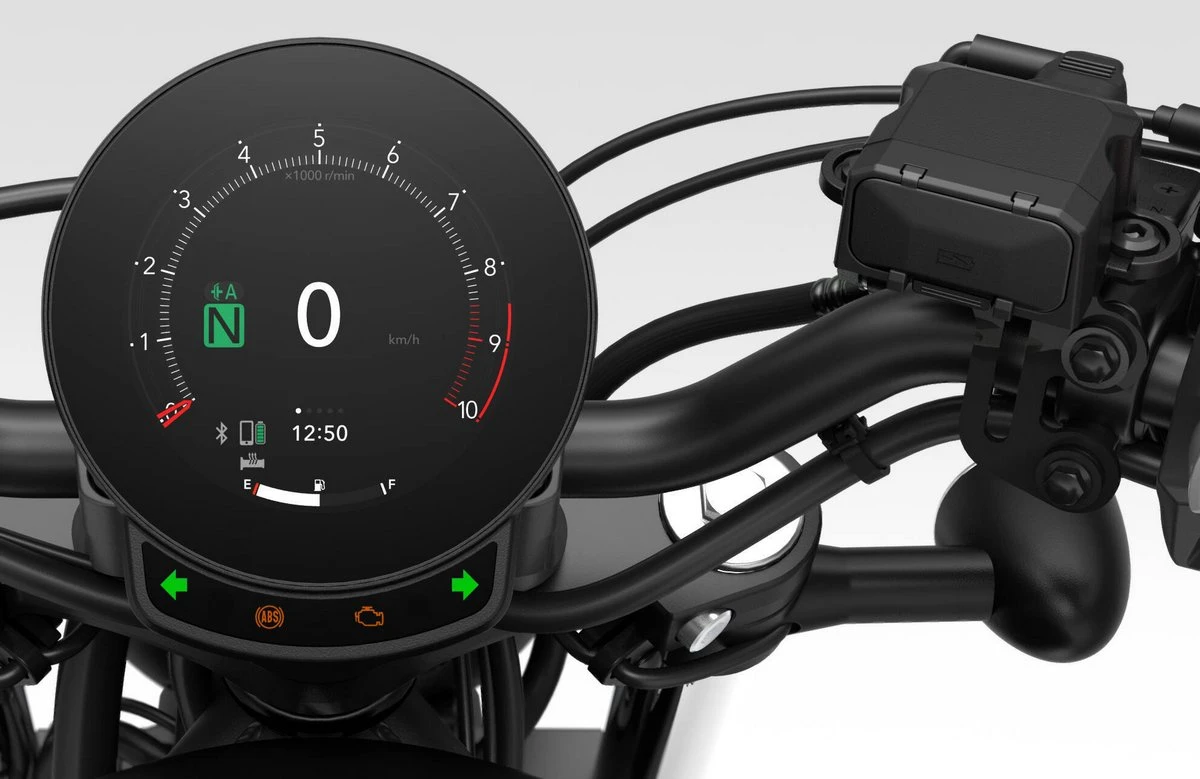
The CMX has also pulled a brand-new color TFT display from the tech shelf. Honda could have gone for cost savings by reusing the display from the 1100, but they didn’t. The 500 gets its own circular instrument cluster, with a 3.5-inch diameter. This allows for more modern graphics, more displayed information, navigation and smartphone control features via the Honda Roadsync app, and keeps your eyes off the USB-C port grafted onto the handlebars like a potato on your cheek.
More high-tech but still rebellious?
It’s got to live up to its name. Because while the CMX takes its tech to the next level with the E-Clutch and TFT instrument cluster, every other aspect of its character retains its unique traits. The CMX 500 is designed to be an extension of the lifestyle of today’s new riders—just like the smartphone, Deezer, and the attitude that go with you everywhere. A sign of the times, the bike is already perfectly tailored for them. Its engine delivers 46 chevaux of power—just below the maximum allowed under A2 regulations.
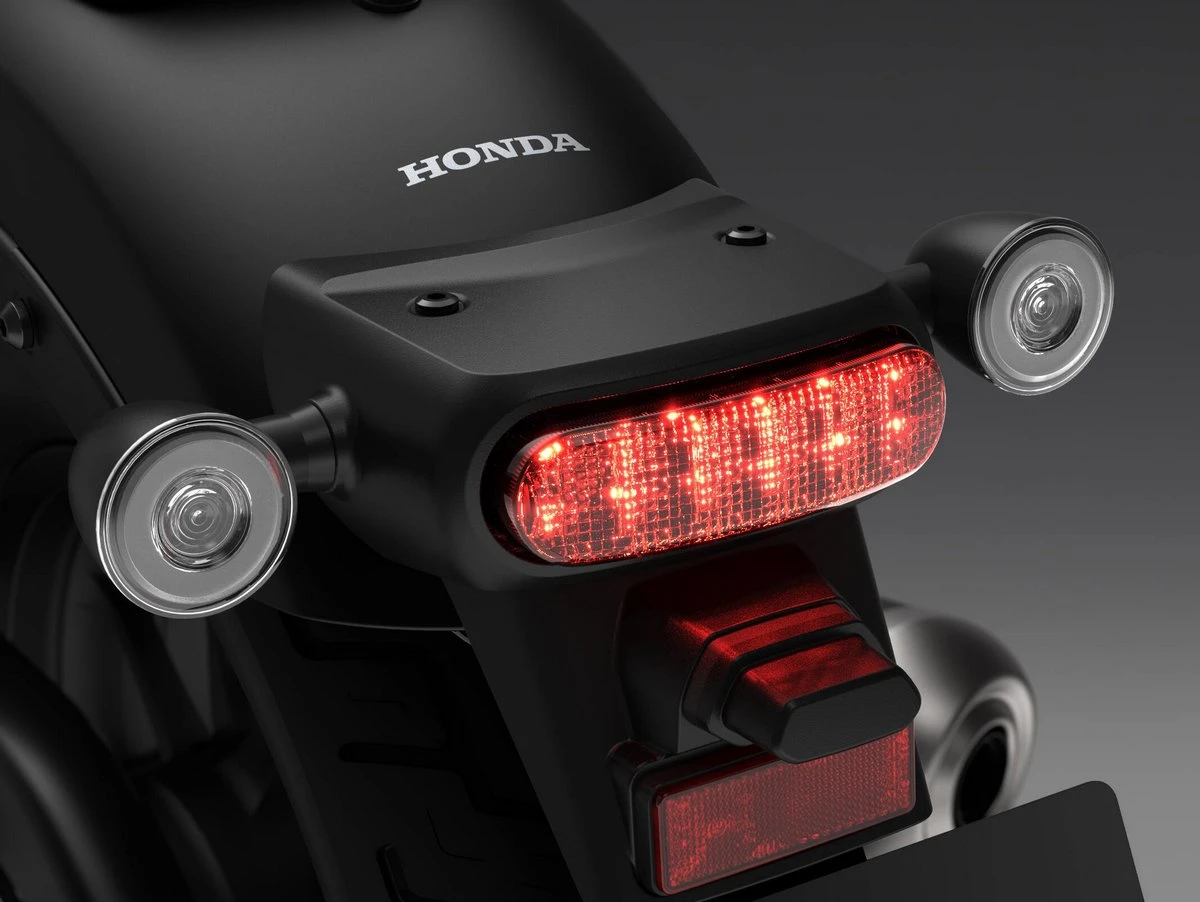
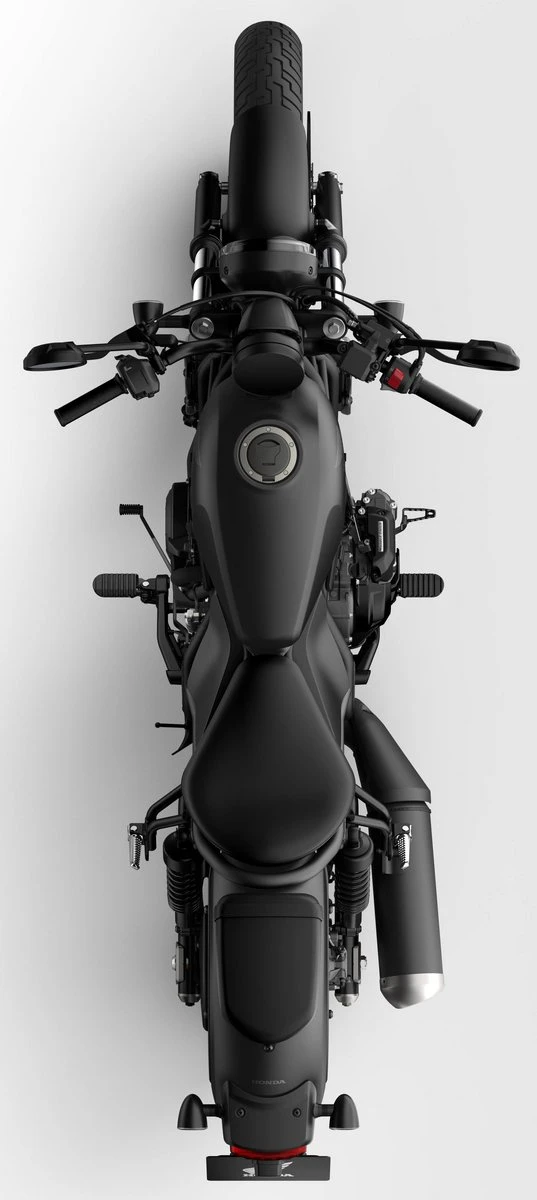
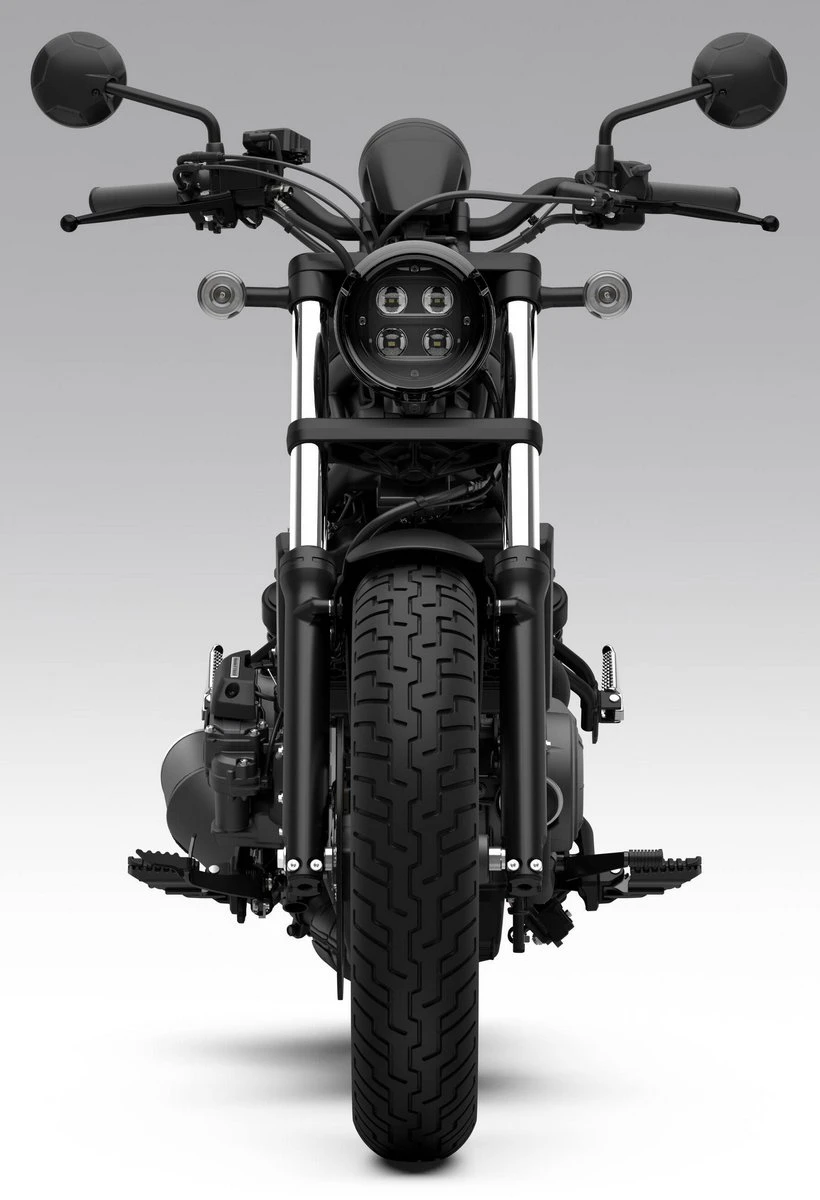
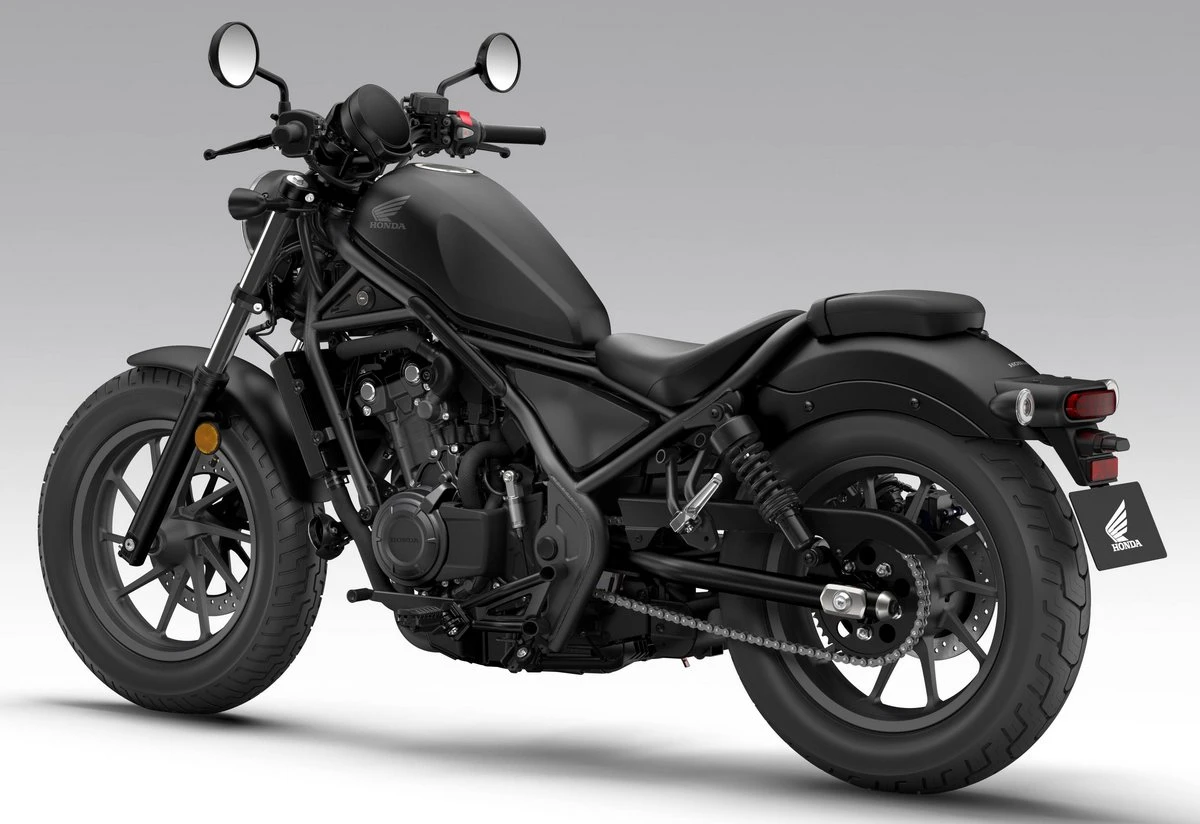
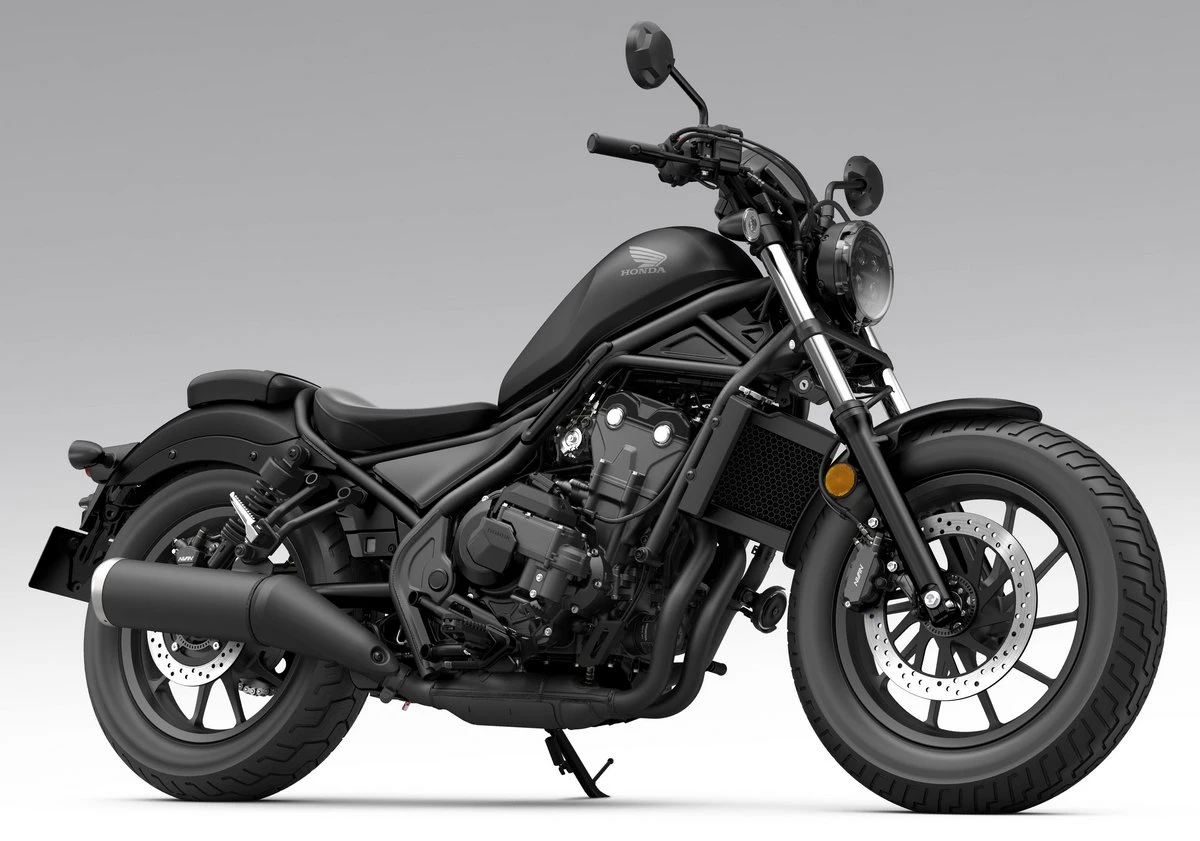
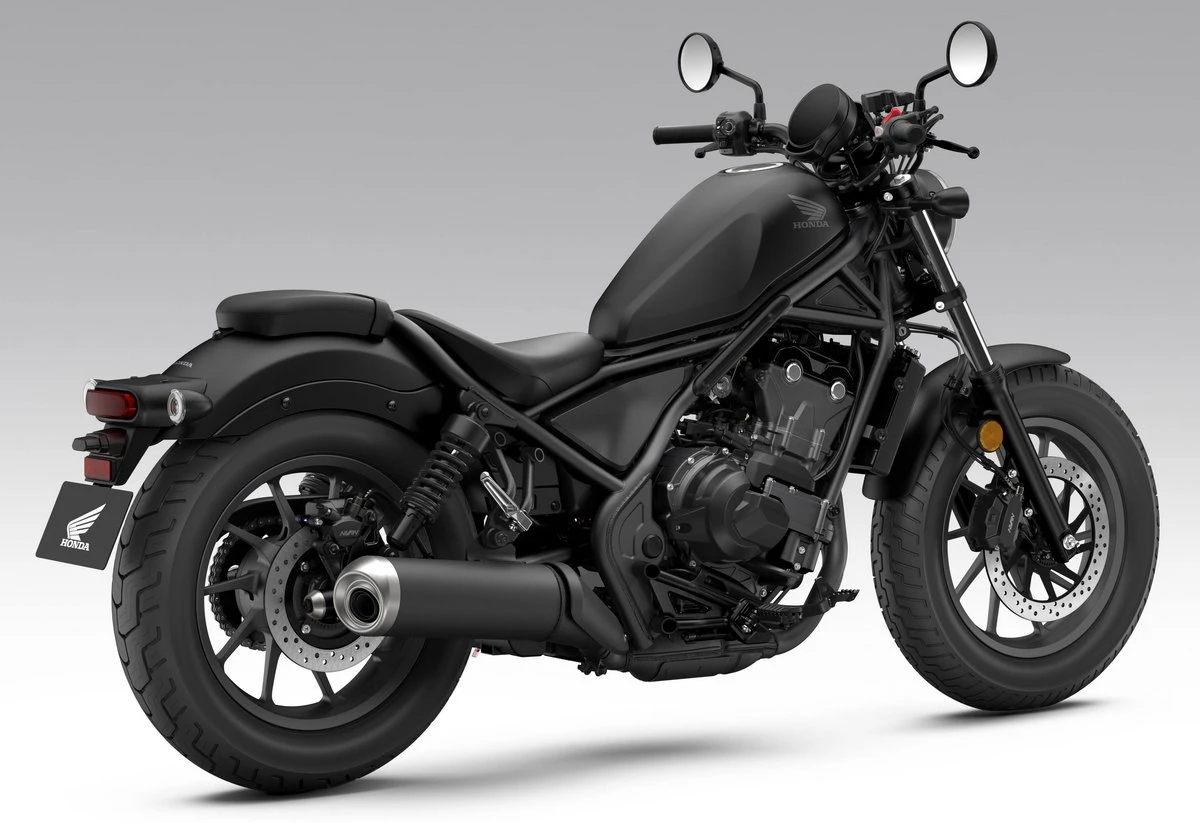
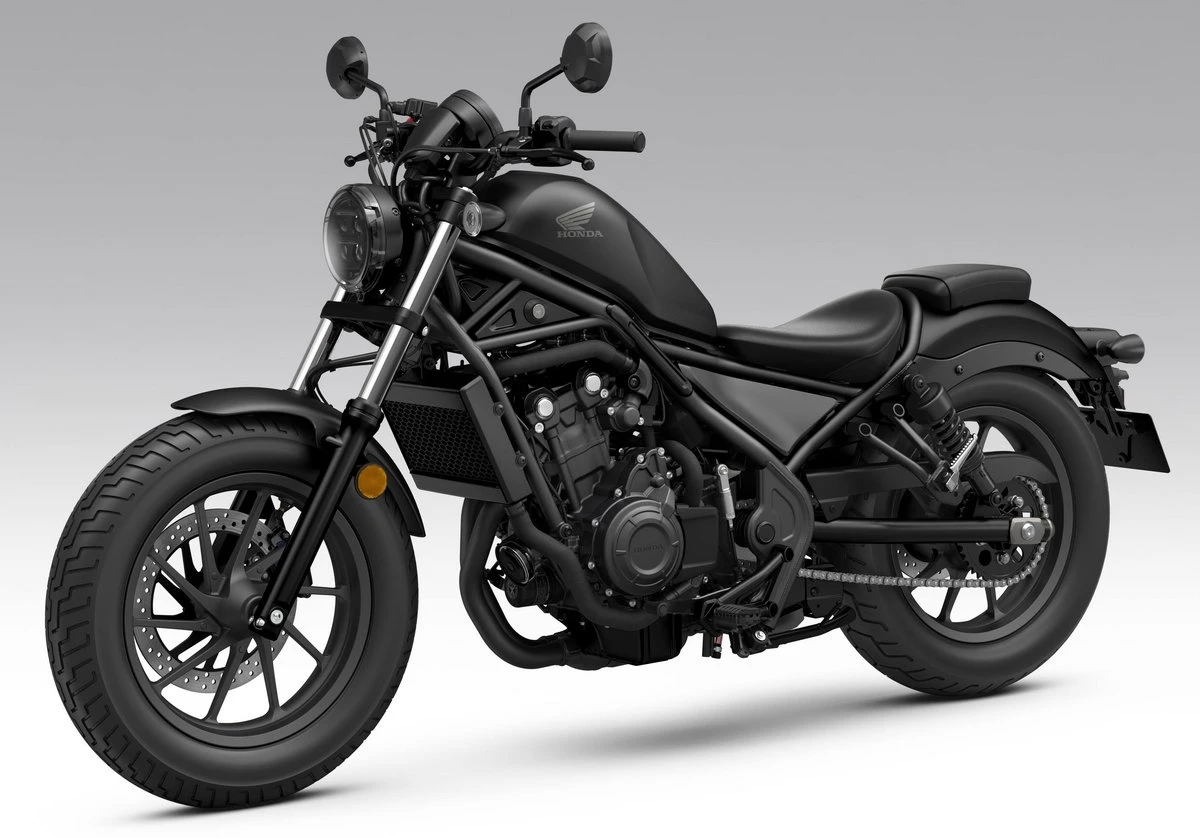
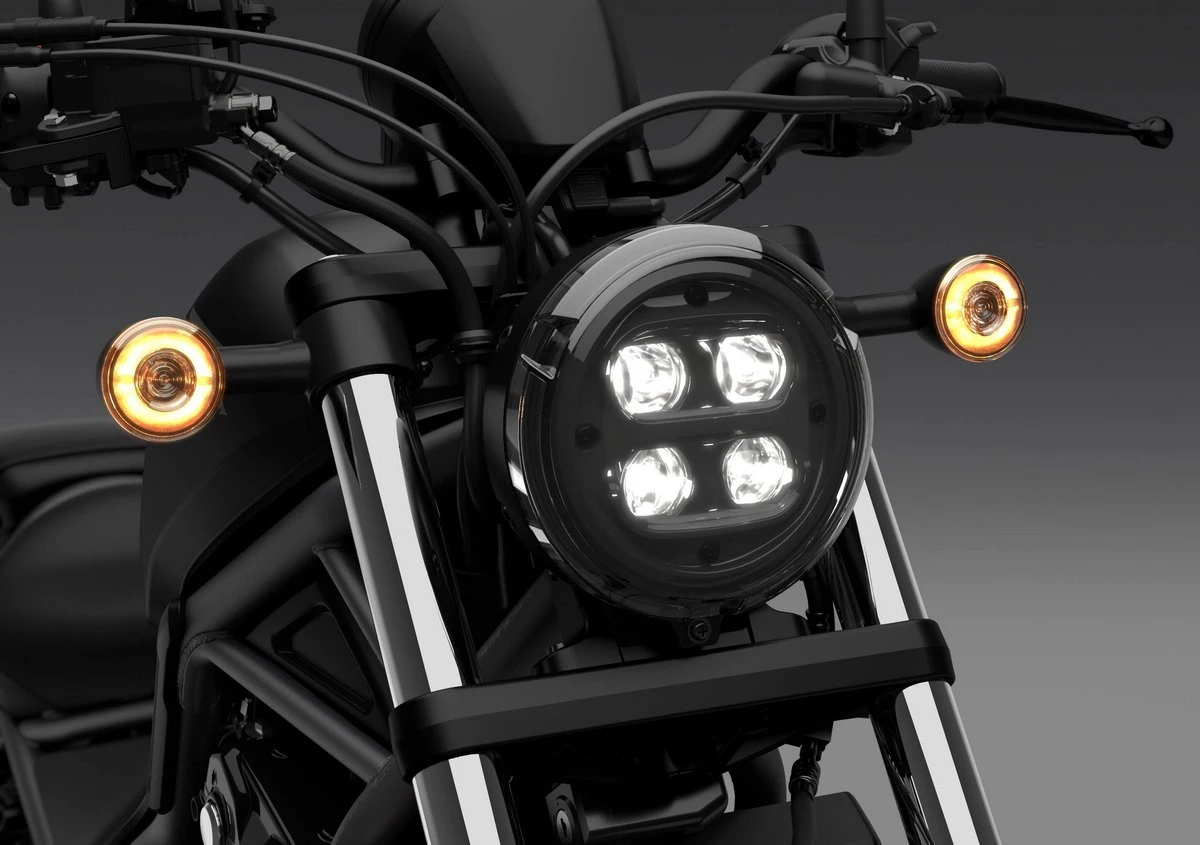
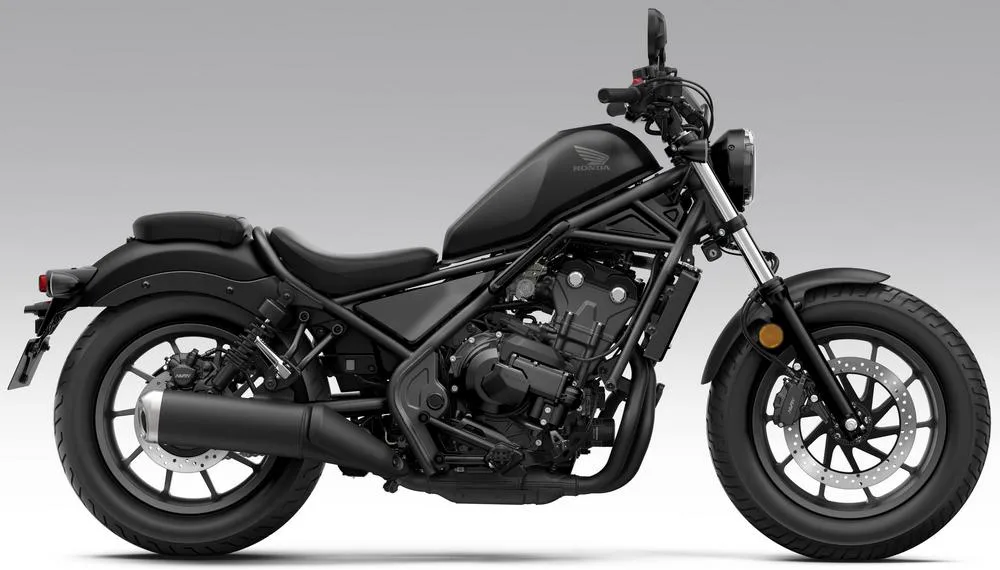
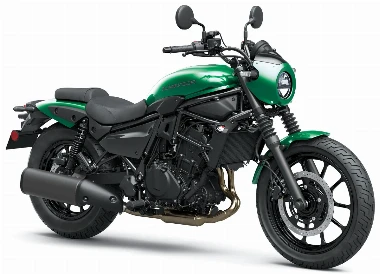
Slim, with a low seat, dark, and firmly planted on wide tires, it leans toward the bobber style. The slanted, elongated fuel tank is surprising, the very modern engine stands out, and the rear end catches the eye. For customizers, this is going to be fun. It looks like a quick pass with an angle grinder could transform it into a minimalist machine, with only the rider’s seat remaining.
That said, without needing a chainsaw, the seat and footrests are easily removable. Then, for those who want to take it further, the rear subframe—made of cast aluminum—is bolted to the frame and offers plenty of customization possibilities. Enough to make a style statement.
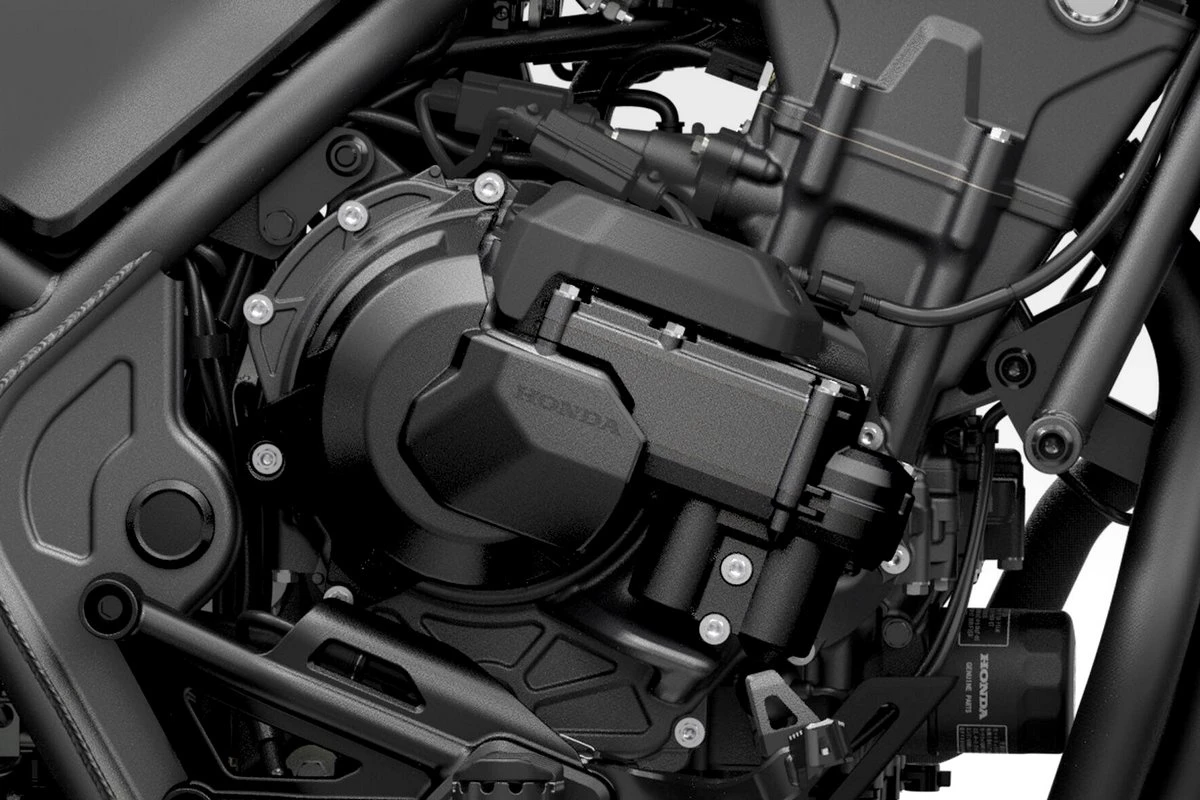
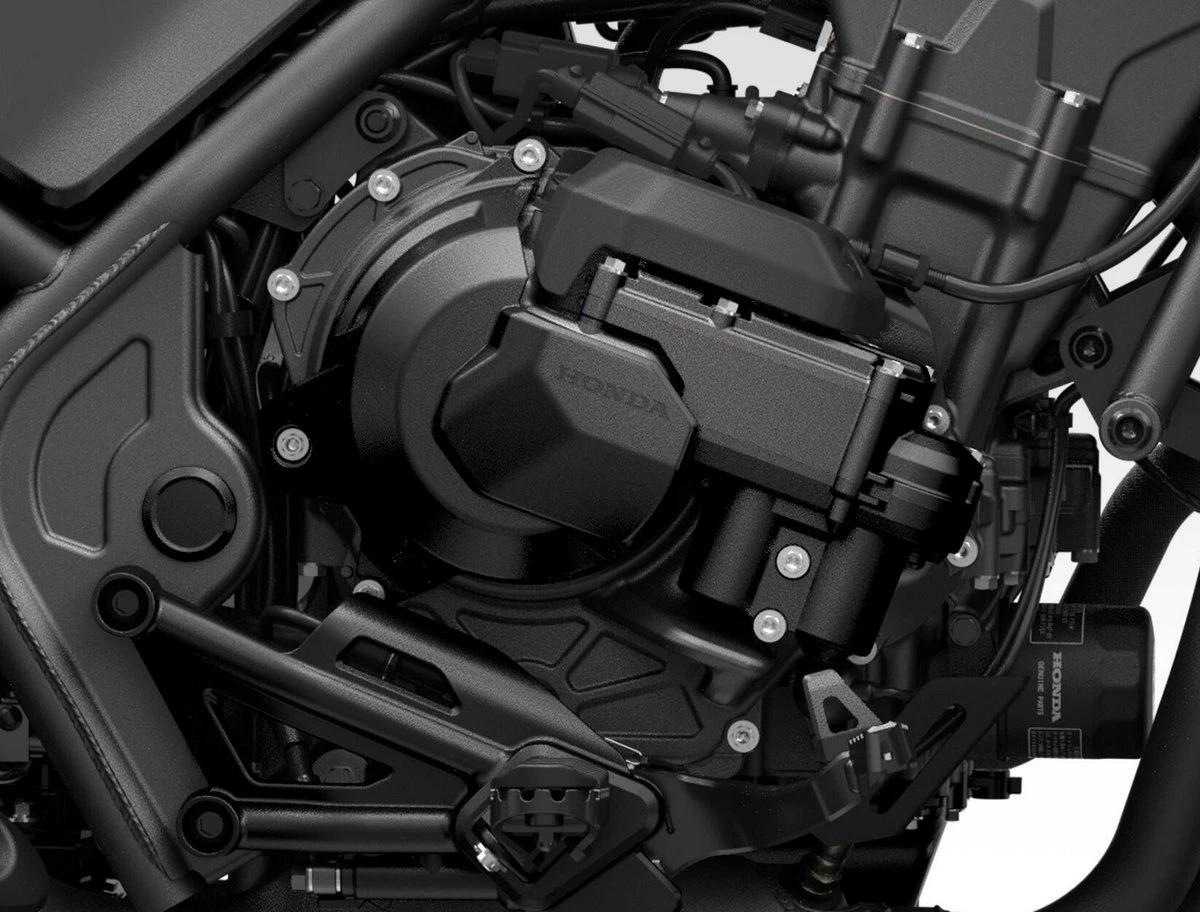
Where purists will grumble is when it comes to the engine. No cooling fins, a water radiator in front of the frame, four times as many valves as cylinders. Not exactly a “custom” engine, in other words. Its appearance exudes seriousness, and the internals match that vibe: 8 valves, liquid cooling, nearly square bore and stroke (67 x 66.8 mm), dual overhead camshafts (DOHC), reduced friction, 180° crankshaft phasing, and a recalibrated fuel injection system to deliver a character more in line with the bike’s spirit.
As we’ve seen, this engine puts out 46 bourrins of power at 8,500 rpm. The torque, a modest 43 Nm, peaks in the mid-range at 6,000 rpm. It’s no speed demon, but high horsepower isn’t the name of the game with mid-size customs. Neither the 883s nor the V7s are known for their raw power. For a laid-back ride, this 500 will get the job done. As usual, boots are recommended—and practically essential for your right leg. Due to the riding position, the side casing immediately presses against your calf.
Not too much technical complexity for a straightforward style
No flashy frame either. After all, a custom bike can only be conceived with a simple design. A steel tubular cradle frame, a 41 mm fork, and a single 296 mm front disc—with a two-piston caliper. At the rear, a steel swingarm with a classic design. It’s paired with two lateral shock absorbers and a 240-mm brake disc with a single-piston caliper. ABS rounds out the package. As for adjustments, the only setting you can adjust is the shock absorber preload.
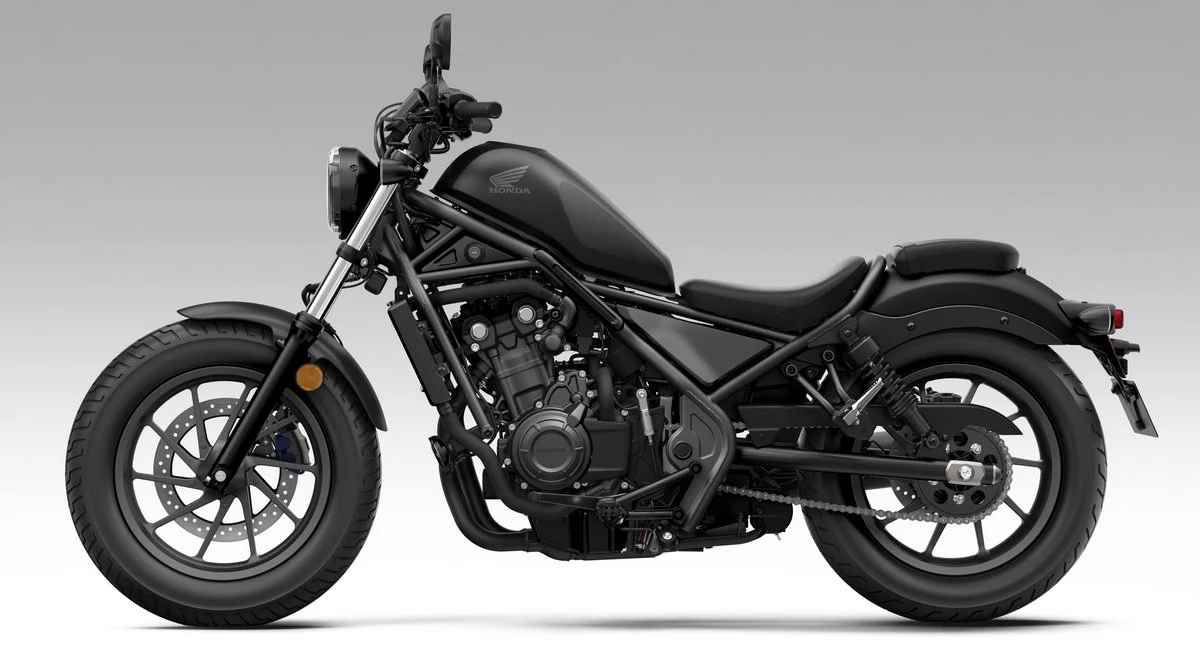
Any technical specs? Let’s break it down: a 30° steering head angle, a wheelbase of 1,490 mm (reasonable for a custom bike), a seat height of 690 mm, a fuel capacity of 11.2 liters, and 16-inch wheels fitted with visually imposing tires. A 130-series front tire isn’t really necessary, but it certainly gives the bike a commanding presence. A big plus: a weight under 200 kilos. In this segment, bikes tend to tip the scales heavily. The Rebel will be all the easier to maneuver as a result.
With the CMX 500 Rebel, Honda has successfully introduced a more edgy style to the custom bike world. It’s a fun, customizable, no-frills little machine. It embodies the essentials—a dark, rebellious attitude—hence its name. A great choice for a first foray into the scene. On the other hand, with its style blending the modern and the conventional, you’ll have to put up with some snide remarks from bikers. Never mind. The world is changing and shaking things up.
M.B. – Manufacturer’s Media
by Greg

Greg is the founder of Motoplanete—a website created in 2001 to share his passion with his friends and showcase as many motorcycle models as possible to his readers. Self-taught and a jack-of-all-trades, his discovery of the world of motorcycles led him to work as a photographer, rider, team manager, web developer, graphic designer, editorial assistant, and editor-in-chief.
 Share
Share
Key facts Honda CMX 500 Rebel (2027) : What you need to know before you buy
Prices
| Basic version | |
|---|---|
 France France |
6,800€
(Motoplanete estimate)
|
Model sold in 2027

Performance
- Max speed : approximately 170 km/h (105.60 mph)
- Average fuel consumption : 3.60 liters/100km (0.65 mpg)
-
Estimated range
: 306 km (190 miles)
Calculated range until tank is empty, not verified.
Specifications Honda CMX 500 Rebel 2027
- Chassis
- Two-seater saddle
- Frame : Tubular steel frame
- Fuel capacity : 11 liters (2.91 US gallons)
- Oil capacity : 3.20 liters (0.85 US gallons)
- Seat height : 690 mm (27.17 in)
- Length : 2,205 mm (86.81 in)
- Width : 810 mm (31.89 in)
- Min height : 1,090 mm (42.91 in)
-
Min. ground clearance : 125 mm (4.92 in)
- Wheelbase : 1,490 mm (58.66 in)
- Weight when fully loaded : 193 kg (425 lb)
- Front axle
- 41 mm diameter telescopic fork / Showa, Wheel travel : 121 mm (4.76 in)
- Angle de chasse : 28 °
- Chasse au sol (mm) : 110 mm
- Monte d'origine du pneumatique avant : Dunlop
- Braking 1 Nissin disc Ø 296 mm (11.65 in), 2-piston caliper
- Front tire (Tubeless) : 130 / 90 - 16 → Order this type of tire
- Pressure : 2 bar
- Transmission
- 6 stage gearbox , manual - power-assisted clutch
- Secondary by chain
- Rear axle
- 2 side shock absorbers / Showa, Wheel travel : 95 mm (3.74 in)
- Preload adjustment
- Monte d'origine du pneumatique arrière : Dunlop
- Braking 1 disc Ø 240 mm (9.45 in), single-piston caliper
- Rear tire (Tubeless) : 150 / 80 - 16 → Order this type of tire
- Pressure : 2 bar
- Motor
- two-cylinder online , 4 strokes
- Injection
- Cooling system : liquid
- 2 ACT
- 4 valves per cylinder
- 471 cc
- 45 ch (44.40 hp) to 8,500 rpm
- 4.60 mkg (43.30 Nm) to 6,000 rpm
- Power-to-Weight Ratio : approx. 4.11 kg/ch
- Torque-to-Weight Ratio : approx. 39.72 kg/mkg
- Compression : 10.7 : 1
- Starting system : electric
- CO² emissions: 84 g/km
- Émission sonore: 78 db
- Anti-pollution standard : Euro 5+
- Standard equipment
- Brake assist : Standard ABS
- TFT Full-Colour screen size: 8.89 cm (3.5 inches)
- Gear indicator
- Anti-slip clutch
- automated clutch
- USB plug
- Optional equipment
- Heated grips
- Saddlebags
- Practical information
Essentials
 Motoblouz
 LaBécanerie


Gallery
Models
2027
Used
Compare the CMX 500 Rebel to its competitors
Compared to its direct competitor, this CMX 500 Rebel holds a particularly dominant position, establishing itself as the benchmark across several key criteria. It outperforms the segment by combining torque of 4.6 Nm, top speed of 170 km/h, and riding range of 306 km. Its torque-to-weight ratio of 39.72 kg/Nm limits its punch at low revs.
Fuel consumption
Range
Torque
Power
Power-to-Weight ratio
Torque-to-Weight ratio
Speed
CO² emissions
FAQ Your frequently asked questions about the CMX 500 Rebel 2027
- What is the power of the CMX 500 Rebel?
-
The CMX 500 Rebel 2027 develops a power of 45 ch (44.40 hp)
- What is the torque of the CMX 500 Rebel?
-
The maximum torque of the CMX 500 Rebel 2027 is 4.60 mkg (43.30 Nm) to 6,000 rpm.
- What is the maximum speed of the CMX 500 Rebel?
-
The CMX 500 Rebel 2027 is capable of reaching a top speed of approximately 170 km/h (105.60 mph) on the track.
- What is the weight of the CMX 500 Rebel?
-
The CMX 500 Rebel 2027 has a a weight when fully loaded of 193 kg (425 lb).
- What is the fuel consumption of the CMX 500 Rebel?
-
Average fuel consumption is estimated at 3.60 l/100km (0.65 mpg) according to the WMTC cycle.
- QWhat is the seat height of the CMX 500 Rebel?
-
To ensure good accessibility, the CMX 500 Rebel 2027 offers a minimum seat height of 690 mm (27.17 in).
- What is the price of the CMX 500 Rebel?
-
The price of the CMX 500 Rebel 2027 is 6,800€ in France
- What size tires should I put on my CMX 500 Rebel?
-
The standard size for a CMX 500 Rebel 2027 is 130 / 90 - 16 for the front, and 150 / 80 - 16 for the rear.
- What colors are available for the CMX 500 Rebel?
-
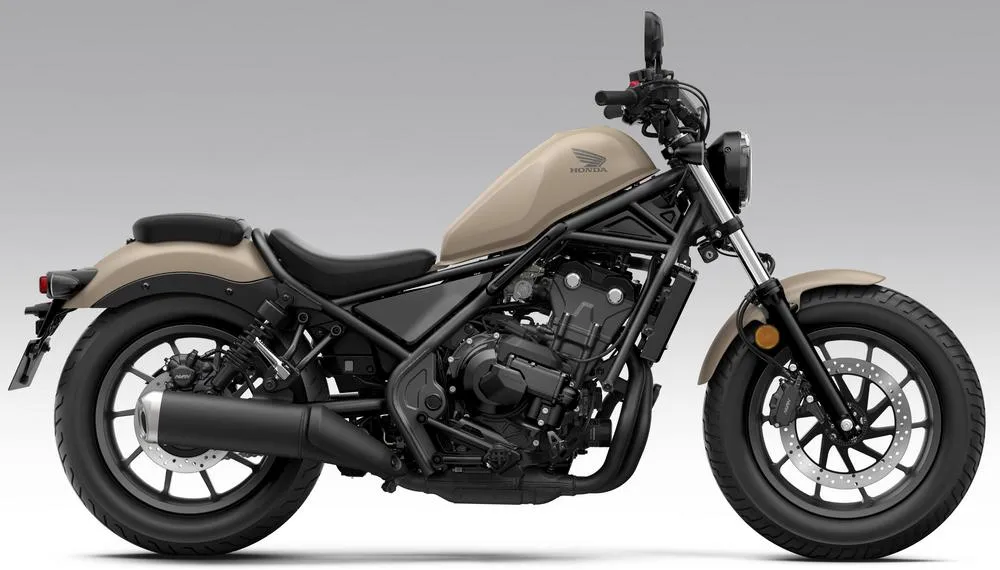
For the 2027 model year, the CMX 500 Rebel is available in several colors: black and beige.
News
-
News on the Street Triple 798, Bonneville 400, Tiger 900, and Tiger 1200.
-
2026 MXoN in Ernée: Belgium Wins, France Falls
-
Furygan offers an airbag vest designed specifically for women.
-
Top 10 Best Scooters of 2026: Our Complete Ranking.
-
Motorcycle Intercoms—A Practical Guide to Choosing the Right One for Your Needs.
-
HJC is gearing up for a big year in 2027, with eight new helmets.
-
Triumph succeeded BSA in the Motocross World Championship.
-
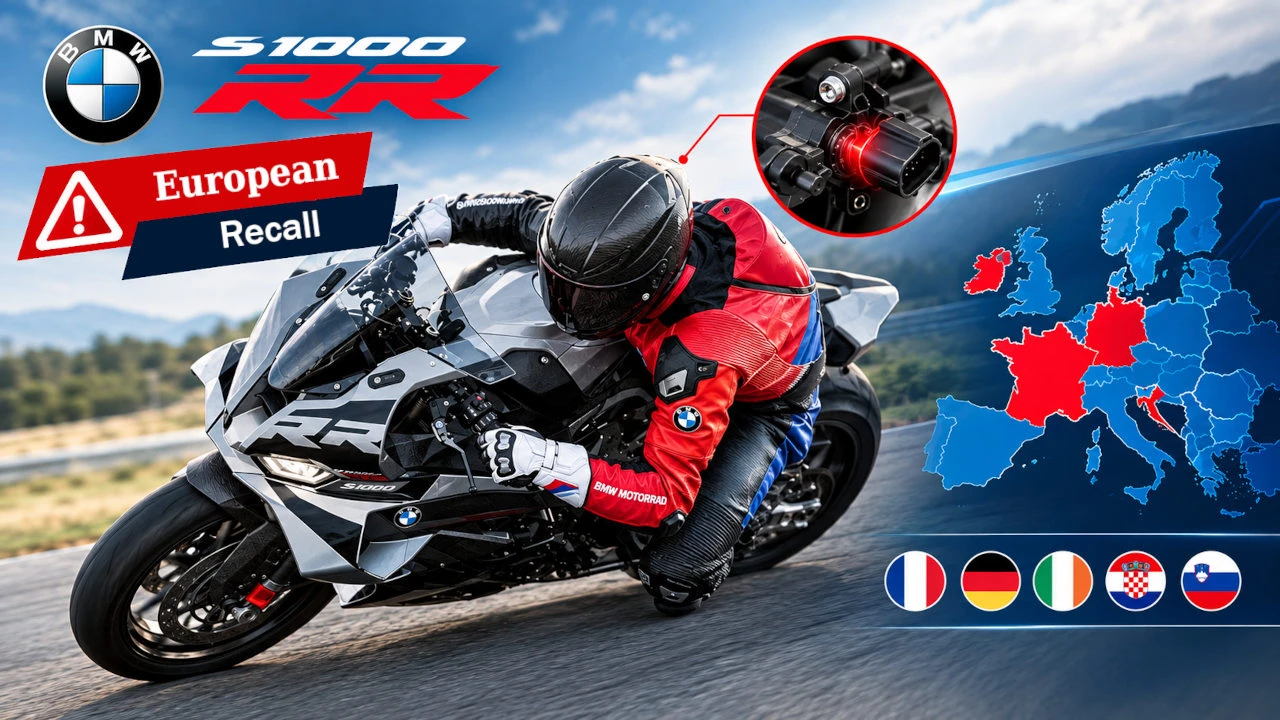
BMW S1000RR Recall Alert: Risk of Engine Shutdown
-
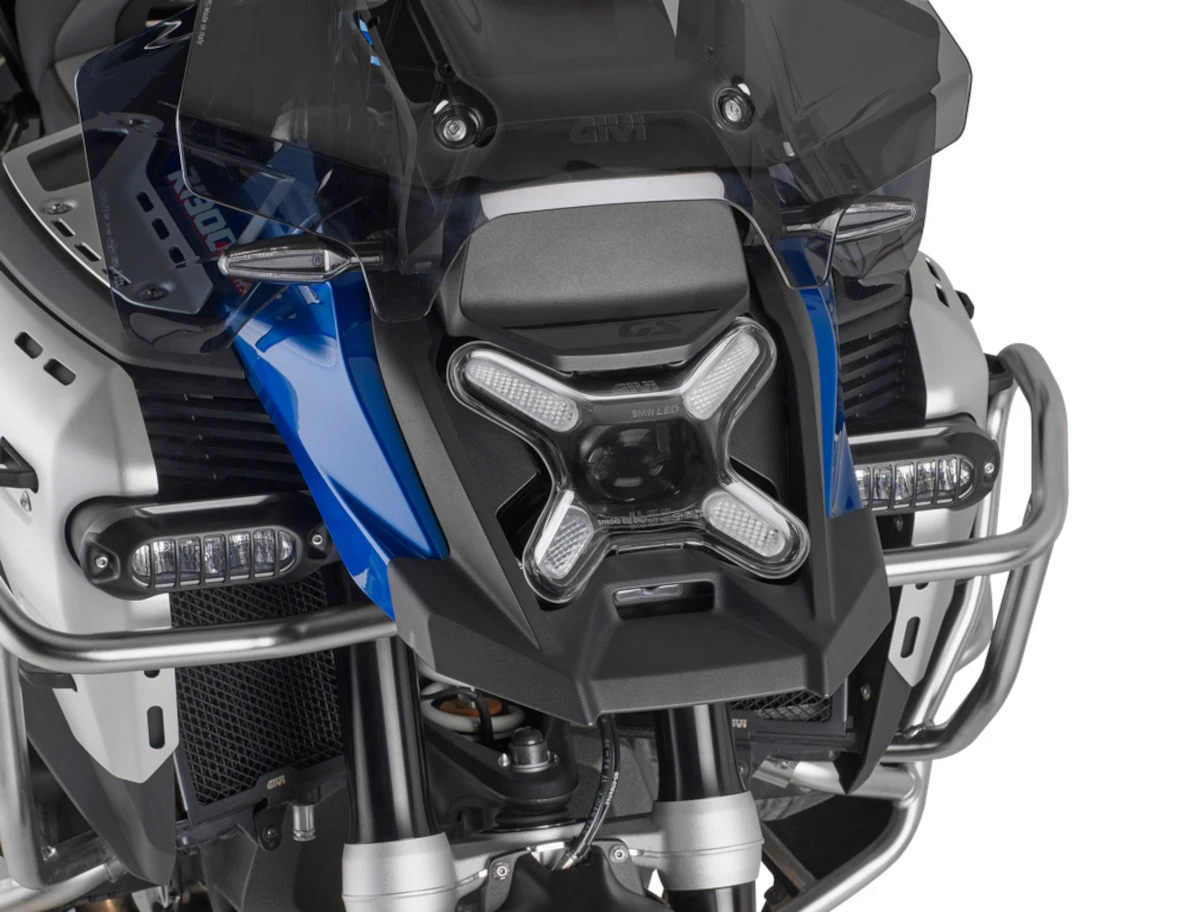
GIVI HLP Headlight Protector: Ténéré 700 and R1300GS
-
The new motorcycle models of 2026 and the evolutions.

Bikers' reviews Leave a review