

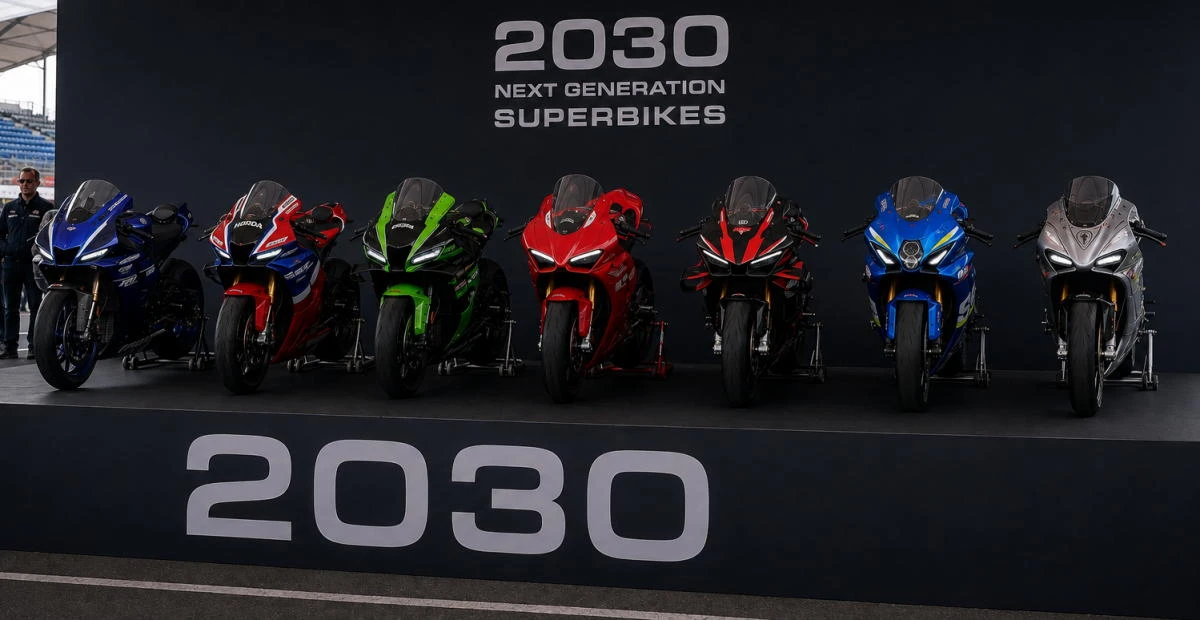
The Superbike Commission—comprising representatives from the FIM, promoter Dorna, and the manufacturers’ association (MSMA)—recently met at Donington Park and approved a series of reforms. While the 2027–2030 timeframe outlines the sport’s new technical framework, several amendments addressing safety and competitive fairness take effect immediately for the current season.
A Technical Roadmap Toward 2030
Starting with the 2027 season, the championship will introduce an engine RPM limit specific to each manufacturer, strictly correlated with a fuel flow restriction. The governing bodies will adjust this limit in 500 RPM increments, either upward or downward, following a review conducted every two races. Compliance will be ensured by an FIM/DWO data logger coupled with the manufacturers’ software.
Editor’s note: In effect, if a manufacturer develops an extremely high-performance model, all its efforts will be curtailed based on its results—as if a tennis player who wins tournaments were given a racket that gets worse and worse. But this will help level the playing field to even out the chances of victory and attract manufacturers.
That same year will mark the transition to a single fuel supplier, whose products must comply with FIM Category 1 standards. At the same time, noise restrictions will be tightened with a 3 dB reduction in the permitted noise level, setting the ceiling at 112 dB.
The Commission also ruled on the championship’s longer-term evolution. The year 2028 will see the introduction of a new licensing system based on a redefinition of the ranks assigned to teams. Finally, a major change is planned for 2030: the maximum permitted displacement for four-cylinder engines will be increased to 1,200 cm³.
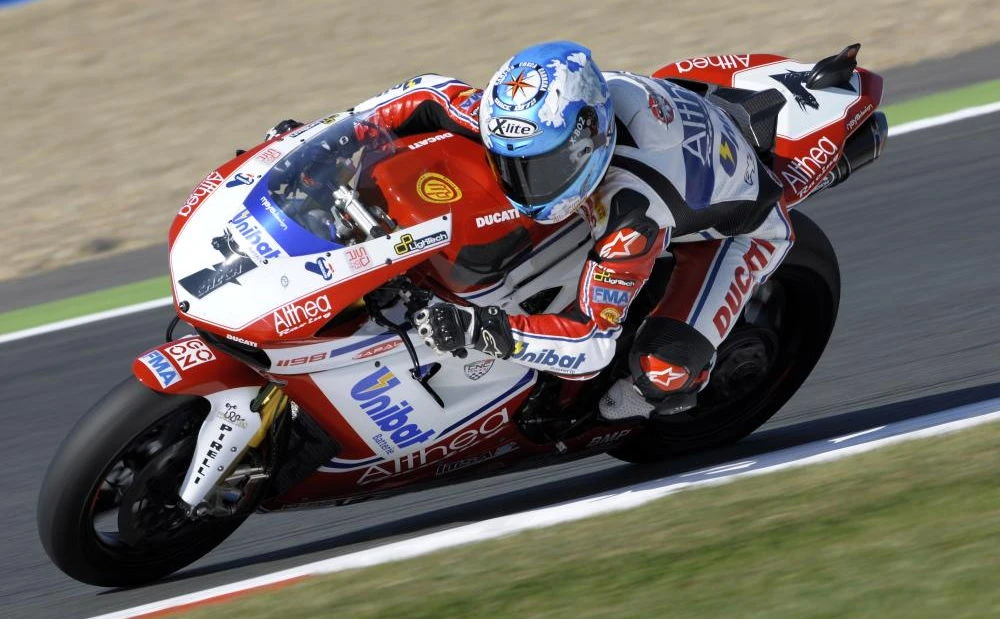
Toward a new generation of sports cars with VERY high performance potential.
This regulatory change and this significant increase in displacement will completely transform the philosophy of hypersports, at least as much—if not more—than the transition from the legendary 7.5s to today’s 1,000s.
With manufacturers now able to significantly increase power and torque, their “missiles” will push toward this new limit in the near future.
And since a model competing in WSBK must be derived from a production motorcycle, a whole new wave of machines will hit the market by 2030. Today’s 1000s produce 200 to 215 chevaux (approximately)—a 20% increase in displacement could boost their power to around 240 chevaux or even more for the most advanced brands. A symbolic 250 ch would be a great calling card for a Panigale 1200 V4 R.
The 2029 Milan Motor Show might just give us a glimpse of this Ducati, along with the Honda CBR 1200 RR-RR, Kawasaki ZX-12RR, Suzuki GSX-R1200RR, Aprilia RSV4 1200 Factory, Yamaha 1200 R1 SP, BMW S 1200 RR, as well as new contenders such as a hypothetical racing-optimized Norton 1200 Manx RR or a version of the CFMOTO SR-RR.
Sporting Adjustments Effective Immediately
In addition to these technical developments, several regulatory clarifications are now in effect to streamline the flow of race weekends.
- Traffic in the pit lane is subject to strict control. During each session, riders must enter and exit via the route marked by a broken white line and pass through the designated timing point. Any deviation from this designated route or violation of restrictions imposed by Race Control will result in penalties for the rider.
- To preserve fair competition on the track and avoid hindering the race strategies of the leaders, a disqualification policy now applies to drivers who fall behind. Any competitor returning to the pits to make adjustments and trailing the race leader by two laps or more will be barred from re-entering the track.
- Finally, regarding restart procedures following an interruption, Race Control specifies that races restarted in the Supersport, Sportbike, and Women’s categories must be contested over a minimum distance of five laps.
News credits: WSBK
Image credits: IA
 Share
Share
 helmet
 Gloves
 jacket
 braking
 Chain kit
 Oils
Oils Find an intercom
 Parts
Parts Luggage
 Tires
Tires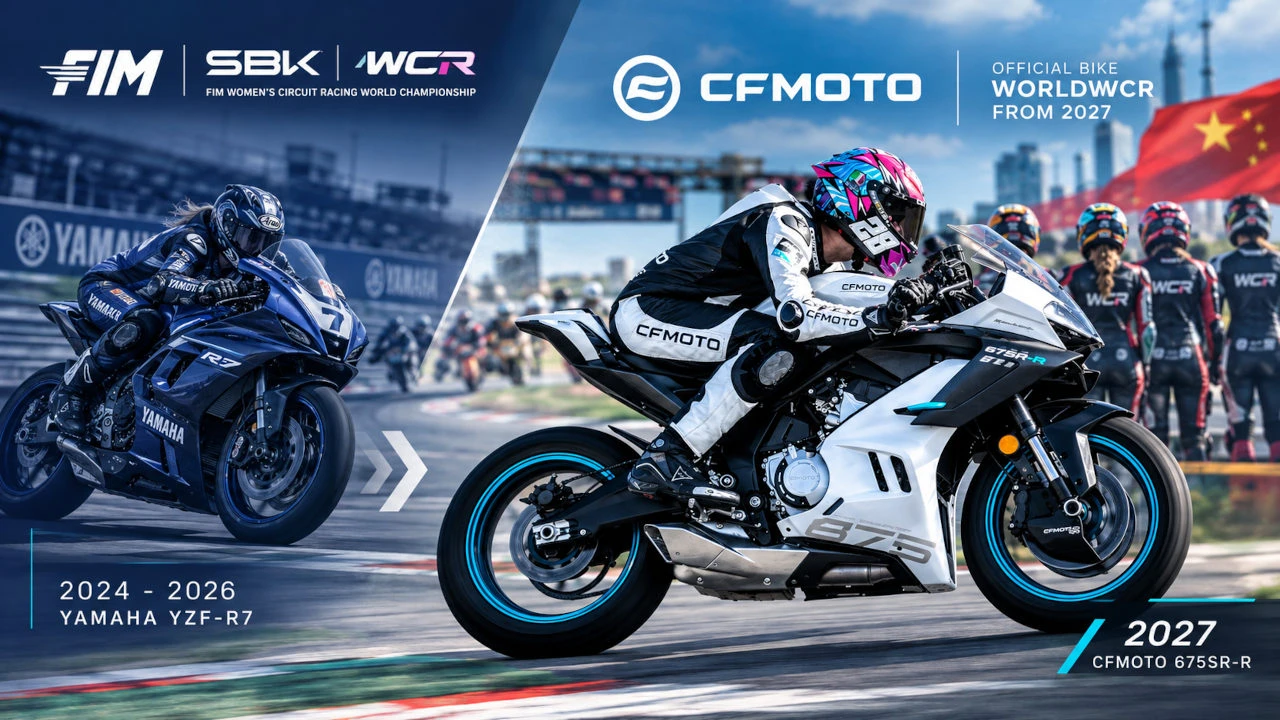

Bikers' reviews
plus d'informations
C'est de la folie