
Motorcycle specifications Honda CBR 500 R Four 2027 The Little Offensive
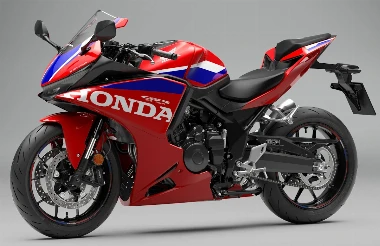

presentation of the CBR 500 R Four 2027
Just four years ago, there wasn’t a single 400/500cc 4-cylinder sport bike on the market (except in Asia, but that’s another story). Then, in 2024, Kawasaki introduced the ZX4-R to our market—a real gamble that turned out to be a great success, offering a very fun bike that’s perfect for learning to ride.
Without meaning to, Kawa’ opened a door that keeps bringing in new models: the ZXMOTO 500 RR, Kove 450 RR, QJ Motor SRK 421, Bimota KB 399…and the world’s largest manufacturer is sensing the buzz. So Honda is jumping on the bandwagon with an all-new 4-cylinder CBR 500 R Four.
Four small ones beat two medium ones
I’m specifying the number of cylinders because the CBR 500 that French riders are familiar with has been powered by a 48 ch twin since 2013. The Four model is in a whole different league. With just a few more cc and twice as many connecting rods, valves, and other parts, power here comes in at 72 chevaux; a 50% increase—that’s impressive!
On the other hand, the handling is completely different. You have to work hard to get that power—it kicks in high up at 11,000 rpm. Whereas the other CBR 500 delivers its peak power at 8,500 rpm. But let’s not compare them so easily—or at all. They share neither the same architecture nor the same philosophy. One is built for dynamic riding on the road; the other is built for screeching slides.
The CBR 500 R Four’s 4-cylinder engine is a new design, derived from that of the CB 400 Super Four roadster (available only in the Japanese market). With a 60 mm bore and 44 mm stroke, it features a very super-square design, ideal for quick revs and high-end power. The cylinders no longer require liners thanks to a silicon carbide-nickel coating. This engine also features a DLC coating on the valve lifters, intake manifolds of varying lengths, and various optimizations over the 400 model.
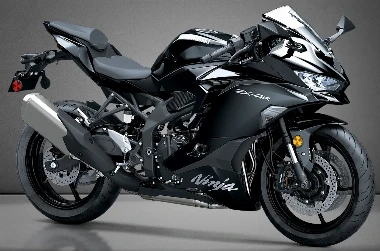
This little firecracker will really light up when you push it to the redline. It capitalizes on its displacement by offering a bit more torque than the competition—4.9 mkg—but overall, it doesn’t have the power to outclass them. The Honda puts out 71 bourrins…. The Kawa ZX-4R spits out 6 more, despite having about 100 cm³ less displacement. As for the ZXMOTO, it dominates the field with 84 ch from its 470 cm³ engine.
Like the vast majority of bikes in this displacement class, it isn’t particularly light at 189 kg fully fueled. That puts it on par with the Kawasaki and well above a Kove.
Equipped to please everyone
All these contenders will be available in the A2 category— but cutting their power in half will prevent riders from appreciating their true nature. However, only the Honda features an automated clutch. The E-Clutch comes standard, allowing you to forget about the clutch lever and use only the gear selector. Just like a shifter? Almost. Except that the E-Clutch also manages the clutch for stops, traffic lights, and so on. We go into a bit more detail about this technology here ->
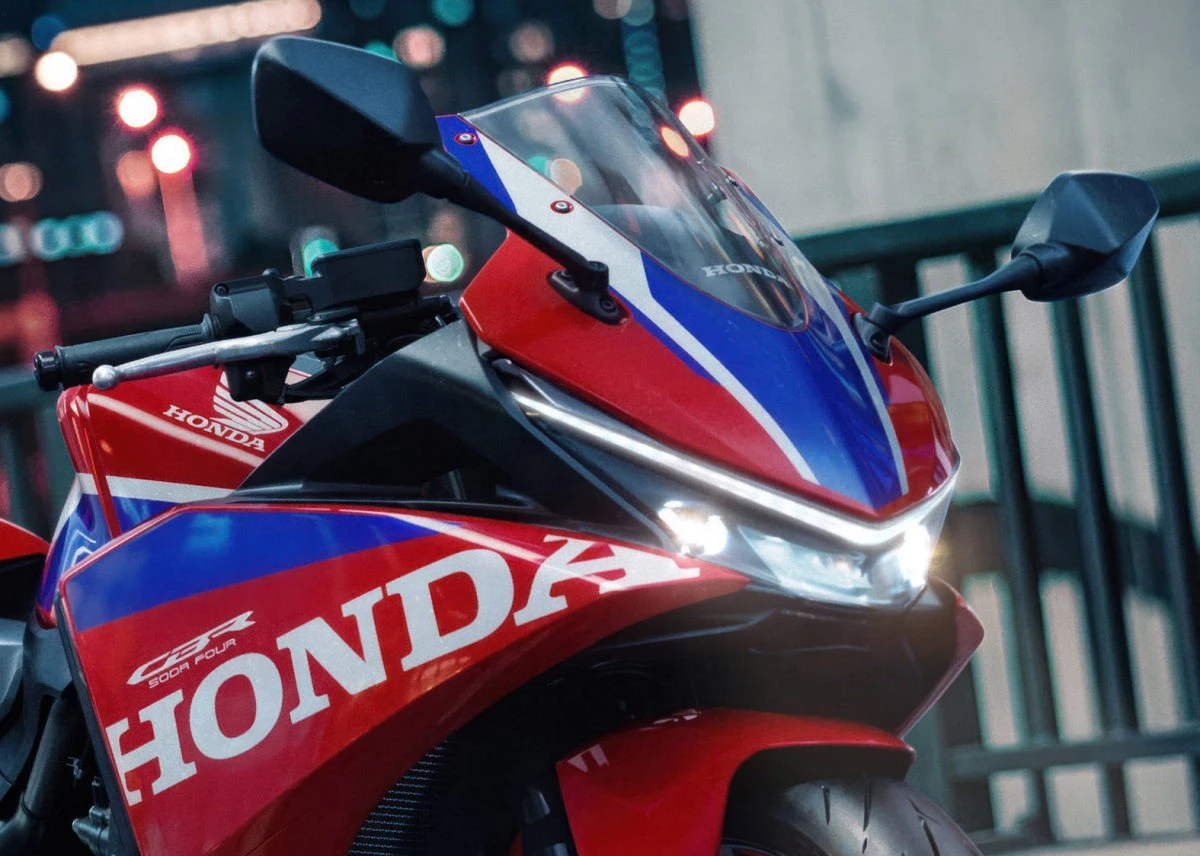
Does a smaller frame mean significantly fewer electronic features than on more powerful sport bikes? Forget that idea. The CBR 500 R Four features traction control, engine braking management, and engine power control; all with three levels of intervention. Five riding modes are available to help riders; three are factory-preset (Standard / Sport / Urban) and two can be customized by the rider.
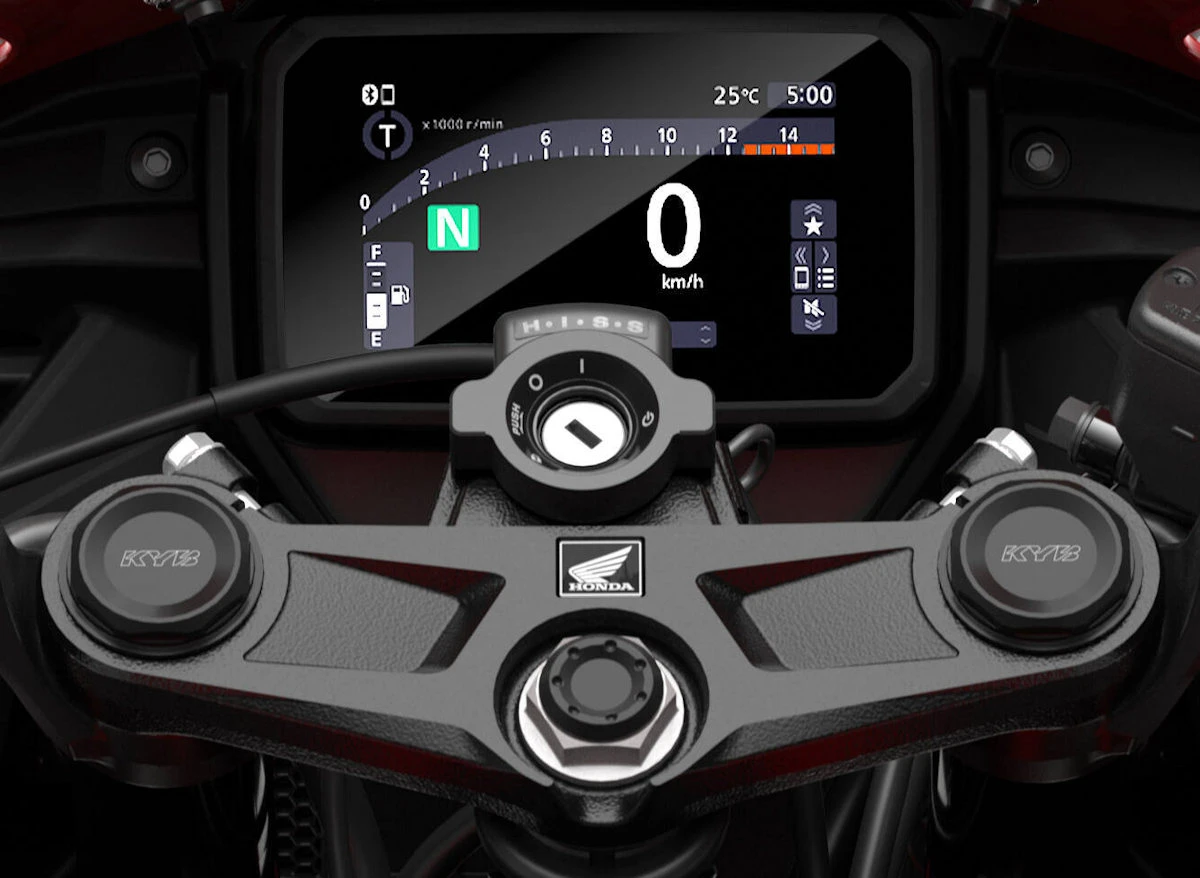
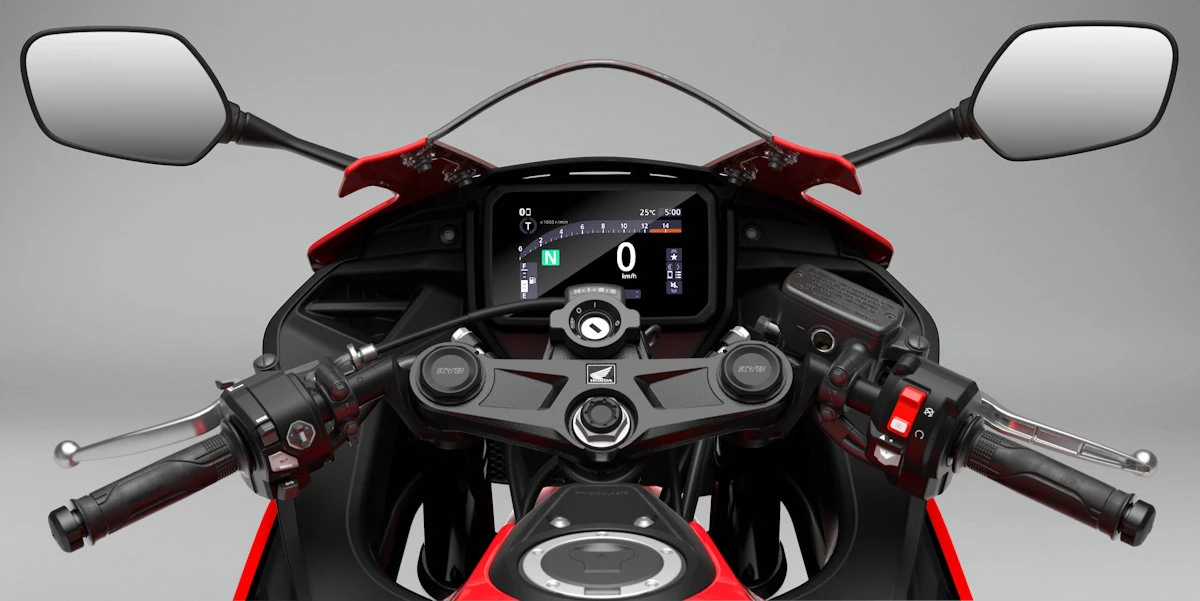
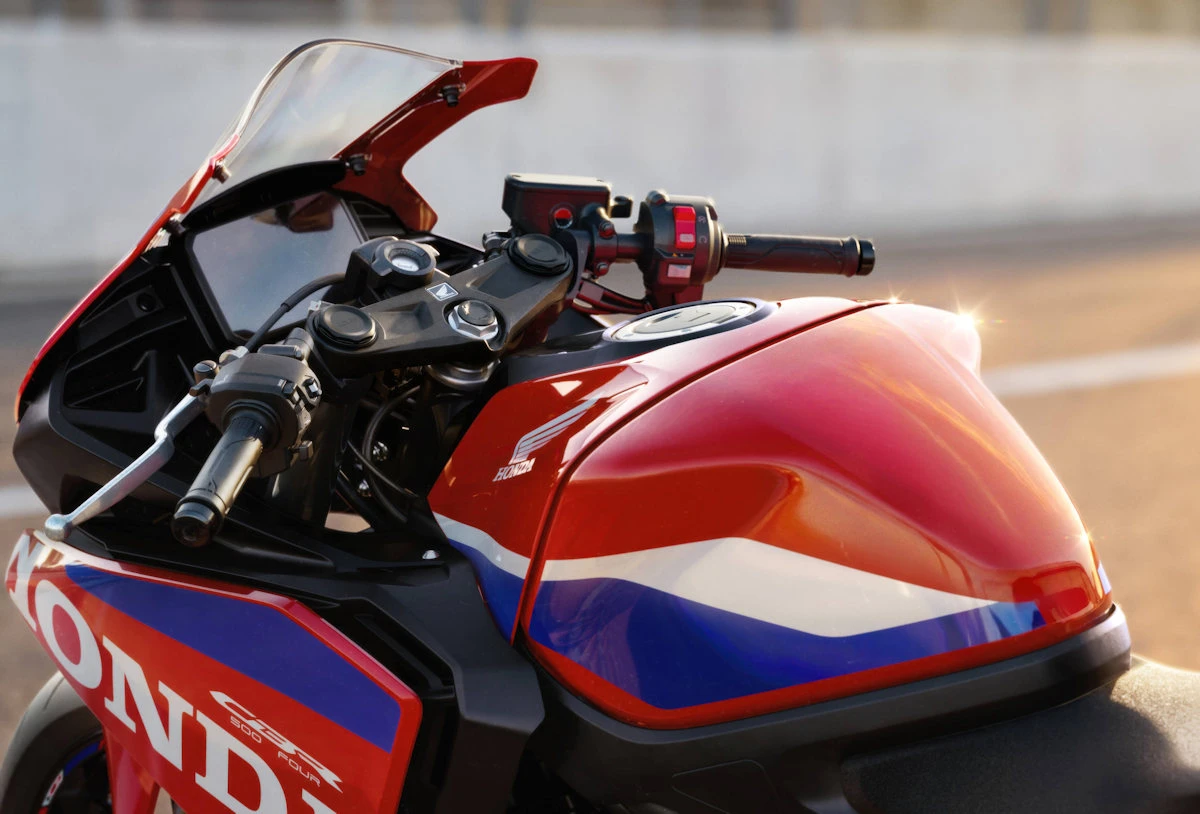
The 5-inch color TFT display—a staple across the Honda lineup—is included, offering three display modes, a USB-C port, and smartphone connectivity for iOS and Android.
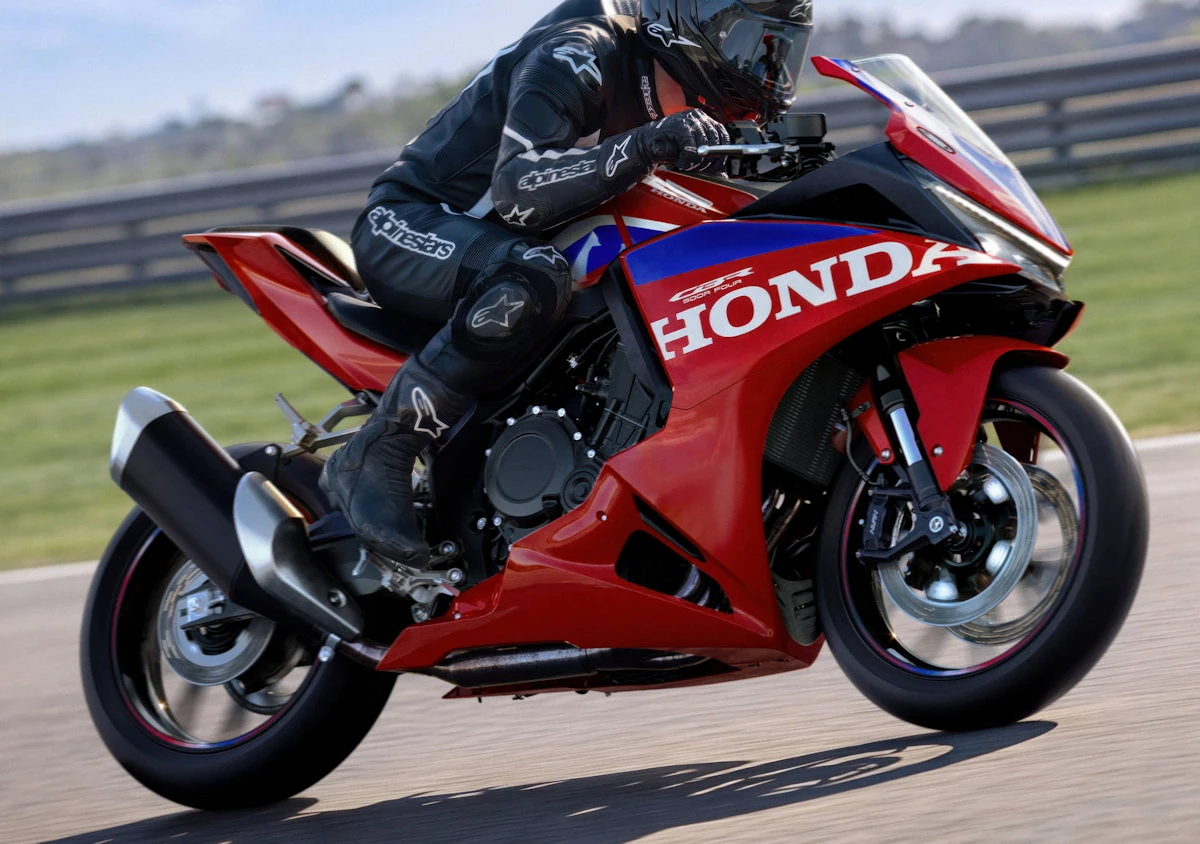
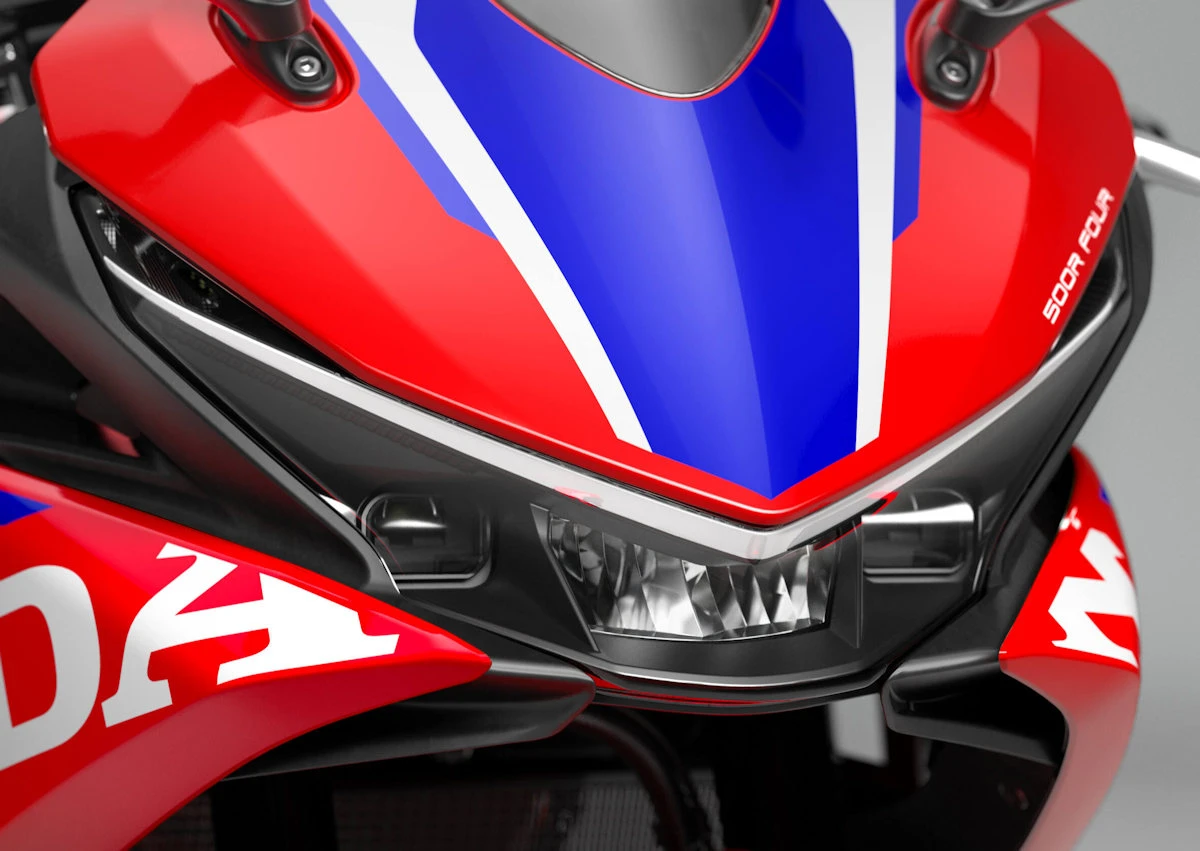
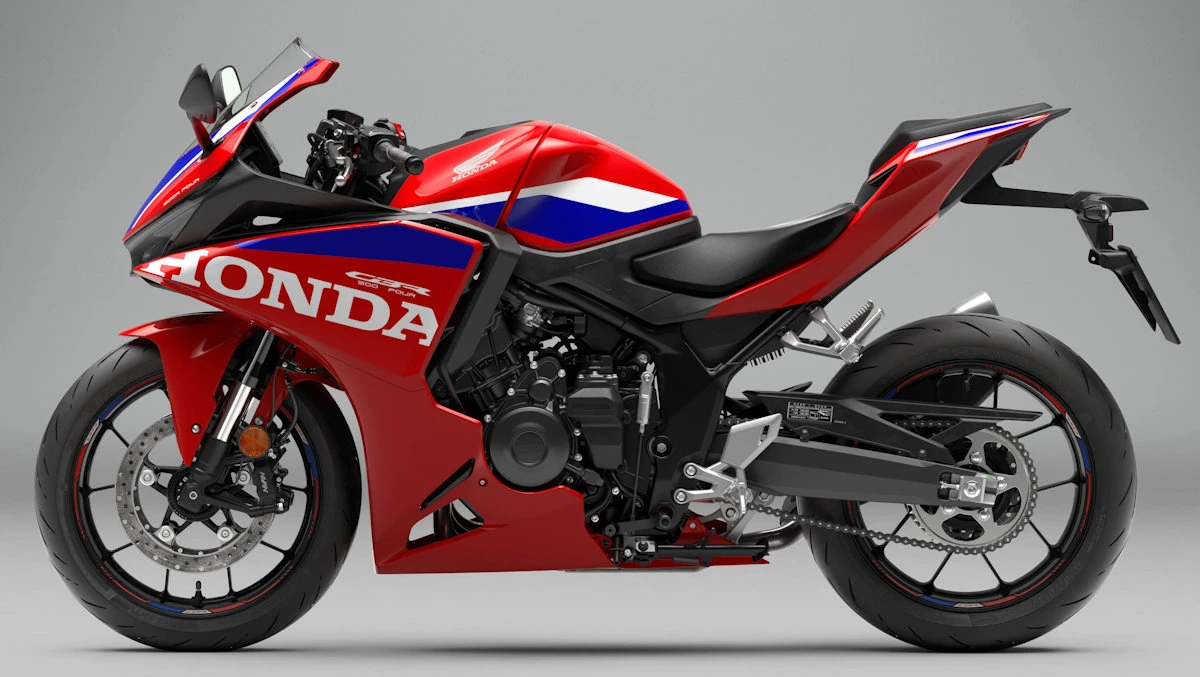
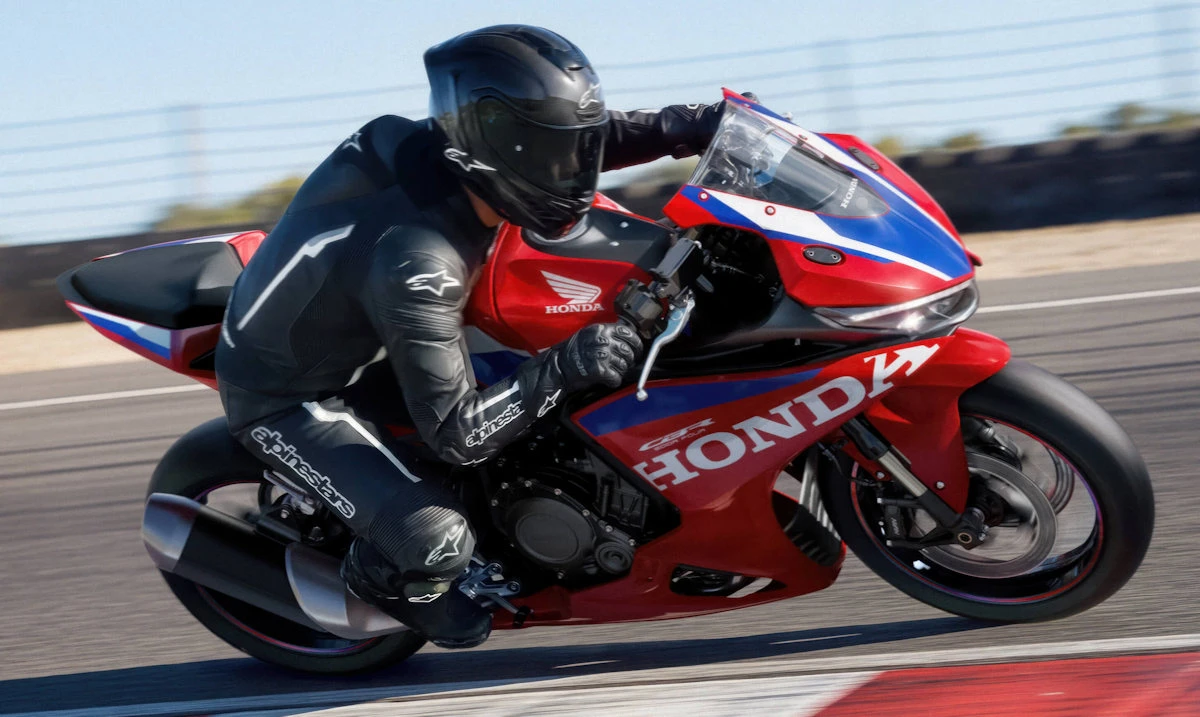
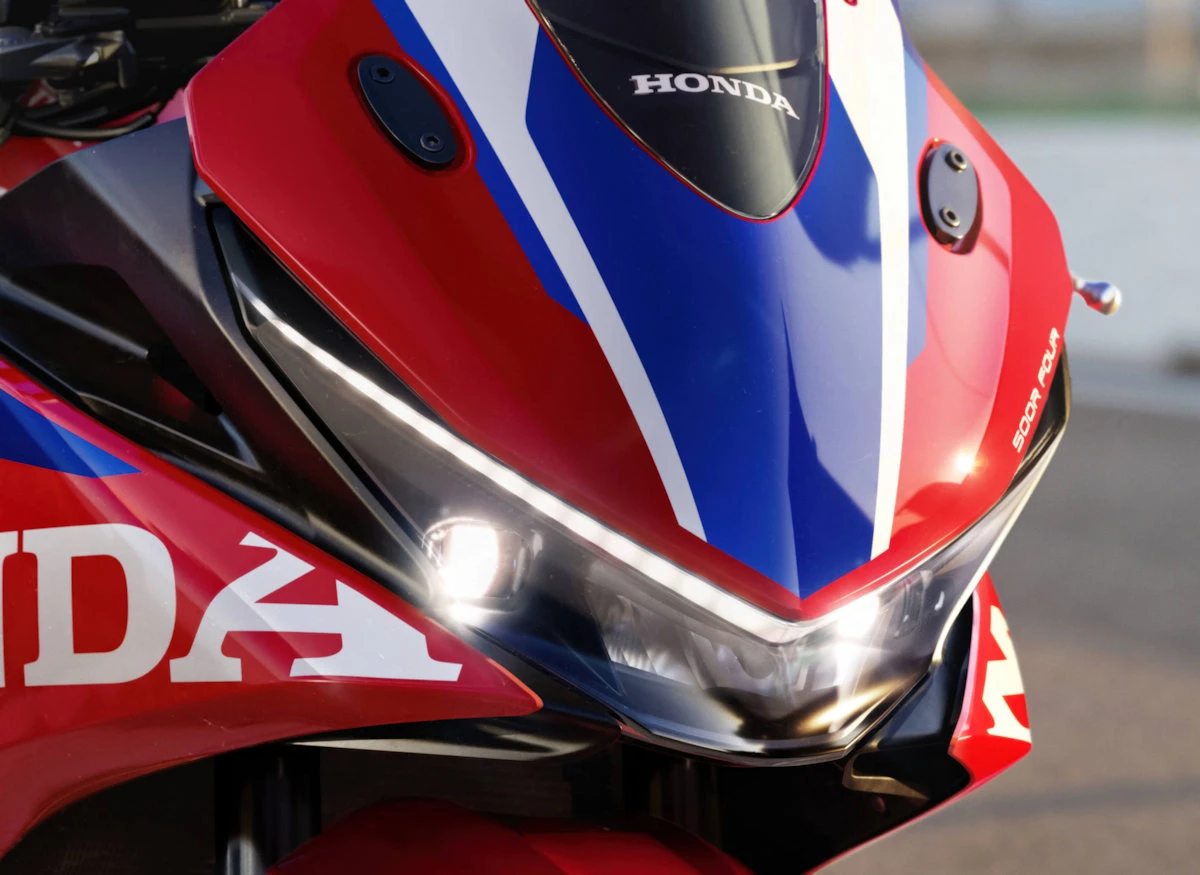
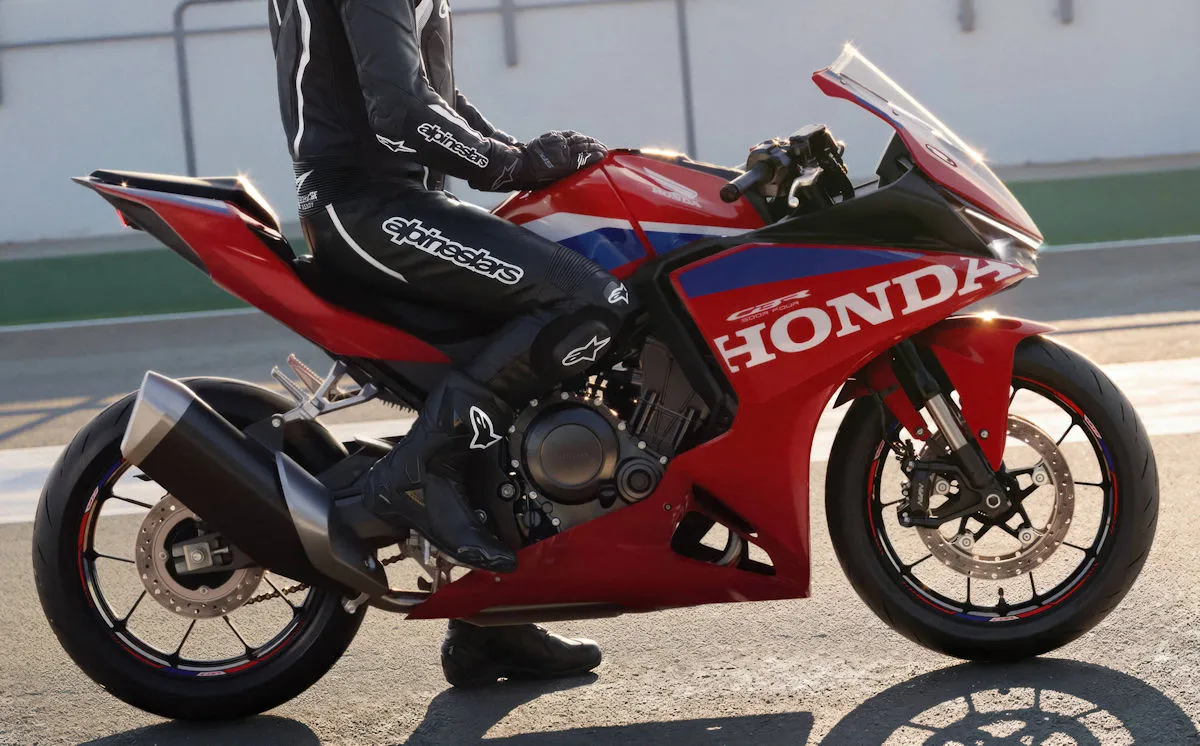
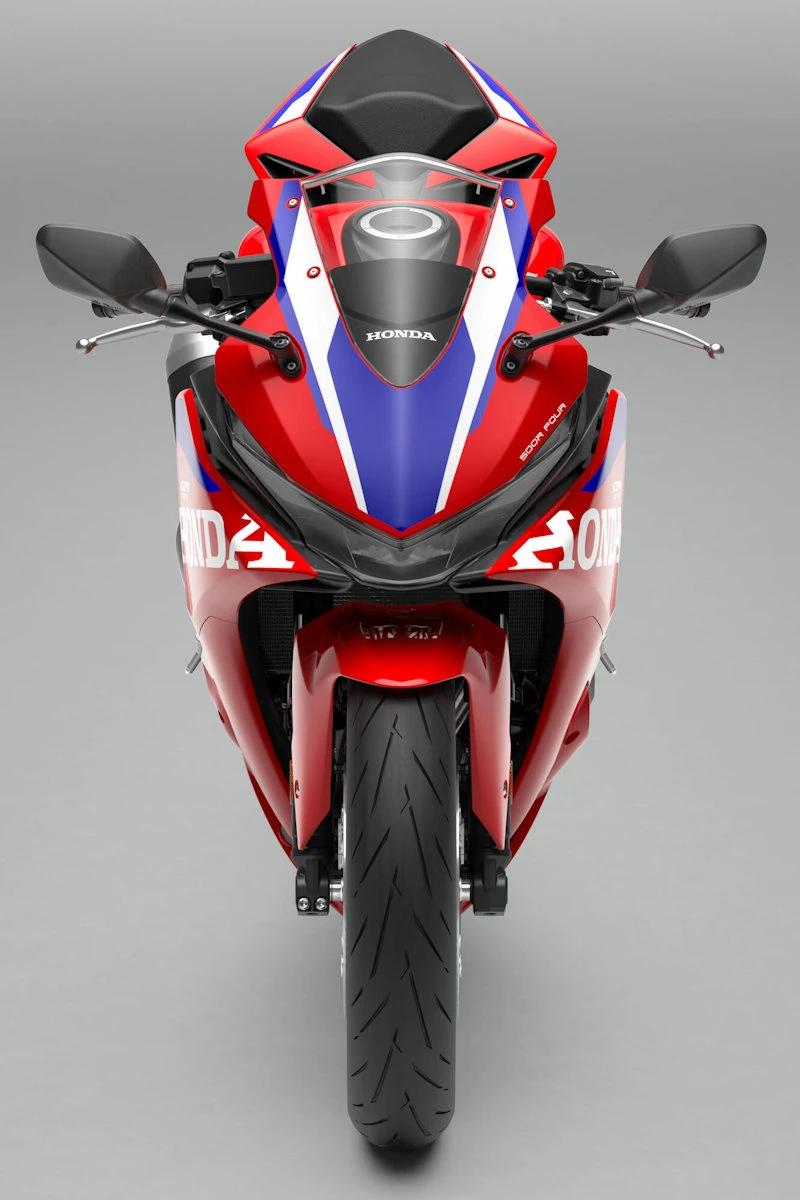
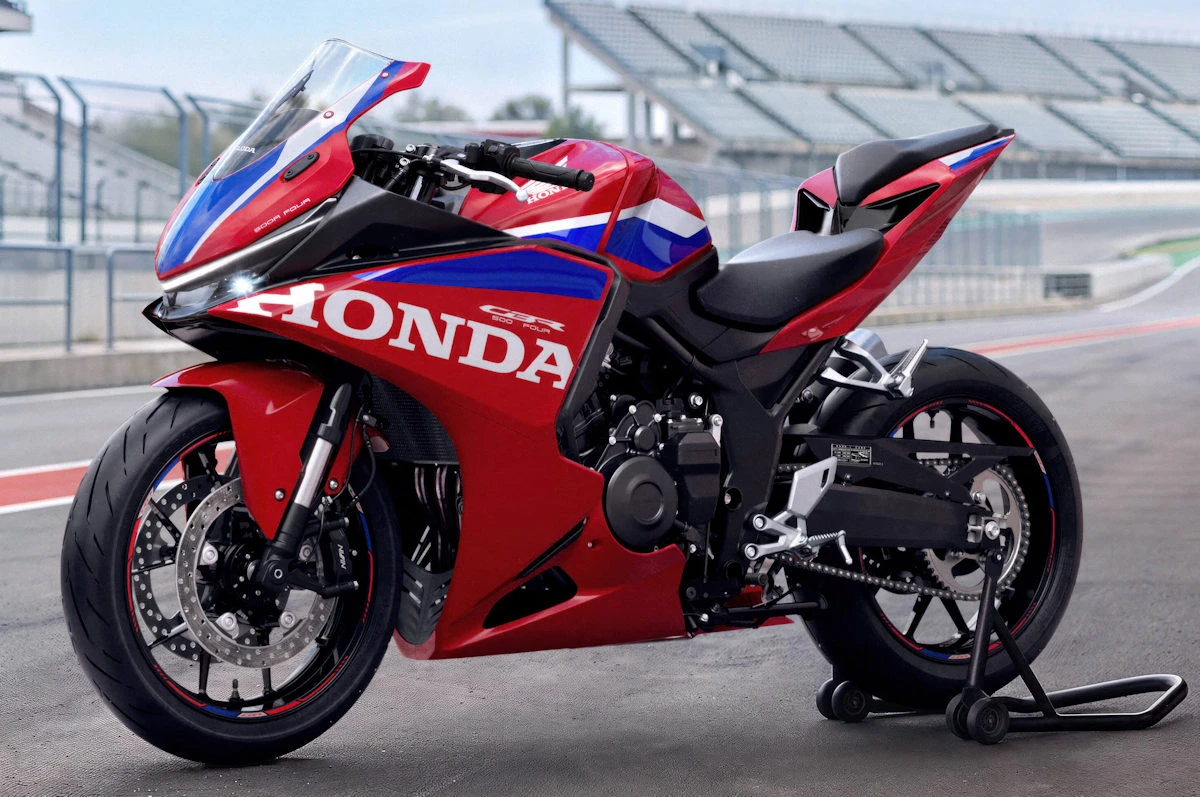
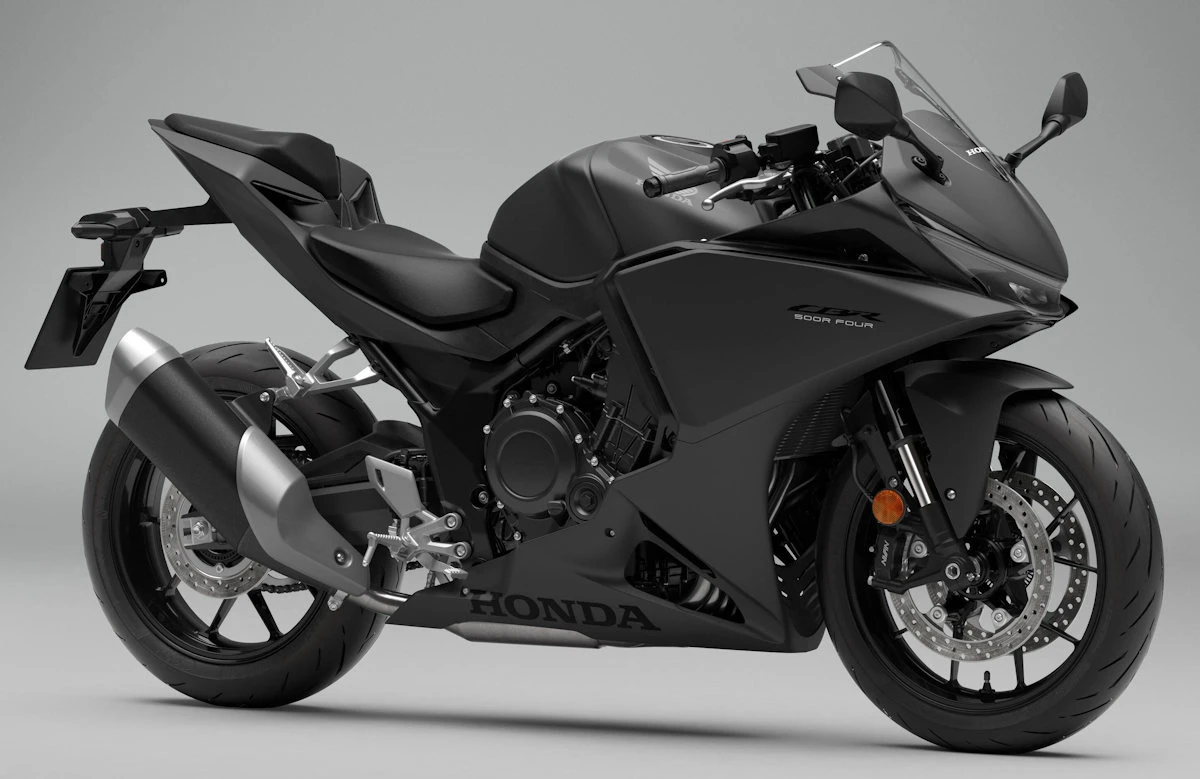
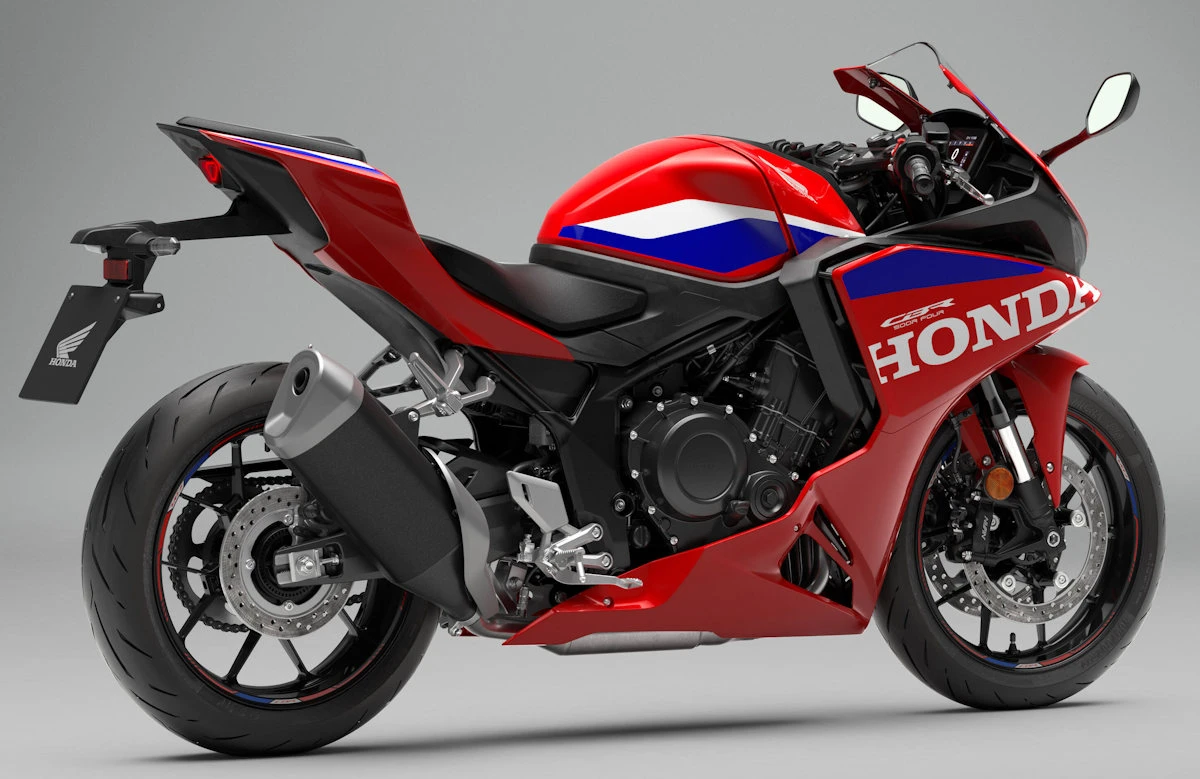
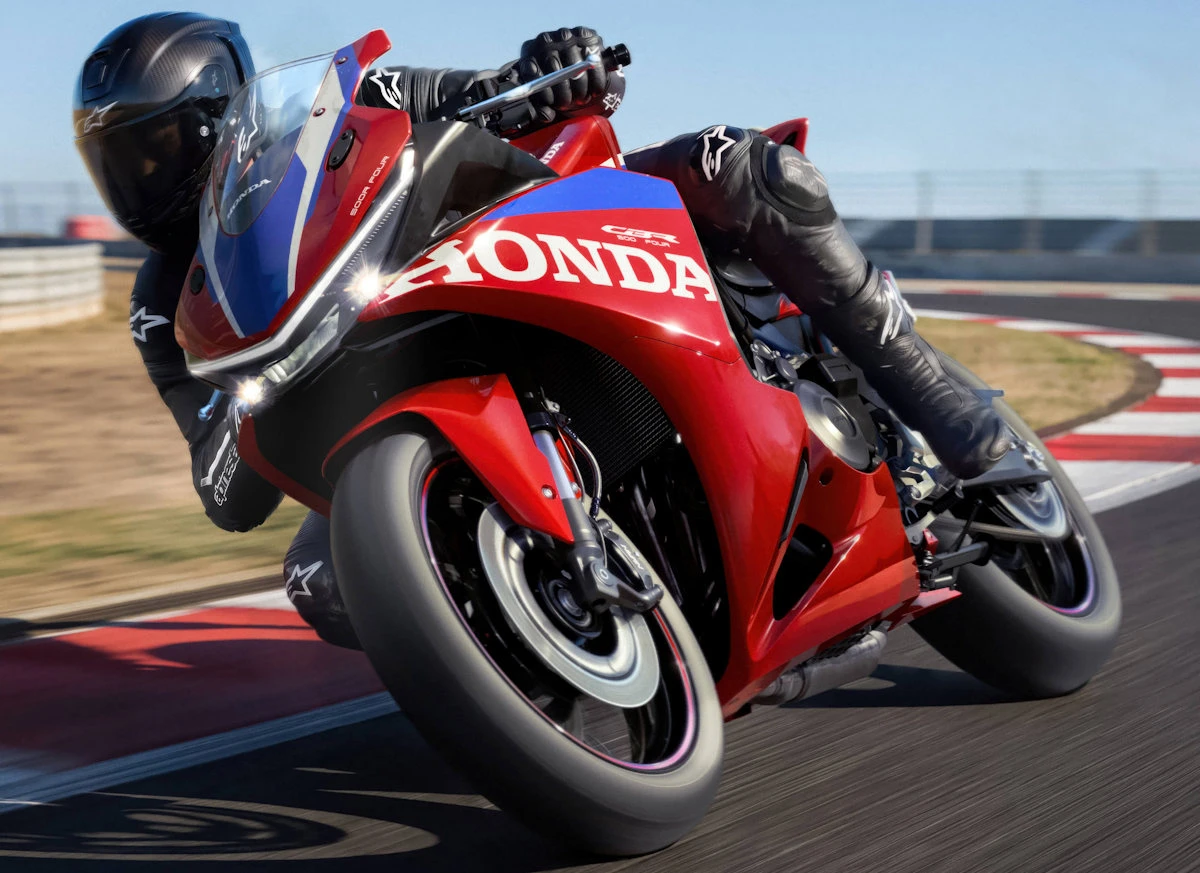
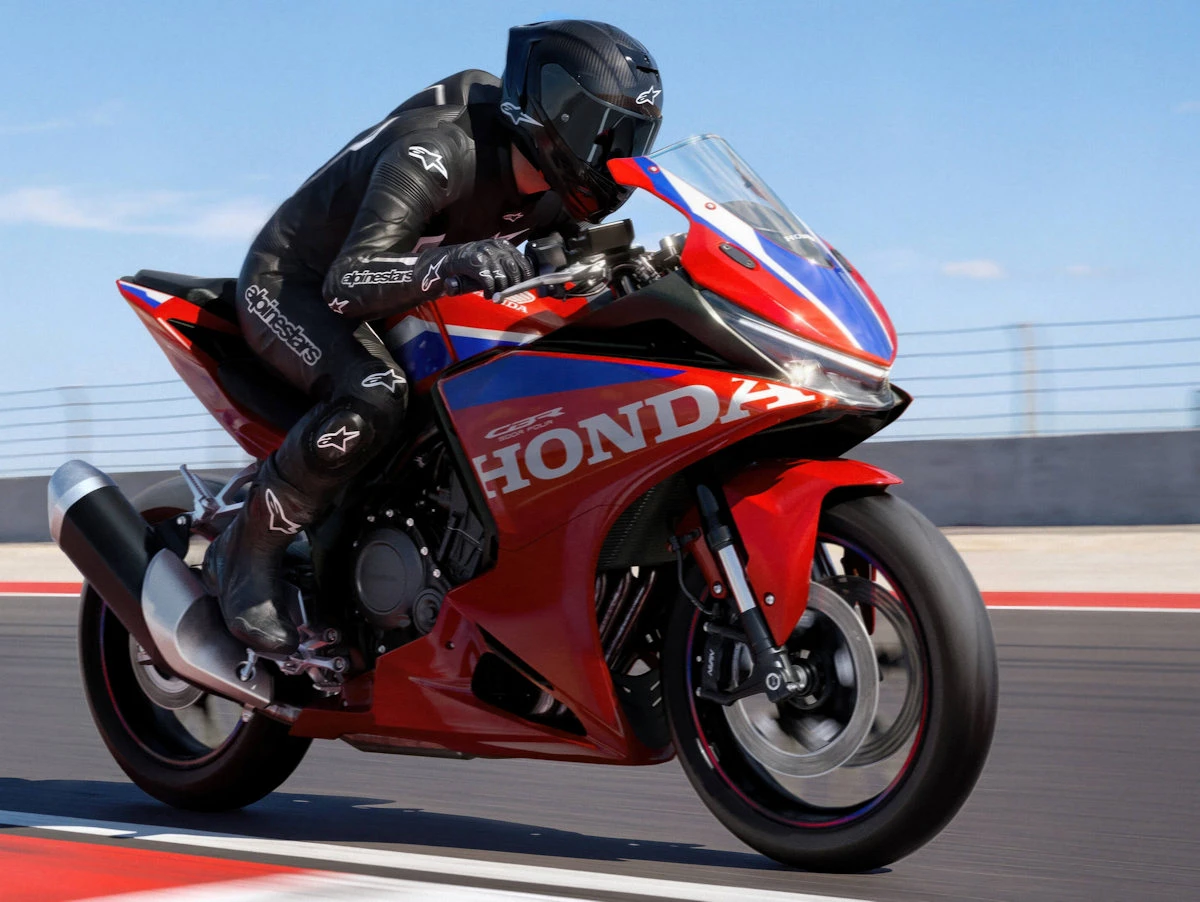
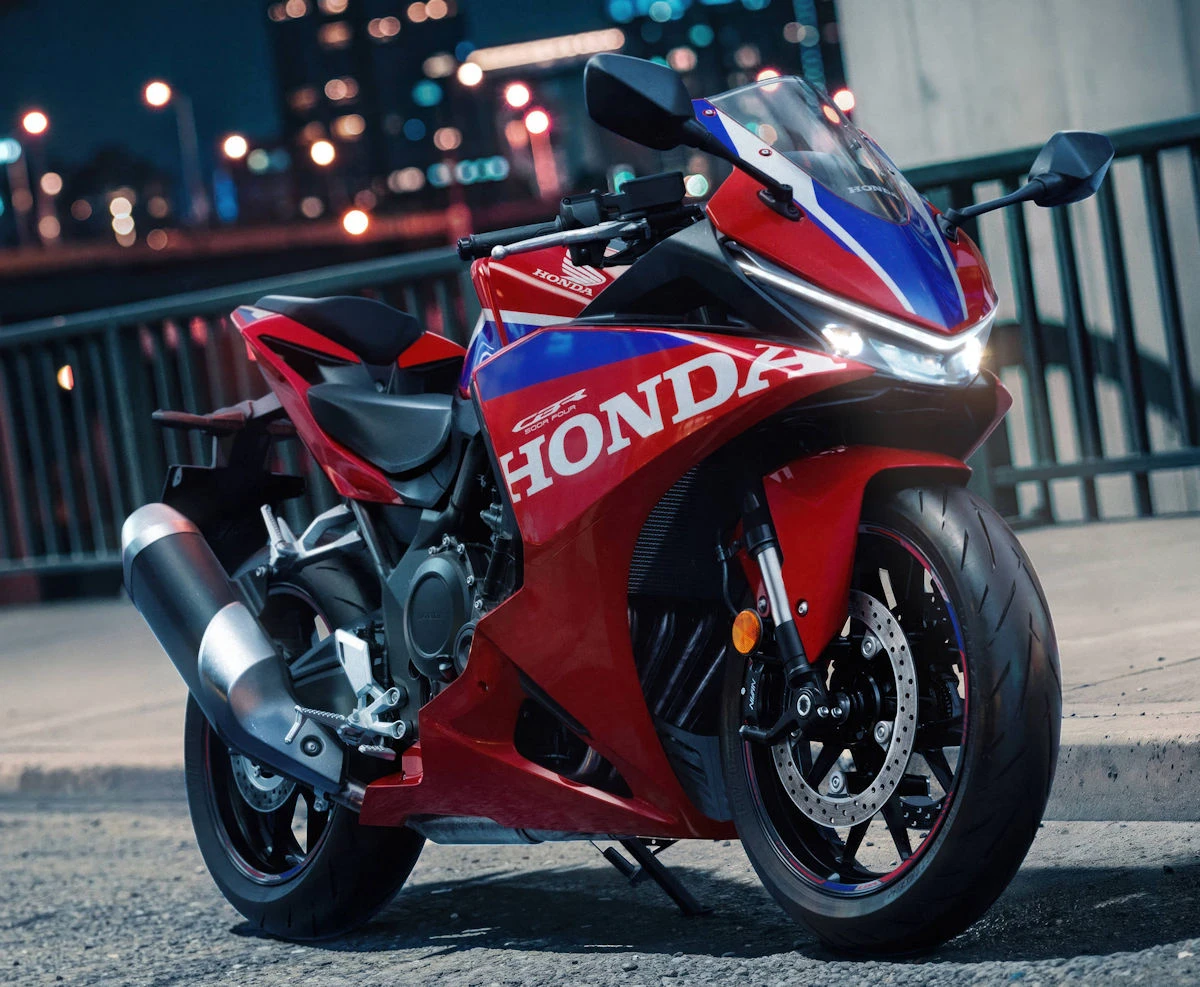
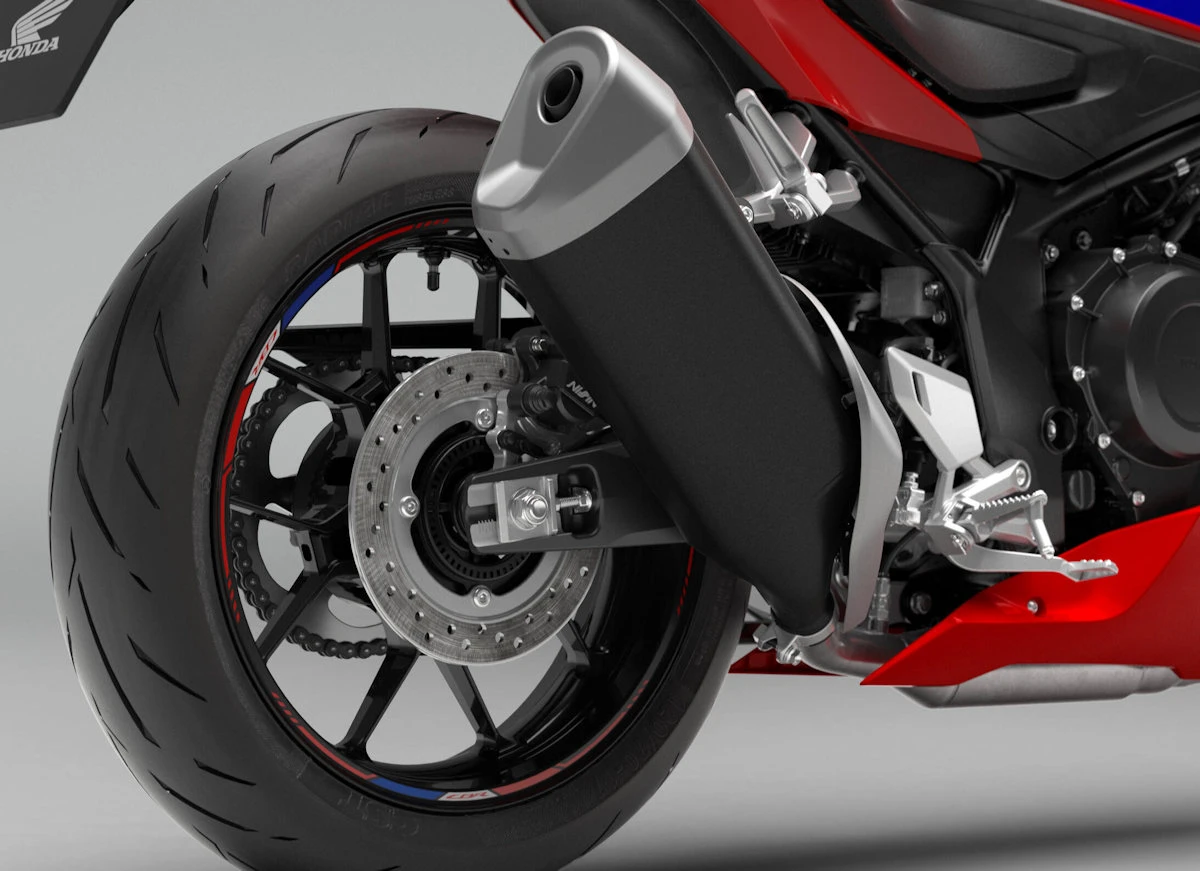
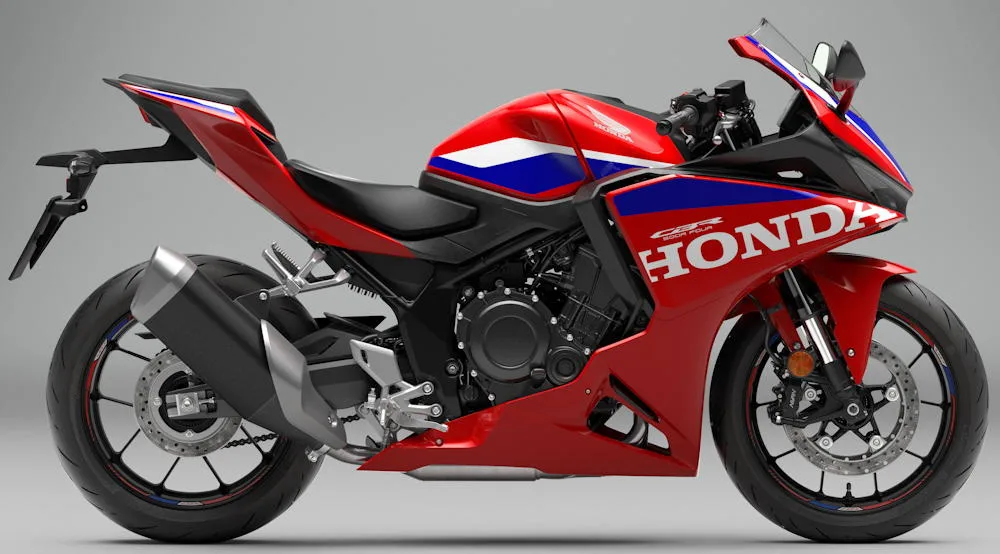
Beneath its sleek and streamlined fairing—featuring a futuristic front end that’s highly unusual for a Honda—the CBR 500 R Four conceals a steel backbone frame typical of the class. The 400/500 SuperSport models don’t have aluminum side members; instead, they feature a diamond-type tubular frame, paired with a 41-mm inverted fork, an aluminum swingarm, and a monoshock working in conjunction with a Pro-Link system. This setup gives it sporty yet responsive handling, without the stiffness of a pure sports bike—which would be more precise but also more demanding and require more experience.
Braking is handled by 296-mm discs clamped by 2-piston calipers. They’re radially mounted, but given the bike’s profile, we would have preferred 4-piston calipers. Plus, there are no suspension adjustments aside from rear preload—that’s not great.
The compact size of a true sports bike
Initially unveiled at the CIMAMOTOR show in China in early 2026, the CBR 500 R Four didn’t make its way to Europe until 2027. It brings Honda’s signature touch to a niche category for connoisseurs—one that’s particularly enjoyable and fun but still somewhat marginal. Its less extreme technical features, its E-Clutch, and—hopefully—its price should broaden the appeal of this segment.
It will serve as an excellent training ground for riders before they tackle more radical machines like its 600 CBR sibling or the few mid-size sport bikes on the market (the real ones, not the roadsters disguised as leggings and sneakers).
Don’t underestimate this “little” CBR. It’s in a whole different league than the CBR 500 R we’re used to here. The name is the same, but the “Four” suffix is enough to change everything.
Image credits: Manufacturer
by Greg

Greg is the founder of Motoplanete—a website created in 2001 to share his passion with his friends and showcase as many motorcycle models as possible to his readers. Self-taught and a jack-of-all-trades, his discovery of the world of motorcycles led him to work as a photographer, rider, team manager, web developer, graphic designer, editorial assistant, and editor-in-chief.
 Share
Key facts Honda CBR 500 R Four (2027) : What you need to know before you buy
Prices
| Basic version | |
|---|---|
 France |
7,800€
(Motoplanete estimate)
|
 United Kingdom |
£6,999
|
Performance
- Max speed : 210 km/h (130.50 mph)
- Average fuel consumption : 4.50 liters/100km (0.52 mpg)
-
Estimated range
: 311 km (193 miles)
Calculated range until tank is empty, not verified.
Specifications Honda CBR 500 R Four 2027
- Chassis
- Two-seater saddle
- Frame : Diamond-style tubular steel frame
- Fuel capacity : 14 liters (3.70 US gallons)
- Oil capacity : 3.20 liters (0.85 US gallons)
- Seat height : 780 mm (30.71 in)
- Length : 2,057 mm (80.98 in)
- Width : 755 mm (29.72 in)
- Min height : 1,125 mm (44.29 in)
-
Min. ground clearance : 135 mm (5.31 in)
- Wheelbase : 1,412 mm (55.59 in)
- Weight when fully loaded : 189 kg (417 lb)
- Front axle
- Reverse-action telescopic hydraulic fork, Ø 41 mm / Kayaba (KYB), Wheel travel : 109 mm (4.29 in)
- Angle de chasse : 25 °
- Chasse au sol (mm) : 99 mm
- Monte d'origine du pneumatique avant : Pirelli
- Braking 2 Nissin discs Ø 296 mm (11.65 in), radial mounting, 2-piston caliper
- Front tire (Tubeless) : 120 / 70 - 17 → Order this type of tire
- half handlebars (wristbands) handlebars
- Transmission
- 6 stage gearbox , Manual + E-Clutch
- Secondary by chain
- Rear axle
- Pro-Link Single Shock Absorber, Wheel travel : 119 mm (4.69 in)
- Preload adjustment
- Monte d'origine du pneumatique arrière : Pirelli
- Braking 1 Nissin disc Ø 240 mm (9.45 in), single-piston caliper
- Rear tire (Tubeless) : 160 / 60 - 17 → Order this type of tire
- Motor
- 4 cylinders online , 4 strokes
- Injection
- Cooling system : liquid
- 2 ACT
- 4 valves per cylinder
- 502 cc
- 72 ch (71 hp) to 11,000 rpm
- 4.80 mkg (47.40 Nm) to 9,750 rpm
- Power-to-Weight Ratio : approx. 2.48 kg/ch
- Torque-to-Weight Ratio : approx. 36.76 kg/mkg
- Compression : 12.3 : 1
- Starting system : electric
- CO² emissions: 105 g/km
- Émission sonore: 75 db
- Standard equipment
- Number of riding modes : 5
- TFT Full-Colour screen size: 12.70 cm (5 inches)
- Traction control
- Gear indicator
- Bluetooth
- USB plug
- Engine-brake control
- automated clutch
- Anti-wheeling control
- Practical information
Essentials
 Motoblouz
 LaBécanerie


Gallery
Used
Compare the CBR 500 R Four to its competitors
Compared to its direct competitor, this CBR 500 R Four holds a particularly dominant position, establishing itself as the benchmark across several key criteria. It outperforms the segment by combining torque of 4.8 Nm, riding range of 311 km, and torque-to-weight ratio of 36.76 kg/Nm. Its power-to-weight ratio of 2.48 kg/ch betrays a bit of extra heft on the scales.
Fuel consumption
Range
Torque
Power
Power-to-Weight ratio
Torque-to-Weight ratio
Speed
CO² emissions
FAQ Your frequently asked questions about the CBR 500 R Four 2027
- What is the power of the CBR 500 R Four?
-
The CBR 500 R Four 2027 develops a power of 72 ch (71 hp)
- What is the torque of the CBR 500 R Four?
-
The maximum torque of the CBR 500 R Four 2027 is 4.80 mkg (47.40 Nm) to 9,750 rpm.
- What is the maximum speed of the CBR 500 R Four?
-
The CBR 500 R Four 2027 is capable of reaching a top speed of 210 km/h (130.50 mph) on the track.
- What is the weight of the CBR 500 R Four?
-
The CBR 500 R Four 2027 has a a weight when fully loaded of 189 kg (417 lb).
- What is the fuel consumption of the CBR 500 R Four?
-
Average fuel consumption is estimated at 4.50 l/100km (0.52 mpg) according to the WMTC cycle.
- QWhat is the seat height of the CBR 500 R Four?
-
To ensure good accessibility, the CBR 500 R Four 2027 offers a minimum seat height of 780 mm (30.71 in).
- What is the price of the CBR 500 R Four?
-
The price of the CBR 500 R Four 2027 is £6,999 in United Kingdom. It is displayed at 7,800€ in France.
- Is the CBR 500 R Four approved for transporting a passenger?
-
Yes, this vehicle is equipped as standard for 2 people.
- What size tires should I put on my CBR 500 R Four?
-
The standard size for a CBR 500 R Four 2027 is 120 / 70 - 17 for the front, and 160 / 60 - 17 for the rear.
- What colors are available for the CBR 500 R Four?
-
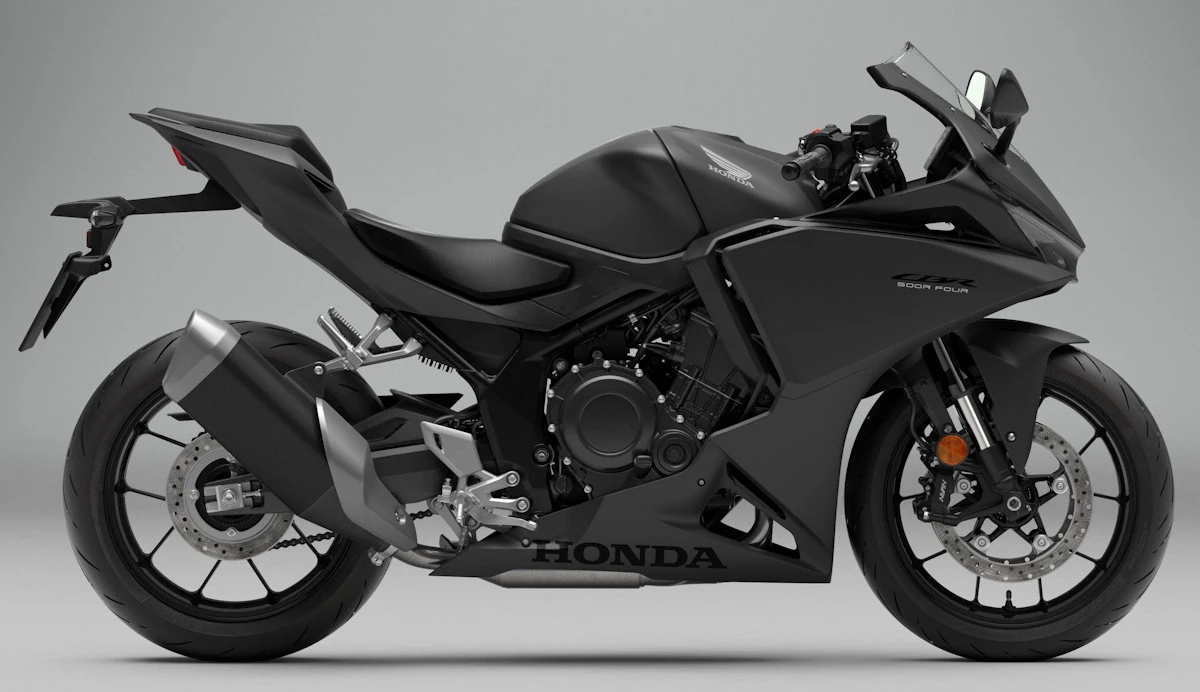
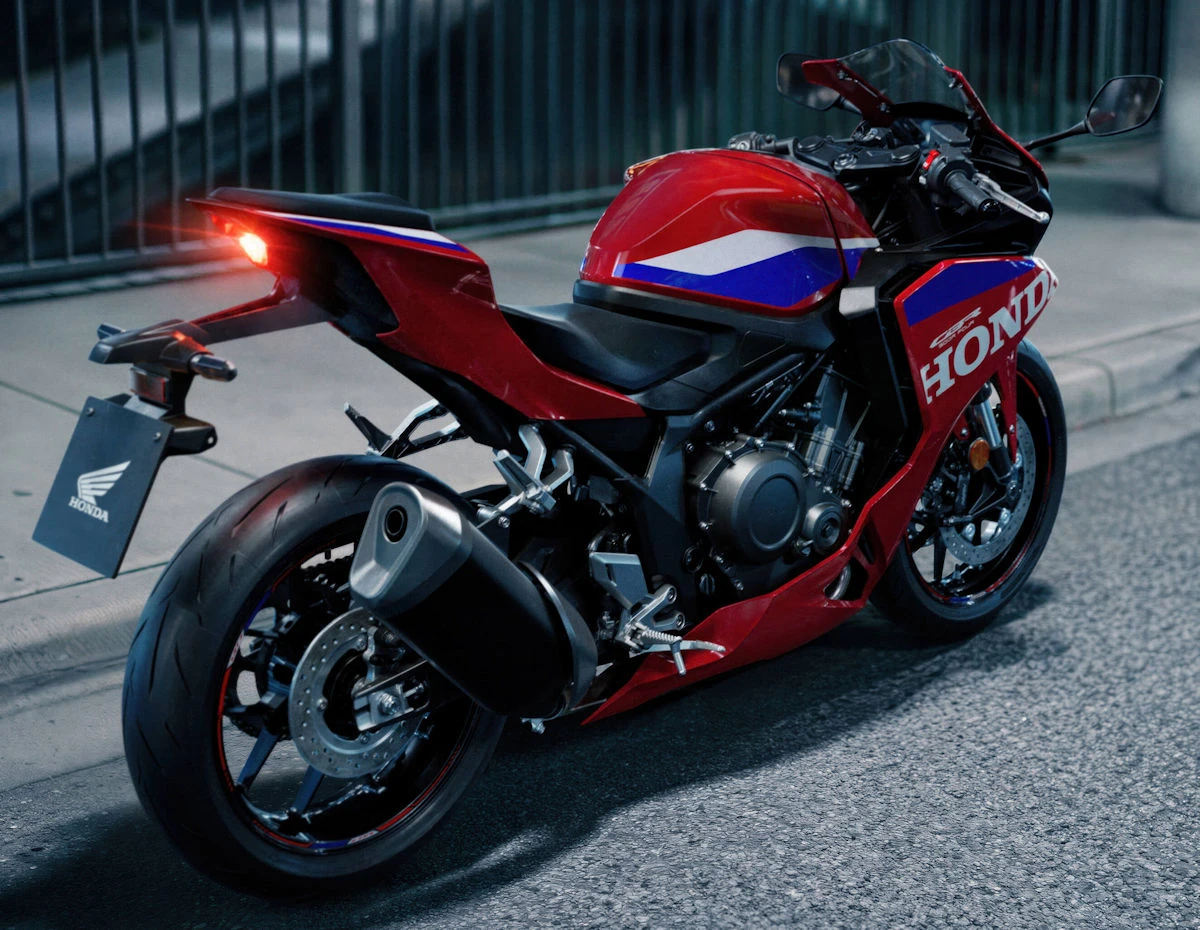
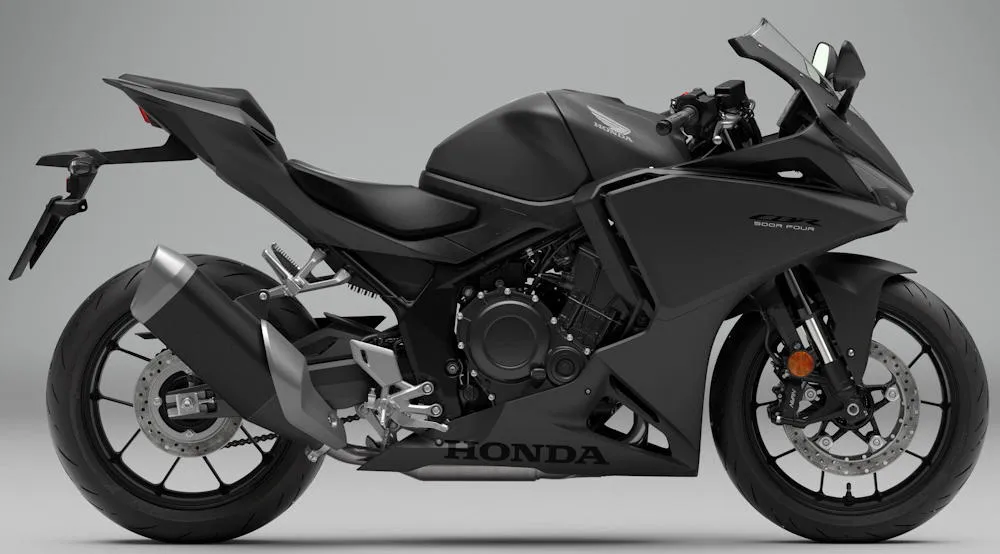
For the 2027 model year, the CBR 500 R Four is available in several colors: white / red / blue and black.
News
-
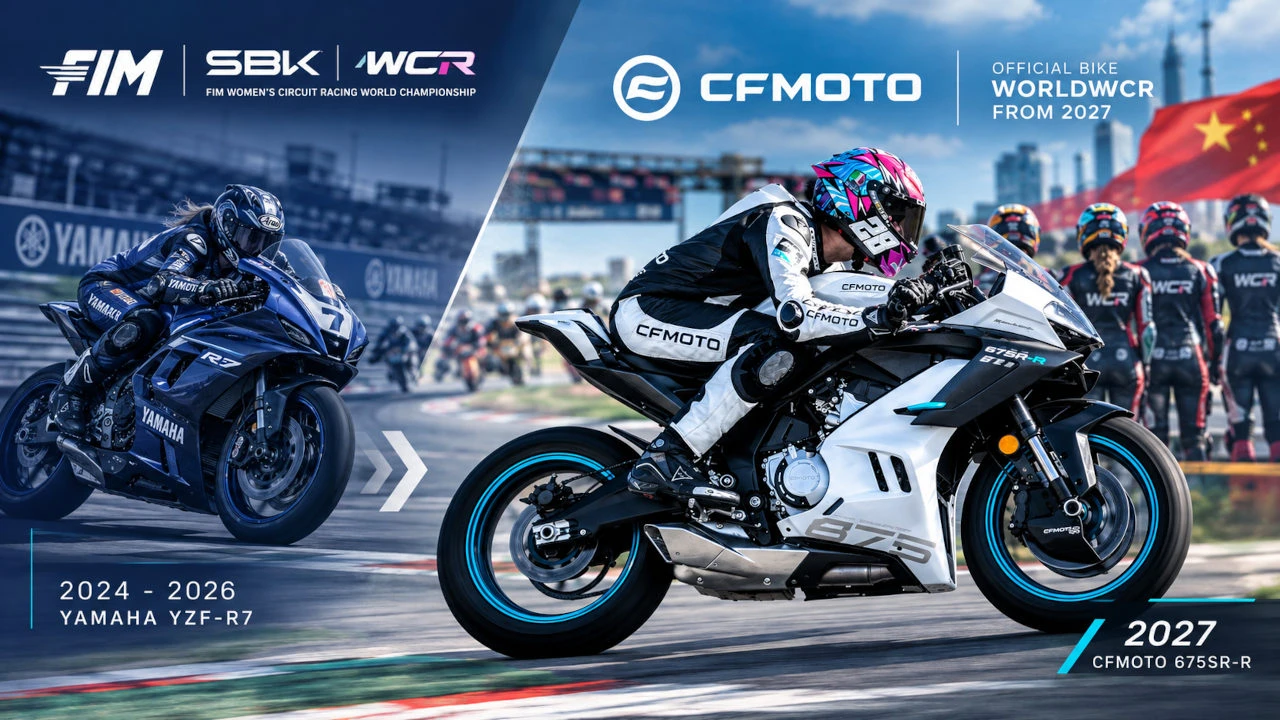
CFMOTO 675SR-R: Official Motorcycle of the WorldWCR Starting in 2027
-
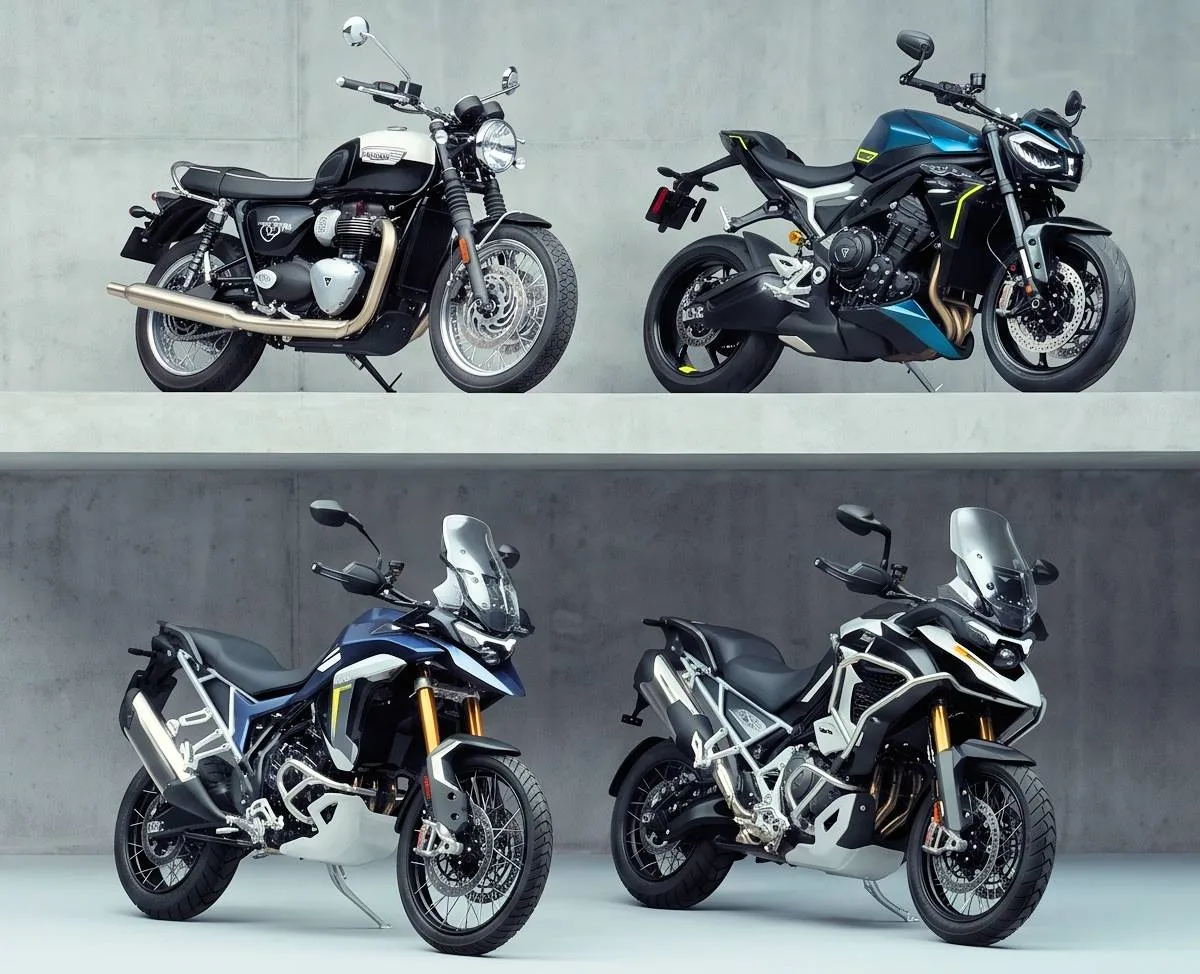
News on the Street Triple 798, Bonneville 400, Tiger 900, and Tiger 1200.
-
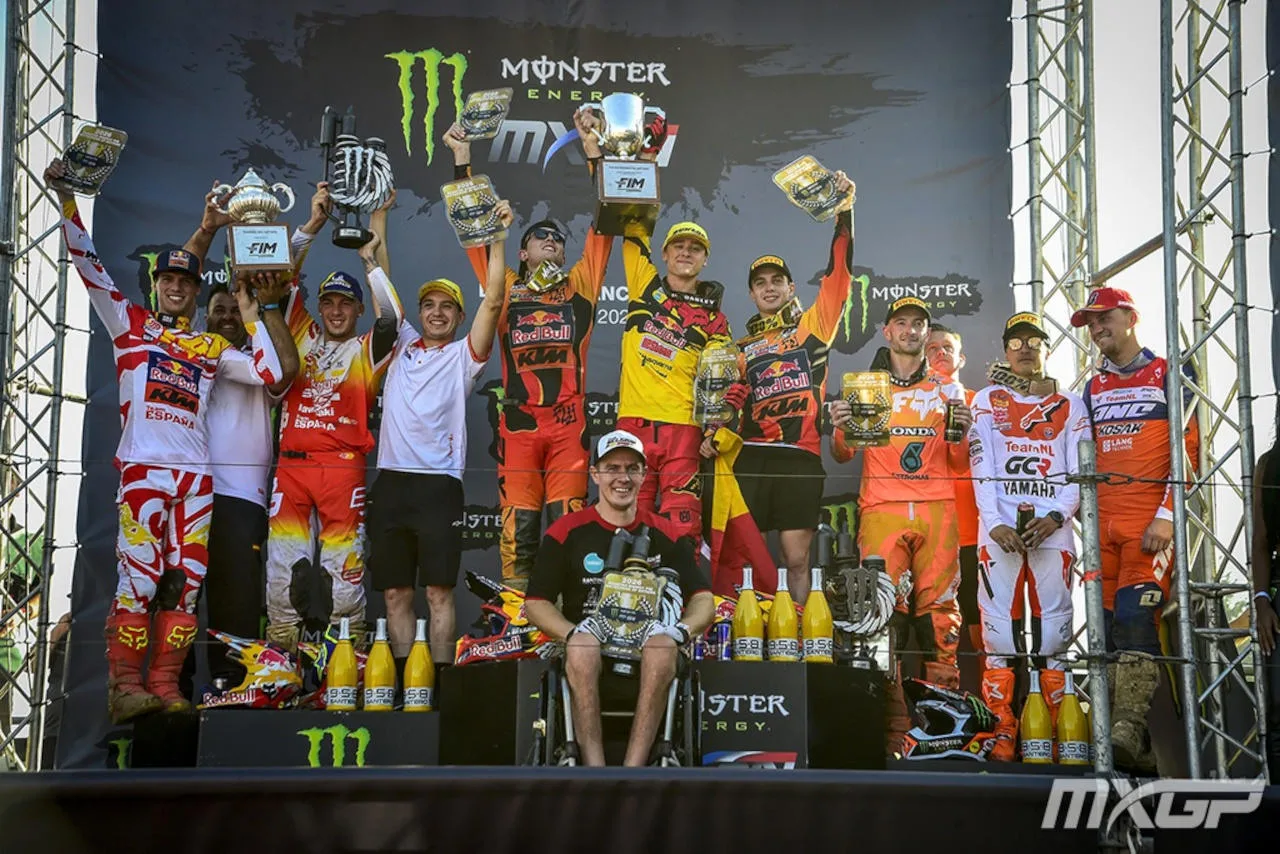
2026 MXoN in Ernée: Belgium Wins, France Falls
-
Furygan offers an airbag vest designed specifically for women.
-
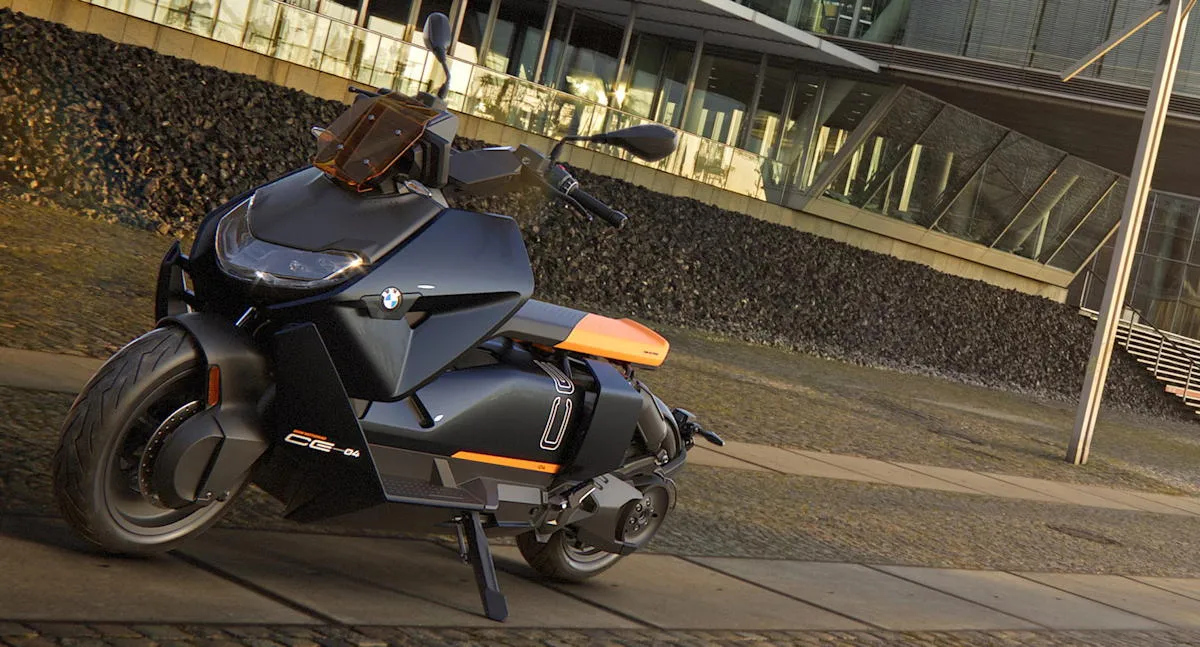
Top 10 Best Scooters of 2026: Our Complete Ranking.
-
Motorcycle Intercoms—A Practical Guide to Choosing the Right One for Your Needs.
-
HJC is gearing up for a big year in 2027, with eight new helmets.
-
Triumph succeeded BSA in the Motocross World Championship.
-
BMW S1000RR Recall Alert: Risk of Engine Shutdown
-
The new motorcycle models of 2026 and the evolutions.

Bikers' reviews Leave a review - 1 review