

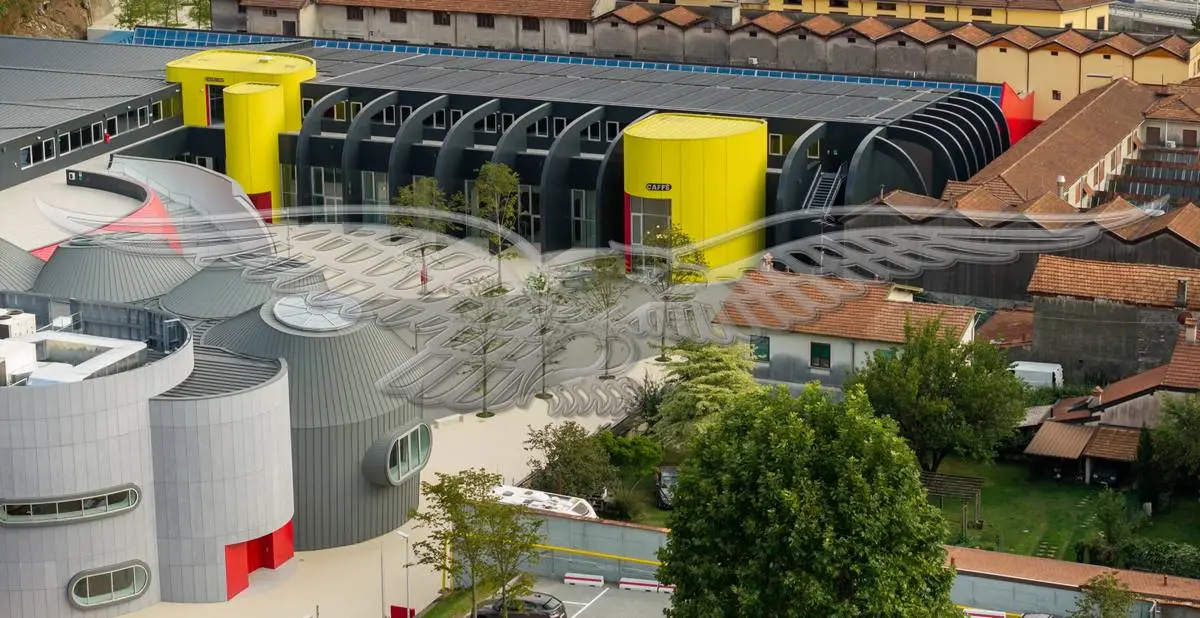
In Mandello del Lario, the brand’s birthplace since 1921, Moto Guzzi is completing a major transformation of its historic site. A new factory, a completely redesigned museum, and several spaces open to the public now form a complex that aims to blend industrial heritage, technology, and cultural engagement.
You still have to walk through the same door to enter Moto Guzzi. The iconic red door on Via Parodi has been there since 1921. For over a century, workers, engineers, mechanics, and riders have walked through it every day. Over time, it has also become an almost symbolic gateway for enthusiasts from around the world coming to discover the place where some of the most iconic motorcycles in Italian history were born.
Behind this door, however, the landscape has changed profoundly.
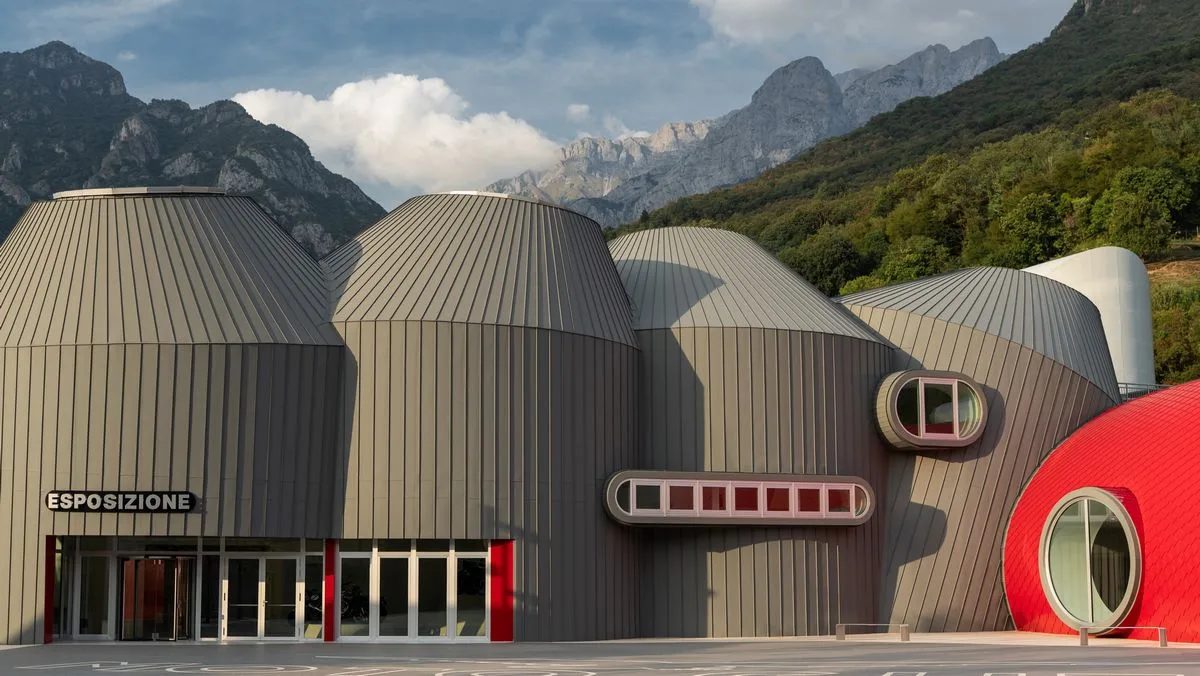
After about five years of construction, Moto Guzzi is inaugurating a new phase in the evolution of its Mandello del Lario site, on the shores of Lake Como. The project is not simply about renovating an old factory. It centers on the creation of new industrial infrastructure, a 3,000-square-meter museum, and several visitor spaces.
The complex was designed by American architect Greg Lynn, winner of a Golden Lion at the Venice Architecture Biennale. His project stays within the factory’s historic boundaries while profoundly transforming its layout and architecture.
A New Factory Within the Old Factory
The first transformation is industrial. Moto Guzzi now has 5,500 m² of new production facilities and an additional 380 m² of office space. The total area of the industrial site is approximately 38,000 m².
The goal is to have a production facility adapted to current requirements without relocating operations outside of Mandello. The new engine assembly lines were designed around automated systems and state-of-the-art equipment.
The final motorcycle assembly line is directly connected to the engine shop via a network of robotic conveyors. Some of the material handling is performed by Kilo robots, developed in Boston by Piaggio Fast Forward. The motorcycles are then transported to the various inspection and testing stages.
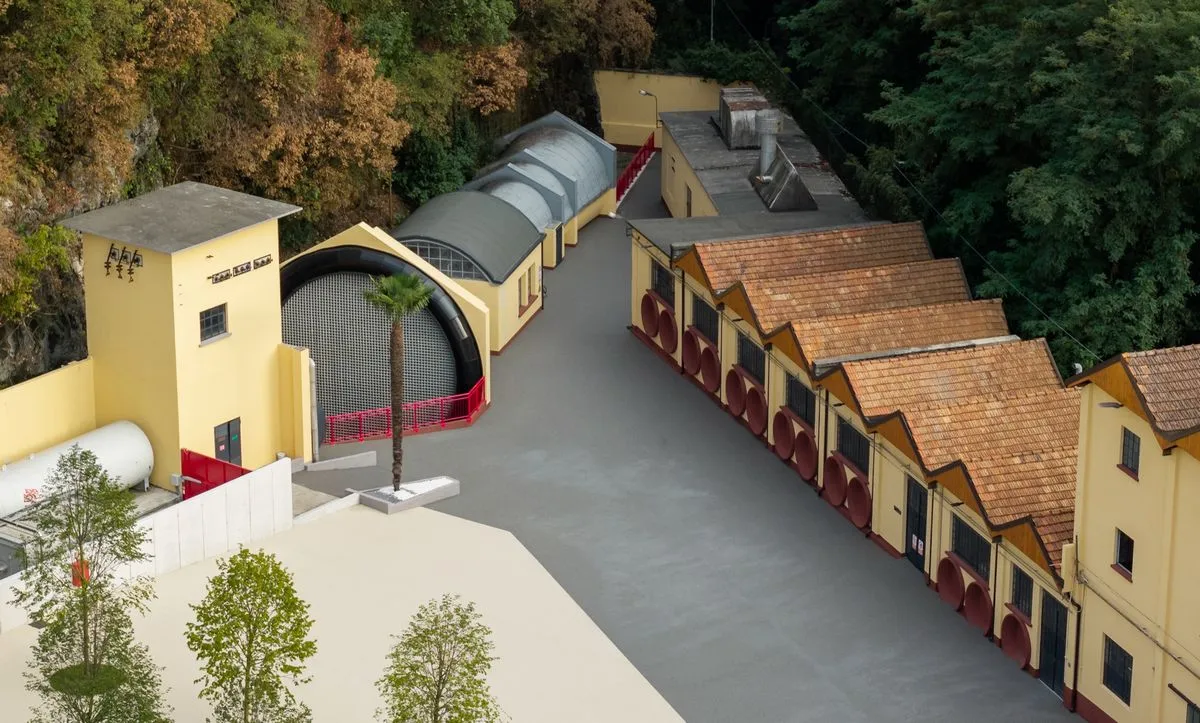
This modernization is accompanied by efforts to improve resource efficiency and the site’s environmental performance. The manufacturer thus presents these new facilities as an industrial tool designed to support Moto Guzzi’s production for decades to come.
However, the project does not seek to erase the past. The red gate on Via Parodi remains in place, serving as a tangible link to the company’s early years.
The museum is also entering a new era
Next to the factory, a new 3,000 m² building houses the Moto Guzzi museum. Here, too, the change is significant.
The new spaces draw inspiration from the brand’s mechanical heritage, with an architectural design largely dominated by metal and spacious areas bathed in natural light. References to the motorcycles produced in Mandello are evident in certain architectural details and finishes.
But it is above all the visitor experience that has evolved.
The collection features more than 160 restored motorcycles. It traces the history of Moto-Guzzi from its origins—including the G.P., an iconic prototype from the brand’s early days—through to its current models. Production models are displayed alongside racing machines, some of which contributed to the brand’s successes in world championships, resulting in 14 world titles.
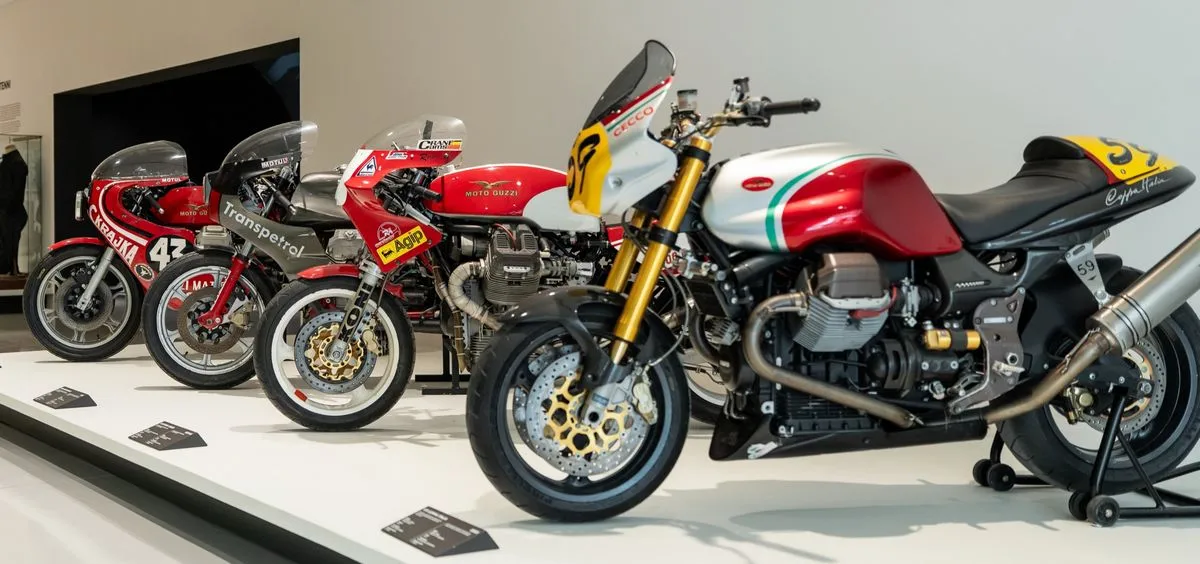
The exhibition also explores other uses of the motorcycle. Film, racing, travel, the arts, military vehicles, and law enforcement motorcycles are among the themes covered.
The museum thus aims to tell more than just a story of models and engines. Through the motorcycles on display, it offers insight into the evolution of technology, design, and societal uses throughout the 20th century and up to the present day.
Watch the motorcycles roll off the assembly line
The museum’s immediate proximity to the factory is one of the unique features of the new exhibit.
From the museum, visitors can observe the production lines in operation. The manufacturing of contemporary motorcycles thus becomes part of the visitor experience, creating a direct link between the historic models on display in the galleries and those rolling off the assembly lines in Mandello today.
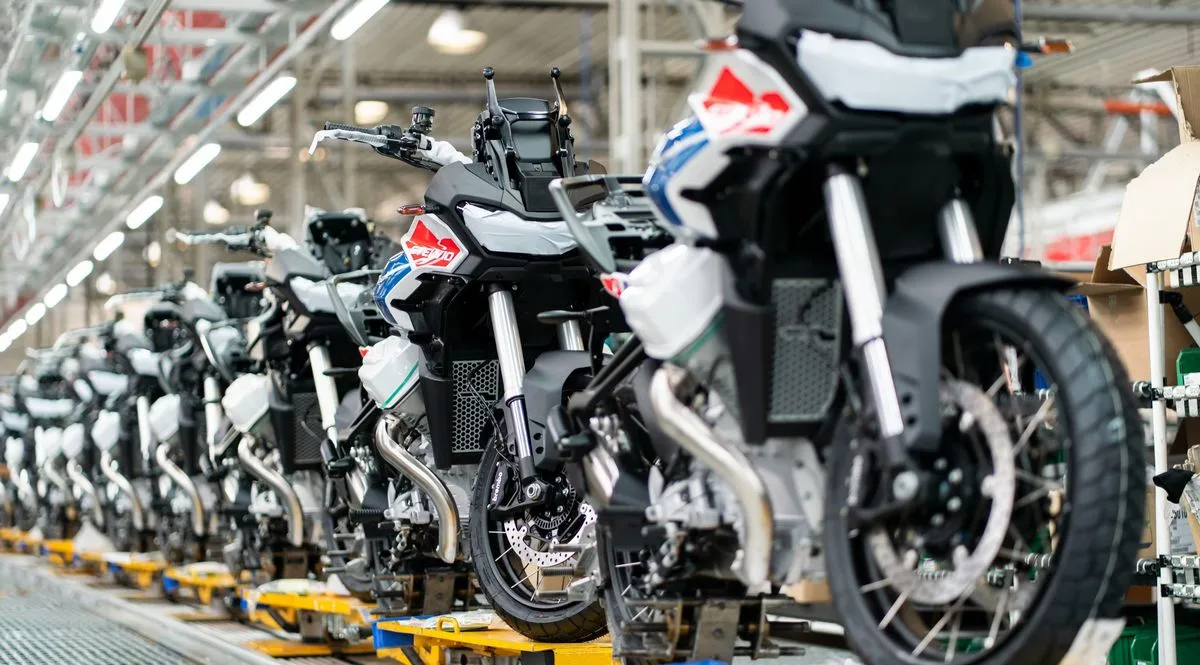
This choice also highlights a unique feature of the site: unlike many industrial museums, the Moto Guzzi museum remains integrated into an active factory.
The heritage is therefore not presented as a static history. Vintage motorcycles stand side by side with industrial equipment that continues to produce the brand’s motorcycles.
An Industrial Site Open to the Public
Finally, the transformation extends to the outdoor spaces. Approximately 4,200 m² are now dedicated to pedestrian areas accessible to visitors. Two plazas have been landscaped and planted with 35 trees to create a path through the site.
The Galerie du Vent, a historic feature of the factory, has been restored. A raised terrace overlooks the central plaza, where an imposing mosaic depicting the Moto Guzzi eagle serves as a reminder of the brand’s identity.
The complex also houses a Motoplex Store, a cafeteria, spaces for workshops and events, and an auditorium. These facilities add more than 1,200 m² of space.
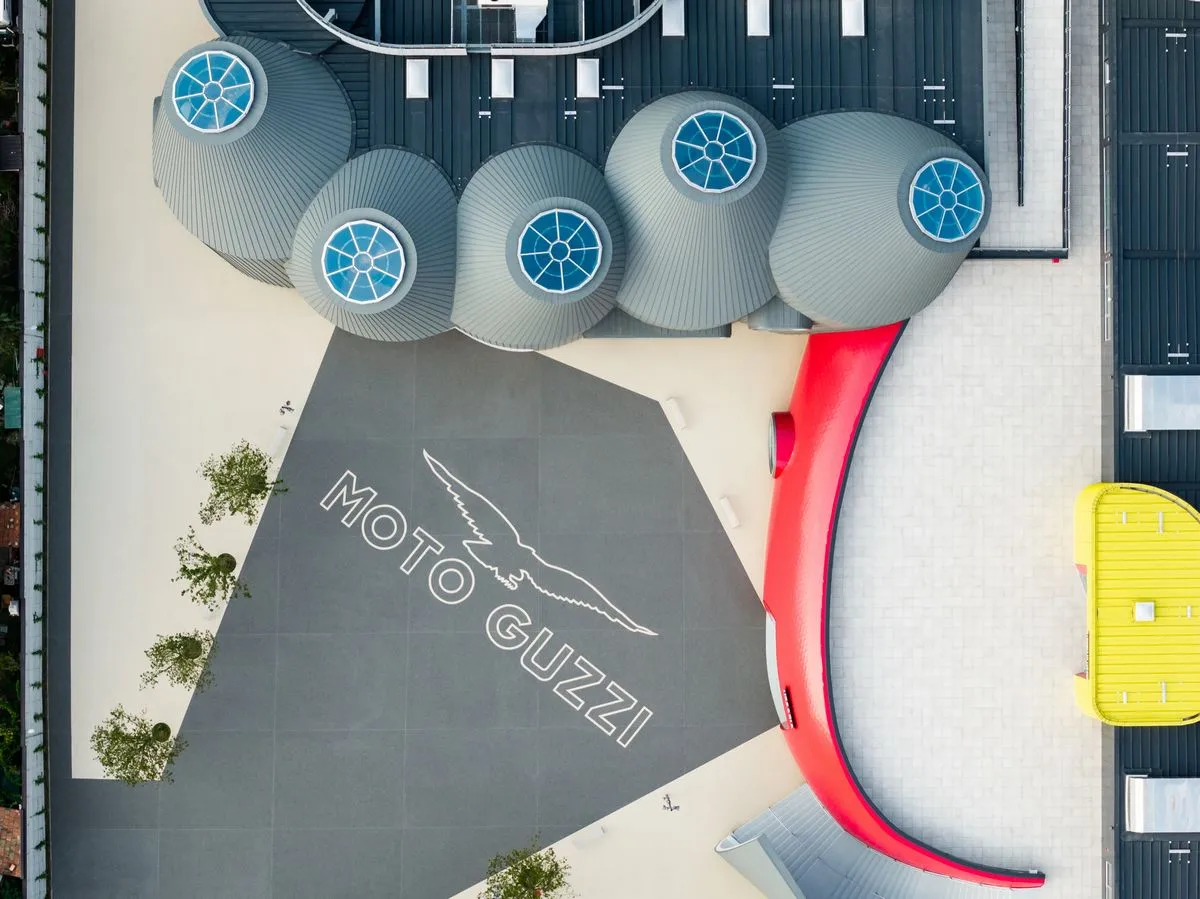
The goal, therefore, is to transform the Mandello site into a place that is no longer dedicated solely to production. Tours, exhibitions, events, and cultural activities will now have a place there alongside industrial operations.
Mandello Remains the Heart of Moto Guzzi
The decision to transform the historic site rather than build elsewhere is far from trivial. Moto Guzzi was founded in Mandello del Lario in 1921 and has been producing its motorcycles there since its inception. The relationship between the company and this town on the shores of Lake Como therefore extends far beyond the purely industrial dimension.
By preserving some of the site’s historic landmarks while rebuilding much of its infrastructure, Moto Guzzi seeks to bring together two eras: that of a company with more than a century of history and that of a manufacturer that must adapt its industrial facilities to contemporary demands.
The result is a hybrid complex—at once a factory, a museum, and a visitor center. This marks a significant evolution for the Mandello site, yet one aspect remains constant: motorcycle production continues right where the Moto Guzzi adventure began.
At the entrance, the red gate remains unchanged. Behind it, however, a new chapter begins.
Beginning 105 years ago, this story is told not only within these walls but also through the special-edition anniversary models: the Stelvio, V 100 Mandello, V7 Stone, and V 85 Strada.

 Share
Share
 helmet
 Gloves
 jacket
 braking
 Chain kit
 Oils
Oils Find an intercom
 Parts
Parts Luggage
 Tires
Tires


 Question of the day
Bikers' reviews