
Motorcycle specifications Honda CB 1000 Hornet 2025 Programmed for success at last?


presentation of the CB 1000 Hornet 2025
Honda today unveils a new Hornet. As in the early 2000s, the Japanese manufacturer's aim is to capitalize on the popularity of the Hornet name. Unfortunately for the world's leading manufacturer, the 900 Hornet was not a success, owing to a sulphurous reputation due to its sweeping front end.
today , the market for large roadsters has become elitist, following the same technical foundations as Superbikes; motorcycles have become expensive and are becoming rare on our roads. Buyers' renewed interest in trail bikes is not entirely unrelated to the lack of interest in these street-fighters. The new Hornet 1000 falls into this category, and let's see why.
A heart of thunder ... 2017 version
to bring you the most powerful Hornet ever produced, Honda has grafted the inline 4-cylinder engine of the impressive CBR1000RR Fireblade into a new double-beam steel frame.
but it's not the latest generation Fireblade that serves as the donor for the engine. Honda has taken the basics from the 2017 model. It's a 1,000 cm3, 16-valve, 4-cylinder DOHC engine that claims 111.6 kW (152 hp) at 11,000 rpm and 104 Nm at 9,000 rpm. A copious amount of power, but more reasonable than the insane fire pumps - a competitor it's not aiming at, by the way. Honda is more often pragmatic than crazy.
however, Honda points out that engineers have reworked the engine's character to offer more flexibility and body at mid-range revs. The transmission has also been modified (no doubt shortened) so that gears 2, 3, 4 and 5 give priority to acceleration (according to the press release), while the 6th gear has been sized for cruising on the freeway. You'll note that Honda didn't include a quick shifter as standard equipment ... no doubt to keep the price down.
Cutting-edge electronics, Honda's trademark
this Hornet 1000 features :
- 3 default riding modes, 2 user-configurable modes
- 3 levels of power and engine braking
- 4 levels of torque control (HSTC) and anti-jamming
Thanks to a TBW (Throttle By Wire) electronic throttle, Honda offers 3 predefined riding modes (Standard / Rain / Sport) (each offering specific combinations of power, engine braking and torque control / anti-wheeling), plus 2 USER modes that let the owner create 2 totally personalized modes. Modes are selected via the left-hand switch and TFT display.
in detail, there are 3 levels of power (P) and engine braking (EB), as well as 4 levels for the HSTC torque control system, which can be disconnected for possible track use?
This mode covers most situations, with an intermediate level for power, engine braking and torque control. Power is softened in the first 2 gears, while performance is slightly muted compared to SPORT mode, with reduced torque when the throttle is partially open.
SPORT
Performance is delivered without limitation, engine braking and torque control are at a minimum, so you can enjoy 100% power and torque in all 6 gears, whatever the degree of throttle opening.
RAIN
The power setting is at its minimum for the least aggressive engine behavior possible. Engine braking is at intermediate level, while torque control intervention is at maximum. Power and torque limitation are concentrated on the first 3 gears.
Optimized chassis, farewell to the single-arm design
while Honda has created a new chassis and not simply adopted the chassis of the "neo-sport-café" CB1000R (its predecessor in the 1,000 cm3 range), it is already regrettable that Honda has not retained what has often been the signature feature of the winged brand: a single-arm. Instead, we find a traditional aluminum swingarm, 619.1 mm long. With its double-beam architecture designed to integrate the engine, the torsional rigidity of this frame is 70% higher than that of the CB1000R 2023. Another important detail is the silent-blocks that hold the engine in place at the rear, designed to limit vibrations and enhance feedback to the rider.
Caster angle and drag are 25° and 98 mm respectively, with a wheelbase of 1,455 mm. To enhance the bike's agility and avoid dead weight in corners, Honda has thoughtfully positioned the rear shock absorber, battery and engine as far forward as possible in relation to the frame. As a result, the airbox is housed above the cylinder head rather than behind it. The final weight distribution is 51.2% front and 48.8% rear, with a total kerb weight of 211 kg.
Front braking is provided by a radial master cylinder driving 2 Nissin 4-piston calipers, also mounted radially. The discs are of the floating type, 310 mm in diameter. At the rear, the CB1000 Hornet relies on a Nissin single-piston caliper which bites a 240 mm disc. Naturally equipped with ABS, the 1000 Hornet also features automatic activation of the hazard lights in the event of emergency braking. The wheels are 5-spoke Y-shaped cast aluminum, with 120/70-ZR17 tires at the front and 180/55-ZR17 at the rear.
Hornet-style styling
the design of this new 1000 Hornet is very much in the spirit of the little insect that forged the reputation of the 600 roadster (then the Honda 750 ). This time, it even looks as if the styling department has taken on the challenge of mimicking the Hornet as closely as possible. The front features a generous head, while the body is in two parts, consisting of the tank/engine unit and the rear shell. The optics form a low-positioned mask equipped with two false LEDs. The tank seems to be hollowed out at thigh/knee level, to form one with the bike. The rear end is quite successful, with a hull that doesn't feel heavy - quite the opposite, in fact! Sharp and dynamic, the Hornet looks ready to take on the competition. A few details mark the contrast, with black finishes for the mudguards and radiator scoops. As always with Honda, it's clean and not too transgressive to appeal to the widest possible audience.
on the fork head is a 5-inch color TFT display that looks very exposed. The display is configurable between "bar", "circle" or "simple" modes, while the Honda RoadSync application (free) lets you use phone functions such as navigation, listen to music or make calls using a Bluetooth intercom. Screen functions can be accessed via a new backlit 4-axis control on the left handlebar.
to personalize the bike, the future owner can choose from the catalog of options or equip it with one of Honda's packs: Style, Sport and Comfort.
Style Pack :
- Alcantara rider seat
- Oil filler cap
- Handlebar supports
- Radiator grill
- Rider footrests
- Wheel decals
Sport Pack :
- Quickshifter for upshifting and downshifting
- Windscreen
- Engine cover
- Passenger seat cover
- Fuel tank protection
Comfort Pack :
- Heated grips
- Fuel tank bag
- Seat bag
Certain indications, including prices announced in other countries, lead us to believe that the CB 1000 Hornet will be offered at around 11,000 euros. If this is the case, it would be an absolutely insane and incredibly affordable price for a motorcycle of this calibre. A success or a tidal wave for the big Hornet!?!!
the CB1000 Hornet 2025 will be available in the following colors: Red, Matte Grey or White.
Vincent Beaucousin- Manufacturer's photos
 Share
Share
Key facts Honda CB 1000 Hornet (2025) : What you need to know before you buy
Highlights
- A Fireblade engine
- The right dose of electronics
- Democratic technical solutions
- An incredible price
Weak points
- Not enough premium for specialists
Prices
| Basic version | |
|---|---|
 France France |
10,599€
|
 Spain Spain |
10,990€
|
 United Kingdom United Kingdom |
£8,999
|


Performance
- Max speed : approximately 250 km/h (155.30 mph)
- Average fuel consumption : 5.90 liters/100km (0.40 mpg)
-
Estimated range
: 288 km (179 miles)
Calculated range until tank is empty, not verified.
Specifications Honda CB 1000 Hornet 2025
- Chassis
- Frame : Double steel beam
- Fuel capacity : 17 liters (4.49 US gallons)
- Seat height : 809 mm (31.85 in)
- Length : 2,140 mm (84.25 in)
- Width : 790 mm (31.10 in)
- Min height : 1,085 mm (42.72 in)
- Wheelbase : 1,455 mm (57.28 in)
- Weight when fully loaded : 211 kg (465 lb)
- Front axle
- Reverse telehydraulic fork Ø 41 mm, Wheel travel : 118 mm (4.65 in)
- Preload, compression and rebound adjustment
- Braking 2 Nissin discs Ø 310 mm (12.2 in), radial mounting, 4-piston caliper
- Front tire : 120 / 70 - 17 → Order this type of tire
- Transmission
- 6 stage gearbox , manual
- Secondary by chain
- Rear axle
- Mono-damper, Wheel travel : 138 mm (5.43 in)
- Preload and rebound adjustment
- Braking 1 Nissin disc Ø 240 mm (9.45 in), single-piston caliper
- Rear tire : 180 / 55 - 17 → Order this type of tire
- Motor
- 4 cylinders online , 4 strokes
- Injection Ø 44 mm
- Cooling system : liquid
- 2 ACT
- 4 valves per cylinder
- 999 cc
- 152 ch (149.90 hp) to 11,000 rpm
- 10.60 mkg to 9,000 rpm
- Power-to-Weight Ratio : approx. 1.31 kg/ch
- Torque-to-Weight Ratio : approx. 18.51 kg/mkg
- Compression : 11.7 : 1
- CO² emissions: 136 g/km
- Standard equipment
- Brake assist : ABS
- Number of riding modes : 5
- TFT Full-Colour screen size: 12.70 cm (5 inches)
- Aluminium rims
- Gear indicator
- Bluetooth
- USB plug
- Torque control
- Anti-wheeling control
- Anti-slip clutch
- Engine-brake control
- Practical information
Essentials
 Motoblouz
 LaBécanerie


Maintenance
Due to a defective sealing bolt, oil can splash onto the rear tire while riding, causing the rider to lose control and fall.
Information source du rappelThe gear shift pedal pivot bolt falls out while riding, causing the pedal to sag, making it impossible to change gears and causing the rider to lose control of the motorcycle.
Information source du rappelDue to a defect in the manufacturing, the indicator of the oil level is not functioning correctly. This could result in a reduction in oil pressure, which could lead to seizure of the connecting rod bearing, breakage of the connecting rod, or locking of the rear wheel. This could cause an accident. The oil spilling onto a hot silencer could cause a fire.
Information source du rappelThe fuel hose connected to the fuel tank unexpectedly comes off during riding, resulting in fuel leakage. Leaked fuel may adhere to the rear wheel, increasing the risk of an accident and fire.
Information source du rappelGallery


Models
2026


2025


Used
Find this used CB 1000 Hornet on MotoPlanete




Compare the CB 1000 Hornet to its competitors
Compared to its 7 direct competitors, this CB 1000 Hornet offers an appealing positioning, managing to stand out in certain specific areas. It stands out with top speed of 250 km/h. Its torque-to-weight ratio of 18.51 kg/Nm limits its punch at low revs.
Price
Acceleration
Fuel consumption
Range
Torque
Power
Power-to-Weight ratio
Torque-to-Weight ratio
Speed
CO² emissions
FAQ Your frequently asked questions about the CB 1000 Hornet 2025
- What is the power of the CB 1000 Hornet?
-
The CB 1000 Hornet 2025 develops a power of 152 ch (149.90 hp)
- What is the torque of the CB 1000 Hornet?
-
The maximum torque of the CB 1000 Hornet 2025 is 10.60 mkg to 9,000 rpm.
- What is the maximum speed of the CB 1000 Hornet?
-
The CB 1000 Hornet 2025 is capable of reaching a top speed of approximately 250 km/h (155.30 mph) on the track.
- What is the weight of the CB 1000 Hornet?
-
The CB 1000 Hornet 2025 has a a weight when fully loaded of 211 kg (465 lb).
- What is the fuel consumption of the CB 1000 Hornet?
-
Average fuel consumption is estimated at 5.90 l/100km (0.40 mpg) according to the WMTC cycle.
- QWhat is the seat height of the CB 1000 Hornet?
-
To ensure good accessibility, the CB 1000 Hornet 2025 offers a minimum seat height of 809 mm (31.85 in).
- What is the price of the CB 1000 Hornet?
-
The price of the CB 1000 Hornet 2025 is £8,999 in United Kingdom. It is displayed at 10,599€ in France and at 10,990€ in Spain.
- What size tires should I put on my CB 1000 Hornet?
-
The standard size for a CB 1000 Hornet 2025 is 120 / 70 - 17 for the front, and 180 / 55 - 17 for the rear.
- What colors are available for the CB 1000 Hornet?
-
For the 2025 model year, the CB 1000 Hornet is available in several colors: red, white and grey.
- Where can I find high-quality used CB 1000 Hornets?
-
You can find used CB 1000 Hornet at great prices on MotoPlanete, in the section dedicated to them—models from professionals and private sellers, as well as spare parts.
News
-
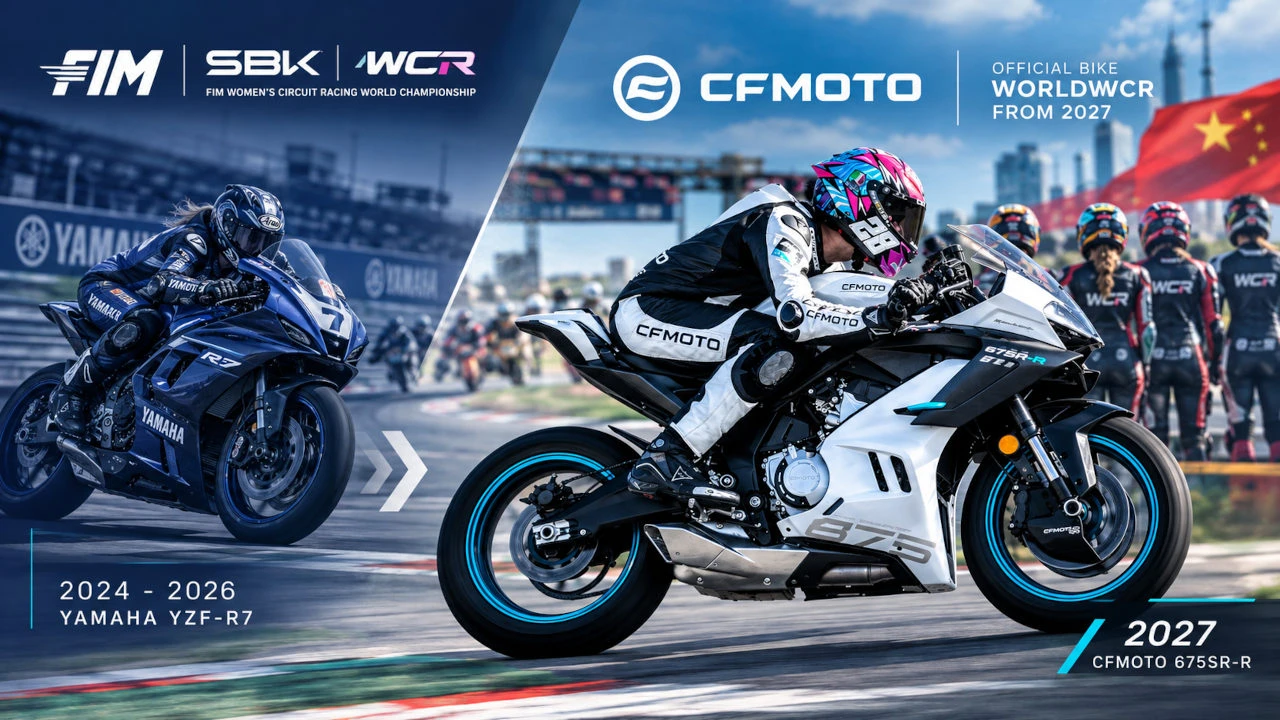
CFMOTO 675SR-R: Official Motorcycle of the WorldWCR Starting in 2027
-
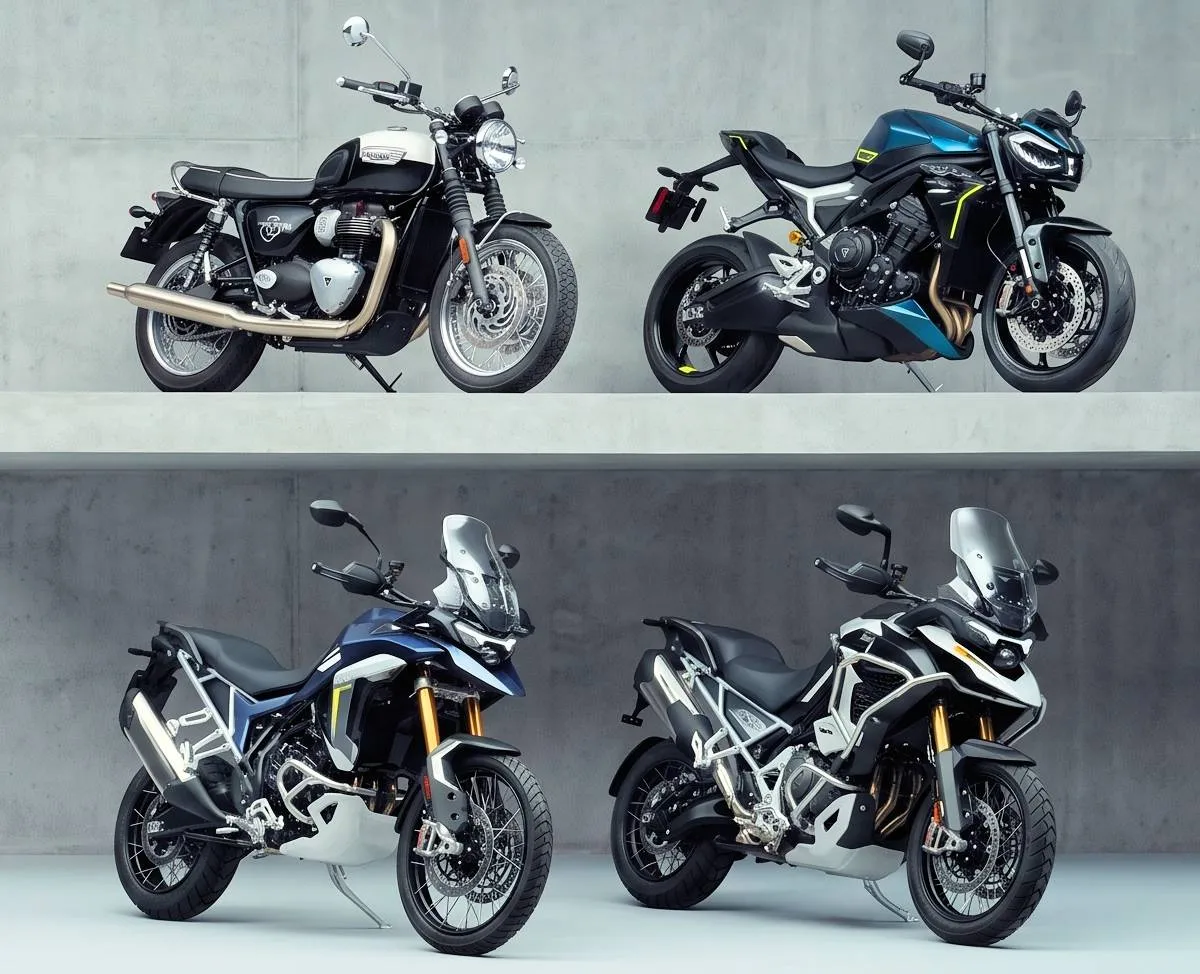
News on the Street Triple 798, Bonneville 400, Tiger 900, and Tiger 1200.
-
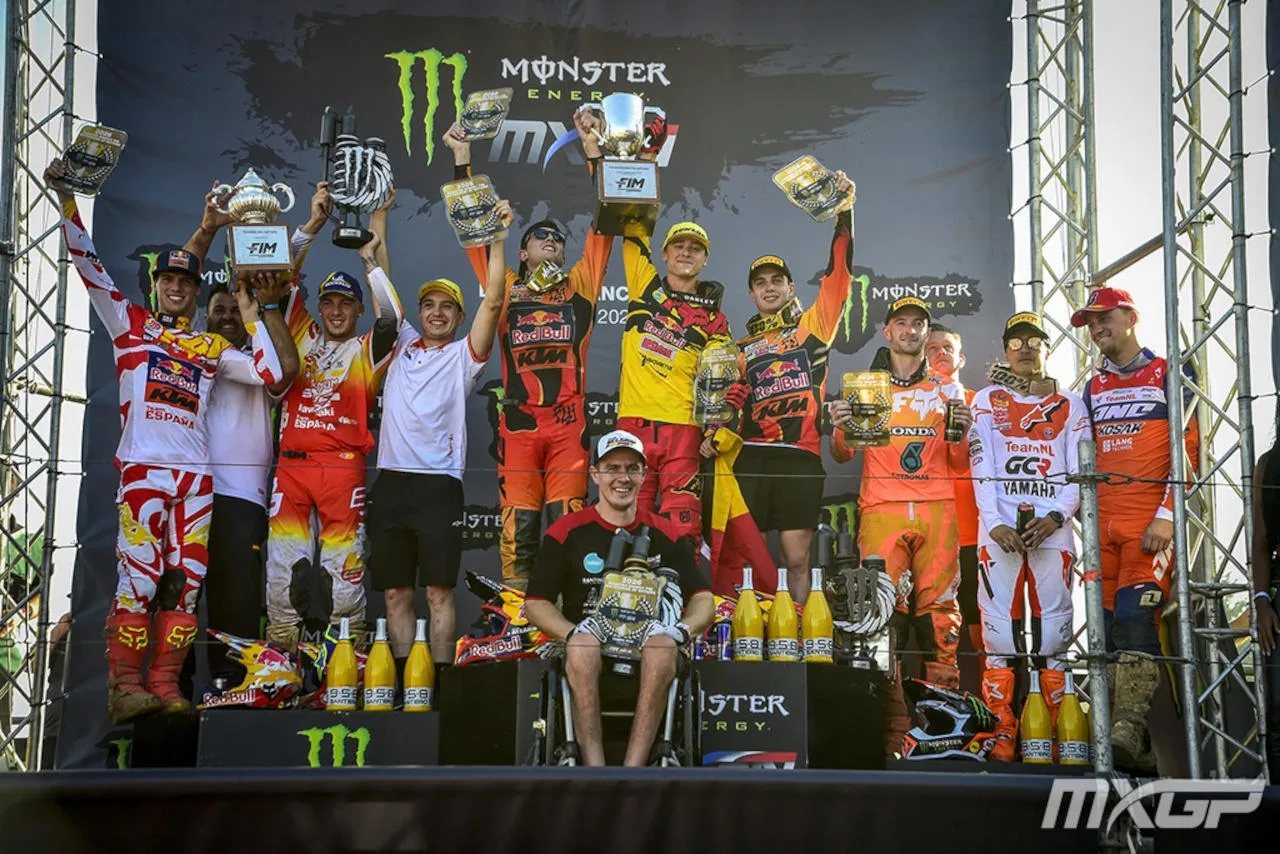
2026 MXoN in Ernée: Belgium Wins, France Falls
-
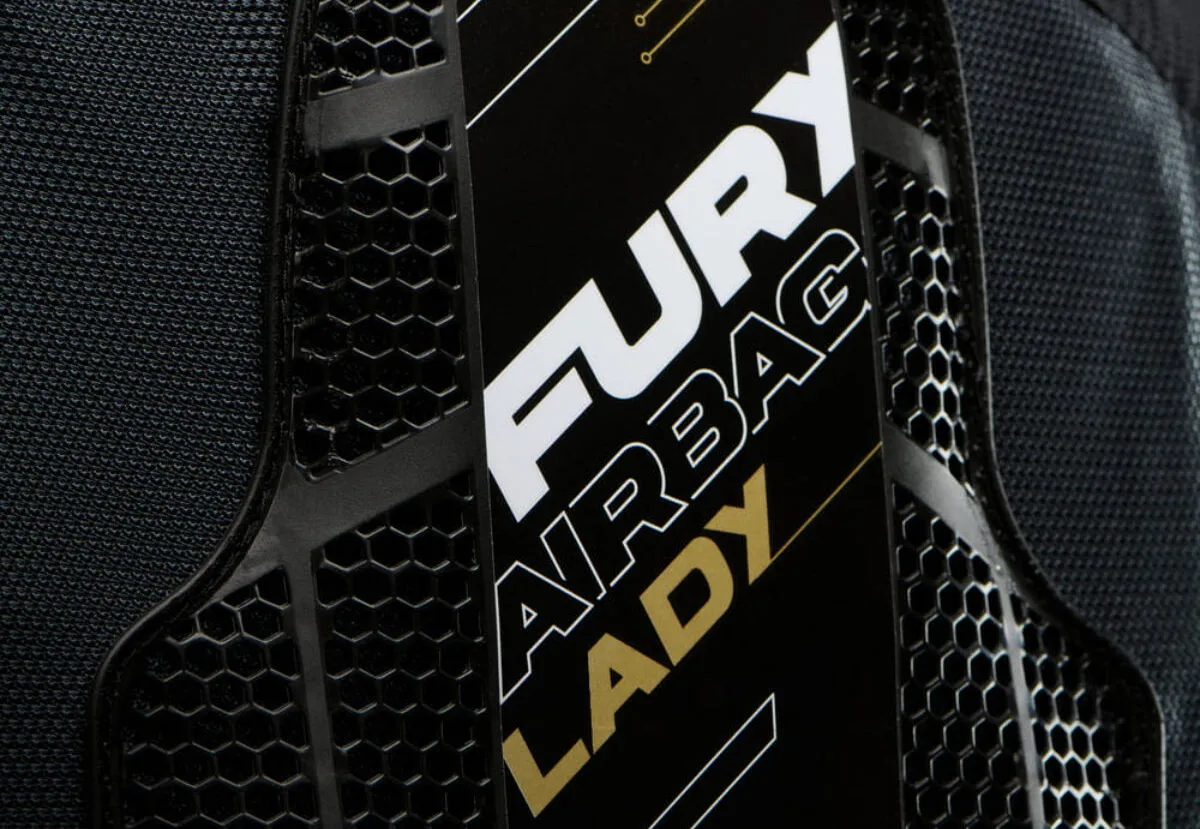
Furygan offers an airbag vest designed specifically for women.
-
Top 10 Best Scooters of 2026: Our Complete Ranking.
-
Motorcycle Intercoms—A Practical Guide to Choosing the Right One for Your Needs.
-
HJC is gearing up for a big year in 2027, with eight new helmets.
-
Triumph succeeded BSA in the Motocross World Championship.
-
BMW S1000RR Recall Alert: Risk of Engine Shutdown
-
The new motorcycle models of 2026 and the evolutions.

Bikers' reviews Leave a review - 18 reviews
This is the first motorcycle I've owned where I haven't had any issues with build quality, unwanted noise, etc.
The bike is simple, made with basic materials, but you can tell it was carefully assembled in Japan.
The bike is very easy to ride. I think anyone with an A2 license could ride it without putting themselves in too much danger. Typical Honda, really.
On the other hand, above 7,000 rpm, it lifts up and the front end struggles to keep up...
Well, at least it’s exciting^^
I get between 5L and 6.5L depending on how I ride it.
All in all, I’m pretty happy with it for 10,000 euros. Rating : 5/5 Respond to Oyo
For me, it's not love at first sight, but for the price, frankly, the competition is going to have a hard time keeping up... Rating : 4/5 Respond to Stef24
Of course, even if everyone says so, the very aggressive price compared to the competition makes for a bike that on paper weighs over 200 kg, but is so well balanced that it feels like it weighs less.
Honestly, I don't see the point of buying the SP version (which I've tried), even though I've had my motorcycle licence for a little over 14 years, I've done track exetera and I find that the standard version does a great job in terms of forks and shock absorbers, so before you get 100% out of this bike, you've got to go for it. I removed the original pot and put in an x race MK2 outlet, I left the catalytic converter in and the sound is really magnificent.
The chassis is really good, the engine is as aggressive as you'd expect - a bit of a shame at times, it's reminiscent of a 600 at low revs, but as soon as you rev it up, you remember there's a CBR engine in there. The riding position - personally, I'm 76 cm tall, the bike fits me like a glove, and I feel like I've always ridden this bike, from the first few metres I've ridden it.
The brakes are really good, no need for the Brembo brakes of the SP version, frankly, the original ones do the job really well.
Now I'm going to talk about the negative points.
The original muffler prevents us from positioning our feet properly on the footrests, so we end up with our foot on the muffler while our foot is on the footrest, which isn't very pleasant, but personally, with the outlet I've fitted, it doesn't bother me any more.
The indicator/horn comodo - you tend to honk when you want to turn on the indicators - I don't find it very well placed. In fact, the button should be reversed, with the indicators on top and the horn on the bottom.
Now we're going to talk about the electronics and the adjustable modes, so it's great to have three driving modes plus two adjustable modes. The problem is that traction control and anti-wheeling are both on the same mode, which means that if you deactivate the assistants, it's fine i think it's a shame, for example, with KTM, you can configure everything, so it's true that you had to save on the price of electronics, but it's a shame that disabling one deactivates everything.
The steering angle of the handlebars when you're stationary isn't great, I'm having trouble getting it into my garage several times because it doesn't steer very well. I feel like I'm going back to the days when I had my R6. Rating : 4/5 Respond to Erwan